The 2026 student-loan changes every physician needs to understand
1. Should I consolidate before July 1, 2026?
The 2026 student loan changes are the most significant shift physicians have faced in years, and they affect which repayment plans you can use, how your payment is calculated, and how forgiveness is taxed. Between the end of the SAVE plan, a new income-driven plan, and the lapse of a temporary tax break, a fresh look at your strategy is genuinely worthwhile this year. This guide walks through what changed, what stayed the same, and what to do about it.
The headline: PSLF is intact
Before the details, the most important point for physicians: Public Service Loan Forgiveness itself is unchanged. The core program, 120 qualifying payments at a nonprofit or government employer leading to tax-free forgiveness, remains written into federal law and operating. Payment counts you have already earned and forgiveness already granted are protected. If you are pursuing PSLF, the foundation of your strategy still stands.
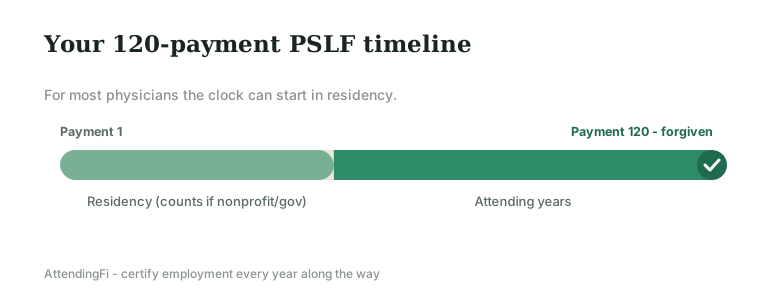
What the 2026 changes affect is mostly the machinery underneath PSLF and the options for borrowers not pursuing it. The income-driven plan that sets your monthly payment, the tax treatment of non-PSLF forgiveness, and the menu available to newer borrowers all shifted. So while your forgiveness goal is safe, the path you take to it may need adjusting.
This distinction matters because it is easy to read alarming headlines about student loan upheaval and conclude that forgiveness is in jeopardy. For physicians on a PSLF track, that conclusion is wrong. The right response is not to abandon PSLF but to review which repayment plan now sits underneath it and whether that plan is still your cheapest option.
What happened to the SAVE plan
The SAVE plan, which many borrowers had enrolled in, was halted by litigation. As the courts and the Department of Education worked through the legal challenges, affected borrowers were placed into a forbearance, often interest-free, that paused their payments. The practical effect for physicians on SAVE was a period of uncertainty about whether those months would count toward forgiveness.
The key question for a PSLF borrower is whether forbearance months count toward the 120, and generally a forbearance does not advance the PSLF clock the way an active qualifying payment does. That makes the SAVE disruption more than an inconvenience: a long forbearance can quietly stall your forgiveness progress even while you remain employed at a qualifying hospital. We cover this in detail in the SAVE forbearance guide.
If you were on SAVE, the move is to understand your current status, whether you are in forbearance, what plan you will land on, and how the interruption affected your count, then re-enroll in a qualifying plan that keeps your months accruing. The buyback program may also help recover certain months. Because the situation has evolved, confirm your current standing rather than assuming.
The new Repayment Assistance Plan
The 2025 budget law introduced a new income-driven plan, the Repayment Assistance Plan, or RAP, which is phasing in for 2026. RAP calculates your monthly payment differently from the older plans and, for newer borrowers, may be the primary income-driven option available. It can serve as a qualifying plan underneath PSLF, so forgiveness remains reachable on it.
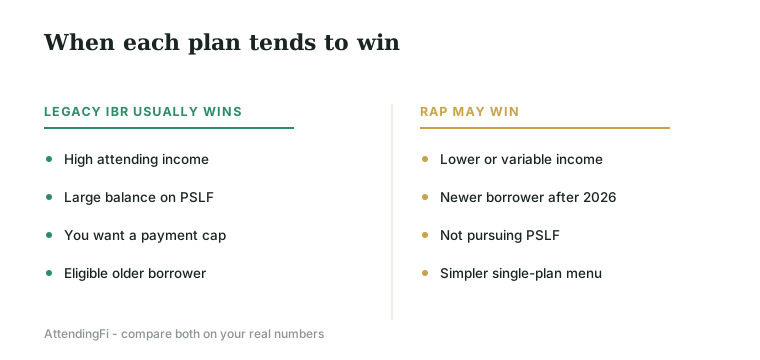
For physicians, the important question is whether RAP or the legacy IBR produces the lower payment, because on a forgiveness path a lower payment means more is ultimately forgiven. The answer depends on your income and balance. We compare them directly in RAP vs IBR for physicians, where the tradeoffs for high earners are spelled out.
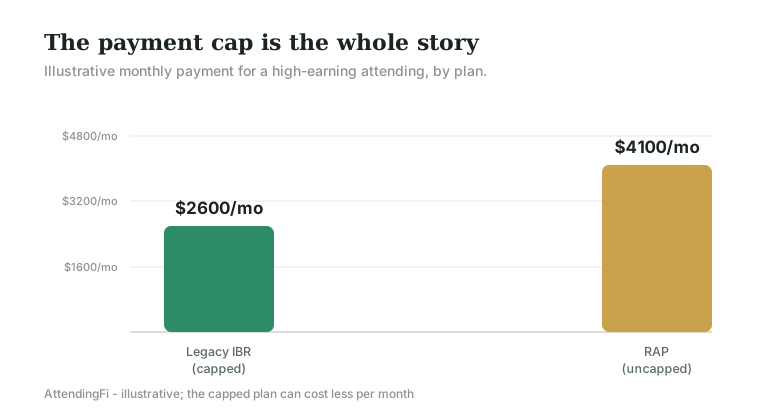
The broad pattern is that RAP can be gentler at lower incomes but, without the same payment cap as legacy IBR, can rise more for very high earners. Since a physician's income usually starts low and climbs steeply, the plan that looks best in training may not be the cheapest as an attending, which is exactly why the 2026 changes make a fresh comparison worthwhile.
The revised IBR
Alongside RAP, the older Income-Based Repayment plan was revised. For high-earning attendings, IBR's defining feature has long been a cap: your payment never exceeds what you would owe on a standard ten-year plan, no matter how high your income climbs. That cap is precisely what makes legacy IBR attractive to physicians whose attending incomes would otherwise push an uncapped payment very high.
Eligibility for the various plans now depends partly on when you borrowed, with newer borrowers facing a narrower menu. This is one of the subtler but more consequential parts of the 2026 changes: two physicians with identical finances might have different plans available simply because of their borrowing dates. Checking what you are actually eligible for is the necessary first step.
For an attending with a large balance pursuing PSLF, the capped legacy IBR plan often remains the cheaper monthly option, and therefore the one that maximizes forgiveness. But this is exactly the kind of conclusion that should be confirmed on your own numbers rather than assumed, because the right plan turns on the specifics of your income trajectory and eligibility.
The forgiveness tax exclusion is lapsing
A quieter but important 2026 change concerns taxes. A temporary federal provision excluded student loan forgiveness from taxable income through the end of 2025. That exclusion is scheduled to lapse, which means non-PSLF income-driven forgiveness, the kind that arrives after 20 or 25 years, may again be treated as taxable income for borrowers who reach it in later years.
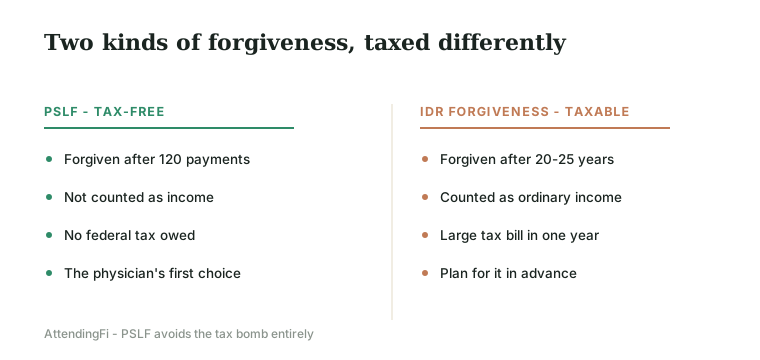
For physicians, this revives the so-called tax bomb for anyone on a non-PSLF forgiveness path. PSLF forgiveness remains tax-free, so PSLF borrowers are unaffected. But a doctor counting on income-driven forgiveness should plan as if the forgiven amount will be taxed, because on a physician-sized balance that bill can reach tens of thousands of dollars. Our tax-bomb guide covers how to prepare.
The practical response is a sinking fund: estimate the eventual tax and set aside a small amount monthly so the money is there when forgiveness arrives. This is a decades-out concern for most, which makes it easy to ignore and easy to prepare for, since a small monthly contribution started early grows comfortably to cover the bill.
The new employer rule
A further change taking effect in 2026 gives the Department of Education authority to disqualify a small number of employers found to have a substantial illegal purpose. Officials have estimated this would affect very few organizations a year, and it does not remove credit you have already earned. For the overwhelming majority of hospitals and academic centers, nothing changes.
The reason to mention it at all is that headlines about employer eligibility can sound alarming to PSLF borrowers. In practice, if you work for a mainstream nonprofit hospital, a public health system, or an academic medical center, this rule is extremely unlikely to touch you. It is aimed at a narrow set of bad actors, not at ordinary qualifying employers.
If you ever have doubt about your specific employer's standing, you can confirm it through the official PSLF Help Tool, which verifies employer eligibility. But for the typical physician, the employer rule is a footnote rather than a reason for concern, and it should not change a sound PSLF strategy.
What physicians should do now
The 2026 changes do not call for panic, but they do call for a review. Start by confirming which income-driven plans you are eligible for, since that depends on your borrowing history. Then compare RAP against IBR on your numbers to find the cheaper qualifying plan, because on PSLF the lower payment maximizes forgiveness. If you were on SAVE, re-establish a qualifying plan that keeps your months counting.
If you are on a non-PSLF forgiveness path, factor the returning tax bomb into your plan and consider a sinking fund. And whatever your path, recheck the comparison between forgiveness and refinancing, since the changed tax treatment can shift the math for some borrowers. None of these steps is complicated; they simply have not been necessary to revisit until now.
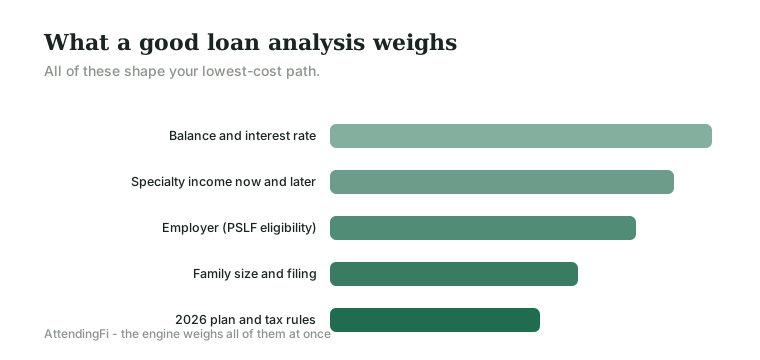
The fastest way to absorb all of this is to model your own numbers under the new rules. The engine reflects the 2026 plan menu and tax treatment, so it can show whether your current strategy is still optimal or whether one of the changes has quietly made a different path cheaper. A short review now can prevent an expensive surprise later.
Key takeaways on the 2026 changes
The 2026 student loan changes reshaped the machinery around forgiveness without dismantling it. For physicians, the practical message is to review, not retreat.
- PSLF itself is intact; earned counts and granted forgiveness are protected.
- SAVE was paused; confirm your status and re-establish a qualifying plan.
- A new RAP plan and a revised IBR change which plan is cheapest for you.
- The forgiveness tax exclusion is lapsing, reviving the tax bomb for non-PSLF paths.
- The new employer rule affects very few organizations, not mainstream hospitals.
- Re-run the forgiveness-versus-refinancing comparison under the new rules.
Treat 2026 as a year to recheck your plan rather than abandon your strategy. Run your numbers in the engine below to confirm your lowest-cost path under the current rules.
How the changes hit different borrowers
The 2026 changes land differently depending on where you are. A resident on a qualifying PSLF path is largely insulated: keep banking cheap qualifying months on whichever qualifying plan is cheapest, and the changes barely touch you beyond a possible plan swap. The disruption for residents is mostly administrative, confirming the right plan and certifying employment, rather than strategic.
A non-PSLF attending on a long income-driven path is more exposed, primarily through the returning tax bomb. For this borrower, the lapse of the tax exclusion can add a large future liability that did not exist on paper a year ago, and it may even tip the forgiveness-versus-payoff calculation toward paying the loan off faster. This group has the most reason to re-run the numbers.
A newer borrower faces the narrowed plan menu most directly, since eligibility now depends on borrowing dates. The practical effect is fewer choices, which makes getting the available choice right more important. Across all three groups, the common thread is that the changes reward a deliberate review and punish drifting on a plan chosen under the old rules.
Staying current as rules evolve
One feature of the 2026 landscape is that some details are still settling, particularly around SAVE litigation and the rollout of new plans. That means the safest posture is to verify your specific situation against current official guidance rather than relying on a single snapshot. Studentaid.gov and your servicer reflect the current state of your account and the plans available to you.
For physicians, this is a reminder that loan strategy is not a set-and-forget decision in a year of change. Checking your status when you recertify income, and whenever you read about a new development, ensures you are responding to the rules as they actually are rather than as they were. A brief annual review is inexpensive insurance against an expensive surprise.
One last point worth holding onto: a year of change is also a year of opportunity. Because the rules shifted, a strategy that was optimal under the old system may no longer be, which means a brief review can uncover savings that were not available before. The physicians who come out ahead in 2026 are not the ones who panic, but the ones who quietly recheck their plan against the new rules and adjust where it pays to.
Get your personalized plan
Don't guess — model your exact numbers. AttendingFi runs the real federal-rules math on your numbers and shows its work. Free, no login needed to see your answer.
Run my numbers →Frequently asked questions
Did the 2026 changes end PSLF?
No. PSLF remains intact and written into federal law. The 2026 changes affected income-driven plans, the tax treatment of non-PSLF forgiveness, and the plan menu for newer borrowers, not the core PSLF program.
What happened to the SAVE plan in 2026?
SAVE was halted by litigation, and affected borrowers were placed into a forbearance. Because forbearance generally does not advance the PSLF clock, borrowers should re-establish a qualifying plan to keep months counting.
What is the new RAP plan?
The Repayment Assistance Plan is a new income-driven plan phasing in for 2026. It can qualify for PSLF, but whether it or the legacy IBR is cheaper depends on your income and balance.
Is student loan forgiveness taxable again in 2026?
PSLF forgiveness remains tax-free. The temporary federal exclusion for other forgiveness is lapsing, so non-PSLF income-driven forgiveness may again be taxable for borrowers who reach it in later years.
Should physicians change their loan strategy for 2026?
Most should review rather than overhaul. Confirm plan eligibility, compare RAP and IBR, address the returning tax bomb if on a non-PSLF path, and recheck forgiveness versus refinancing on your numbers.