Medical school student loans, explained
If you are new to medical school loans, the numbers can feel overwhelming: six-figure balances, unfamiliar terms, and a maze of repayment options. This 101 guide strips the topic down to the essentials, explaining in plain language how medical school loans work, the words you need to know, and the handful of decisions that actually matter. By the end you will understand the landscape well enough to make confident choices, without needing a finance degree to do it.
The basics: what you are borrowing
Medical school loans are money you borrow to pay for your education, which you repay with interest after you finish or while you are in school. Most medical students borrow federal student loans, issued by the U.S. Department of Education, because they come with valuable protections and forgiveness options. Some also borrow private loans from banks, which lack those federal benefits.
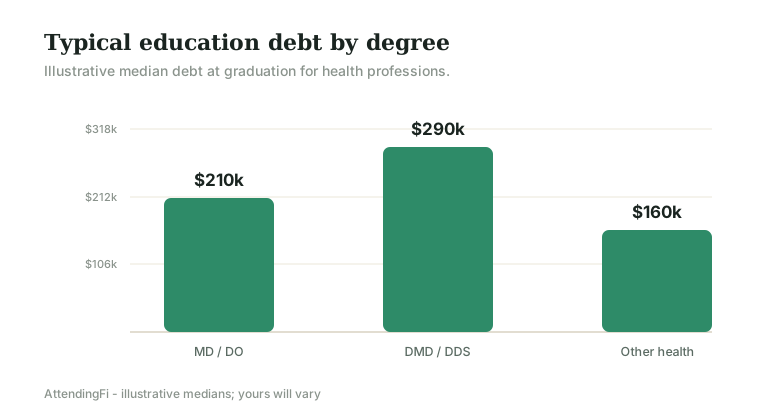
The amounts are large. Many medical graduates owe well over two hundred thousand dollars, among the highest of any profession. That size is exactly why understanding the basics matters: small differences in how you handle a balance this large compound into tens of thousands of dollars over the years of repayment that follow.
The encouraging news is that medicine is also one of the professions with the best loan options, because federal forgiveness programs reward exactly the profile most physicians have: a big balance paired with a low-income training period. So while the numbers are intimidating, the tools available to manage them are genuinely good once you learn how they work.
Key terms in plain language
A few terms unlock most of the topic. Principal is the amount you borrowed. Interest is the cost of borrowing, charged as a percentage of the principal. Federal Direct loans are the standard federal loans most medical students hold, and they are the ones eligible for the best programs. Servicer is the company that manages your loan and takes your payments.
Income-driven repayment means your monthly payment is set as a share of your income rather than a fixed amount, which keeps payments manageable on a low resident salary. PSLF, Public Service Loan Forgiveness, forgives your remaining balance tax-free after ten years of qualifying payments at a nonprofit or government employer. Refinancing means replacing your loans with a new private loan, ideally at a lower rate.
Two more worth knowing: capitalization is when unpaid interest gets added to your principal, increasing the balance you owe interest on, and forbearance is a temporary pause on payments. With just these terms, you can follow almost any conversation about medical school loans and understand the guides that go deeper, like our complete medical student loan guide.
How interest really works
Interest is the single most important concept to grasp early. Most medical school loans are unsubsidized, which means interest starts accruing the day the money is disbursed, while you are still in school, not when you graduate. Over four years, that accruing interest quietly adds to your balance before you make a single payment.
When repayment begins, any unpaid interest is typically capitalized, added to your principal, so you then pay interest on the larger amount. This is why a borrowed amount can grow to a noticeably higher starting balance. Understanding capitalization early helps you appreciate why borrowing only what you need, and considering whether to pay any interest during school, can matter.
The practical takeaway for a beginner is simple: interest is always working, even while you study, so the less you borrow and the sooner you have a plan, the better. You do not need to obsess over it, but knowing that the balance grows on its own removes the surprise many graduates feel when they first see their total.
How repayment works
After you finish school, usually after a short grace period, you begin repaying. As a resident, your income is low, so an income-driven repayment plan keeps your monthly payment small, often a few hundred dollars or less. As your income rises in your attending years, your payment rises too, unless you are on a plan that caps it.
You do not have to navigate this blindly. You choose a repayment plan, and for most physicians the starting point is an income-driven plan because it keeps payments manageable during training and underpins forgiveness. The plan you choose affects both your monthly payment and, if you are pursuing forgiveness, how much is ultimately forgiven, which is why it is a decision worth a little thought rather than a default.
The key beginner insight is that repayment is flexible by design. The federal system is built to keep payments tied to what you can afford, especially in low-income years. That flexibility is one of the biggest advantages of federal loans and a major reason most medical students should exhaust federal options before considering private loans.
Forgiveness, explained simply
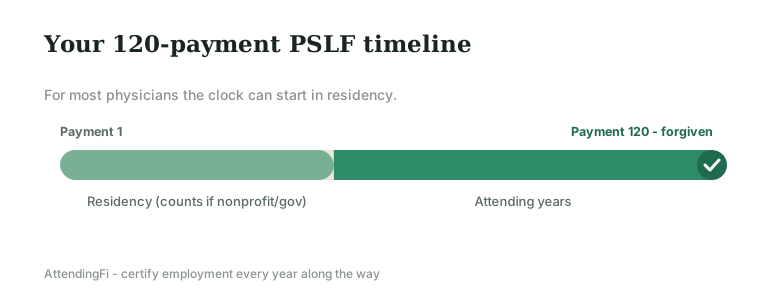
Forgiveness means part or all of your remaining balance is wiped out after you meet certain conditions. The most important version for physicians is PSLF: make 120 qualifying monthly payments, about ten years, while working full-time for a nonprofit or government employer, and your remaining federal balance is forgiven, with no tax owed on it.
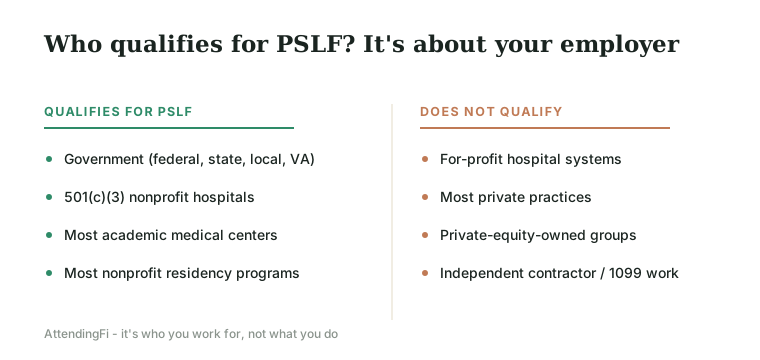
This is enormously valuable for physicians because so many work at qualifying nonprofit hospitals, and because residency, usually at a qualifying teaching hospital, lets the clock start early at a low payment. A large balance forgiven tax-free can be worth more than a year of attending pay. We explain it fully in how PSLF works.
There is also income-driven forgiveness, available after 20 or 25 years on an income-driven plan even without qualifying employment, but that forgiveness can be taxed. For a beginner, the headline is simply that forgiveness exists, that PSLF is the best version for most physicians, and that your employer determines whether you can use it.
Refinancing, explained simply
Refinancing means a private lender pays off your existing loans and gives you a new loan, ideally at a lower interest rate. Done at the right time, it can save money on interest. The crucial catch is that refinancing federal loans into a private loan is permanent and forfeits all federal benefits, including forgiveness and income-driven repayment.
For a beginner, the rule to remember is one of timing and order: do not refinance federal loans until you are sure you are not pursuing forgiveness. Refinancing makes sense mainly for physicians in private practice with no qualifying employer, strong income, and a balance they will pay off rather than have forgiven. For everyone else, it can be a costly mistake.
This is why we always say to confirm your forgiveness path first, then consider refinancing. A lender's free calculator will encourage you to refinance because that is how the lender earns money. Understanding that refinancing is a permanent, one-way decision protects you from giving up benefits you did not realize you had.
The few decisions that actually matter
Despite the complexity, only a handful of decisions truly drive your outcome. First, will you work for a qualifying employer, which decides whether PSLF is available. Second, which repayment plan you choose, which sets your payment and your forgiveness. Third, whether and when to refinance, which is permanent. Fourth, how to handle any future tax on forgiveness if you are on a non-PSLF path.
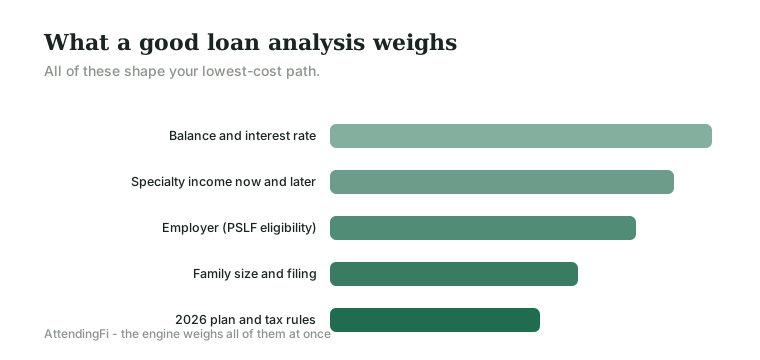
Everything else is detail. If you get these few decisions right, set up the correct plan, confirm your employer, avoid refinancing prematurely, and plan for any tax, you will do well regardless of how much you understand the finer mechanics. The system rewards a few correct choices far more than encyclopedic knowledge.
That is the liberating insight of this 101 guide: you do not need to master everything. You need to make a handful of good decisions and revisit them as your career unfolds. The deeper guides on this site cover the details when you want them, but the essentials above are enough to start with confidence.
How to start
Getting started is straightforward. Pull your full loan list at studentaid.gov so you know exactly what you owe and that your loans are federal Direct. Decide, even tentatively, whether a qualifying employer is in your future. Enroll in an income-driven plan when repayment begins, and if you are pursuing PSLF, certify your employment right away and every year after.
From there, revisit your plan as your career develops, when you finish training, change jobs, or your income jumps. A medical school loan plan is not a one-time decision but a strategy you adjust over time, and the few minutes it takes to review it periodically protect a great deal of money.
The simplest first step is to see your own numbers. Enter your balance, expected income, and employer into the engine, and it will compare your options, PSLF, income-driven plans, and refinancing, in plain terms, so you can begin with a concrete plan rather than a vague worry. Starting early, even before you fully understand everything, is what sets you up to do well.
Medical school loans 101 recap
Medical school loans are large but manageable once you grasp the essentials. A few good decisions matter far more than mastering every detail.
- Most medical students borrow federal Direct loans for their protections.
- Interest accrues from disbursement and capitalizes at repayment.
- Income-driven plans keep payments manageable on a resident salary.
- PSLF forgives your balance tax-free after 120 qualifying payments at a qualifying employer.
- Refinancing is permanent, confirm you are not pursuing forgiveness first.
- A handful of decisions drive your outcome more than the fine details.
- Physician student loans
- PSLF for 1099 & locum physicians
You now know enough to start with confidence. Run your numbers in the engine below to turn these basics into your personal plan.
Beginner mistakes to avoid
A few simple mistakes trip up many new borrowers. Borrowing more than you need is the first, since every extra dollar accrues interest for years. Ignoring how interest accrues during school is another, leaving graduates surprised by a balance larger than they borrowed. Refinancing federal loans too early, before ruling out PSLF, is the most expensive, because it permanently forfeits forgiveness.
Others include delaying setting up a repayment plan during a busy intern year, and never certifying employment for PSLF. None of these require expertise to avoid; they require a small amount of attention at the right moments. The beginners who handle loans well are simply the ones who learn the basics, like those in this guide, and act on them deliberately.
The reassuring truth is that medical school loan mistakes are mostly avoidable with awareness. Knowing what the common pitfalls are, which you now do, is most of the battle. A new borrower who sidesteps these errors is already ahead of many of their peers, regardless of how much finance they know.
Where to go from here
Once you have the basics, you can go as deep as you like when specific decisions arise. Our complete medical student loan guide covers the full strategy, the residents guide details how to bank cheap qualifying months in training, and the PSLF vs refinancing guide walks through the big fork in detail.
You do not need to read everything at once. Learn the basics now, act on the few decisions that matter, and return to the deeper guides when a particular choice, picking a plan, deciding on refinancing, planning for taxes, comes up. Treating your loan education as just-in-time rather than all-at-once keeps it manageable alongside the demands of medical training.
Is the debt manageable?
It is natural for a new borrower to look at a six-figure balance and feel daunted, even to wonder whether it is manageable at all. The reassuring reality is that physician incomes, combined with the federal programs built around them, make even large medical school debt manageable for the overwhelming majority of doctors. Very few physicians are unable to handle their student loans with a reasonable plan.
The reason is the match between the debt and the tools. Income-driven plans keep payments affordable when your income is low, forgiveness can erase a large balance tax-free for those at qualifying employers, and a strong attending income lets others pay the debt off or refinance efficiently. The debt is large, but the income and the programs are sized to it, which is precisely why panic is unwarranted.
What separates physicians who handle their loans gracefully from those who struggle is rarely the size of the balance; it is whether they made a few deliberate decisions early and stuck with them. A doctor with a plan and a balance of three hundred thousand dollars is in a far better position than one with no plan and half that. The plan, not the number, is what makes the debt manageable, which is the entire reason to learn these basics now.
Get your personalized plan
Don't guess — model your exact numbers. AttendingFi runs the real federal-rules math on your numbers and shows its work. Free, no login needed to see your answer.
Run my numbers →Frequently asked questions
How do medical school loans work?
You borrow, usually federal Direct loans, to pay for school, and interest accrues from disbursement. After a grace period you repay, typically on an income-driven plan, and you may qualify for forgiveness through PSLF at a nonprofit or government employer.
How much do medical students typically owe?
Many medical graduates owe well over $200,000, among the highest of any profession. The exact amount depends on your school, in-state status, scholarships, and any undergraduate debt.
What is the most important decision with medical school loans?
Whether you will work for a qualifying nonprofit or government employer, because that determines whether PSLF, the most valuable option for most physicians, is available to you.
Should I get federal or private medical school loans?
Federal loans first, almost always. They offer income-driven repayment, PSLF, and other protections that private loans lack and that are especially valuable during residency.
When should I start thinking about repayment?
Early, ideally as you finish school and enter residency. Setting up the right plan and, if pursuing PSLF, certifying employment promptly lets you bank cheap qualifying months at your low resident income.