The medical student's loan playbook: MS1 to Match Day
Medical student loans are the largest financial commitment most future doctors make before earning a dollar, and the choices you make in school and at graduation shape the next decade of your finances. The average medical graduate leaves with a six-figure balance, interest quietly compounding the whole time. This guide walks you through borrowing wisely in school, understanding what you owe, and setting up the right repayment strategy the moment you graduate.
How much medical students borrow
The typical medical student graduates with a substantial six-figure education debt, and many borrow more than two hundred thousand dollars across four years of medical school, often on top of undergraduate balances. The figure varies enormously by school, in-state versus out-of-state tuition, and whether you receive scholarships, but the headline is consistent: medical student loans are among the largest of any profession.
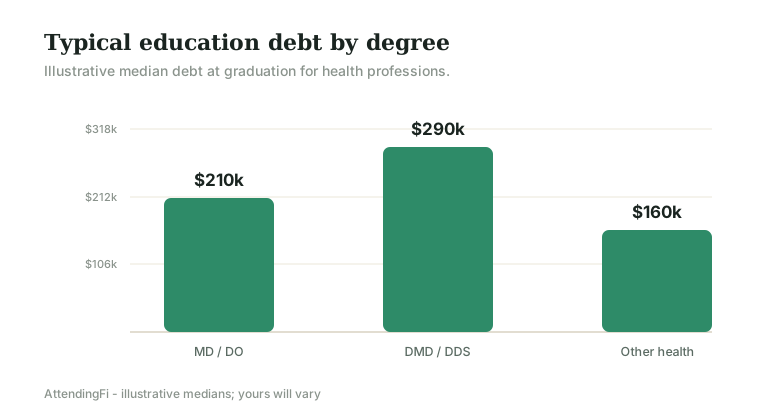
What makes medical debt different is not only the size but the timing. You borrow during four years of zero income, then enter residency on a modest salary before attending pay arrives years later. That long low-income runway is exactly why federal repayment and forgiveness programs can be so valuable to physicians, and why the decisions you make at graduation matter more than the interest rate alone.
The practical implication is to borrow only what you genuinely need. Every dollar you avoid borrowing in school is a dollar that never accrues interest across the years of training ahead. Living frugally as a student is unglamorous, but on a balance this large, restraint during school can save tens of thousands of dollars over the life of the loan.
How interest works while you study
The single most misunderstood feature of medical student loans is interest accrual. Most federal loans for graduate and professional students are unsubsidized, which means interest begins accruing the day the loan is disbursed, while you are still in school, not when you graduate. Over four years of medical school, that accrued interest can add a meaningful sum to your balance before you make a single payment.
At the end of school, any unpaid accrued interest is typically added to your principal, a process called capitalization, after which you begin paying interest on the larger amount. This is how a borrowed amount of, say, two hundred thousand dollars can grow to a noticeably higher starting balance by the time repayment begins. Understanding this early lets you make informed choices about whether to pay any interest during school.
You are not required to pay anything while enrolled, and most students do not, but even small interest payments during school can blunt capitalization. Whether that makes sense depends on your cash flow and your eventual repayment path; a future PSLF borrower, for instance, may rationally let interest accrue because it will be forgiven anyway. The right answer depends on your plan, which is why thinking ahead pays off.
Federal versus private loans
Most medical students should exhaust federal loans before considering private ones, because federal loans carry benefits that private loans simply do not. Federal Direct loans are eligible for income-driven repayment, Public Service Loan Forgiveness, generous deferment and forbearance, and discharge in cases of death or permanent disability. Those protections are especially valuable during the low-income years of residency.
Private student loans, by contrast, are issued by banks and lenders based on credit and offer none of those federal features. They sometimes carry lower rates for borrowers with strong credit or a cosigner, but you trade away flexibility and forgiveness eligibility to get it. For most medical students, that trade is a poor one while still in training.
The general rule is to borrow federal first and treat private loans as a last resort for any gap. If you already hold private loans from undergrad, you can keep them separate from your federal strategy, and you may refinance them later. The key is to preserve federal benefits on the bulk of your medical school debt, since those benefits are where the largest savings for physicians come from.
What to do with your loans at graduation
Graduation is the moment your loan strategy actually begins, and the choices you make in the first months of residency set the trajectory for years. The first task is to know exactly what you owe: pull your full loan list at studentaid.gov, confirm each loan is federal Direct, and note your balances and rates. This inventory is the foundation for everything that follows.
Next, decide your repayment path before your grace period ends. If a qualifying nonprofit or government employer is in your future, which is true for most residents, enroll in a qualifying income-driven plan immediately so you begin banking cheap PSLF months at your low resident income. If you are confident you will be in private practice, you still typically start on an income-driven plan and revisit refinancing once you become an attending.
Avoid the temptation to ignore the loans during intern year. The cheapest, most valuable qualifying months are slipping by while you delay, and a year of inattention can cost far more than the paperwork would have taken. A single afternoon spent setting up the right plan and certifying employment protects six figures of future value.
Where PSLF fits in for medical students
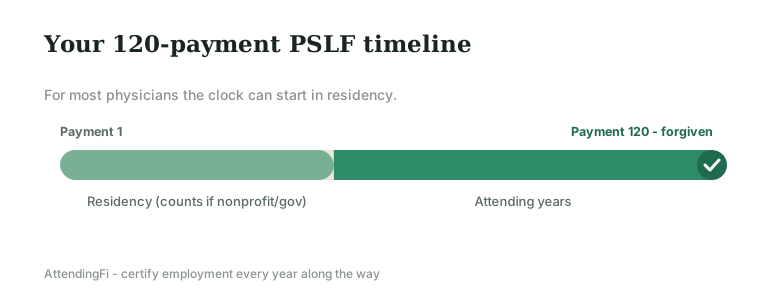
For a large share of physicians, Public Service Loan Forgiveness is the centerpiece of the strategy. It forgives your remaining federal balance tax-free after 120 qualifying payments, about ten years, while you work full-time for a nonprofit or government employer. Because most residencies are at qualifying teaching hospitals, your clock can start the moment you graduate.
The reason PSLF is so powerful for medical students specifically is the combination of large balances and a long low-income window. You bank qualifying months during residency at tiny payments, then finish the clock as an attending, and a large remaining balance is forgiven with no tax bill. We cover the mechanics in how PSLF works and the resident specifics in the residents guide.
Not every future physician will pursue PSLF, and that is fine. Those headed for private practice will weigh an income-driven plan against refinancing instead. But because so many medical graduates can qualify, and because the cheap training months are irreplaceable, every medical student should at least set up their loans so PSLF remains an option until they are certain of their path.
When refinancing makes sense
Refinancing replaces your federal loans with a private loan at a potentially lower rate. For medical students, the important rule is timing: refinancing during school or residency is usually a mistake if any qualifying employer is in your future, because it permanently forfeits PSLF and erases the cheap qualifying months you would otherwise bank.
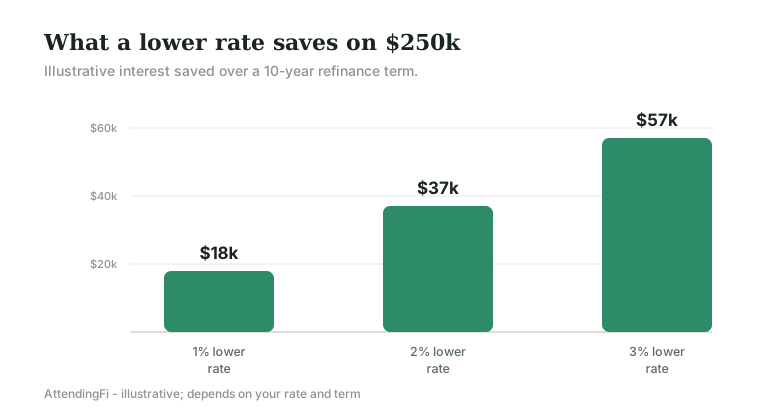
Where refinancing does make sense is later, once you are an attending and have confirmed you are not pursuing forgiveness, your income is strong relative to your debt, and a lender offers a rate well below your federal average. At that point, refinancing can save real money. We walk through the decision in should I refinance my medical-school loans.
The discipline to remember as a student is simple: do not let a low advertised resident refinance rate tempt you into forfeiting federal benefits you have not yet finished evaluating. Confirm your path first, then optimize. Refinancing is a one-way door, and walking through it early is one of the costliest mistakes a young physician can make.
Mistakes medical students make
A handful of avoidable errors account for most early-career loan regret. Borrowing more than necessary in school is the first, because every extra dollar compounds for years. Ignoring how interest accrues and capitalizes is the second, leaving graduates surprised by a balance larger than they borrowed. Refinancing federal loans too early, before ruling out PSLF, is the third and most expensive.
Other common missteps include delaying repayment setup during intern year, choosing the wrong income-driven plan, and never certifying employment for PSLF. None of these require financial expertise to avoid; they require a small amount of attention at graduation and a yearly habit thereafter. The students who handle their loans well are rarely the most sophisticated, just the most deliberate.
Perhaps the biggest mistake is treating the loans as a problem for later. The most valuable decisions, and the cheapest qualifying months, happen early. A student who sets up a deliberate plan at graduation captures advantages that a student who drifts will never recover, no matter how diligently they pay later.
Building your medical student loan plan
Pulling it together is straightforward. While in school, borrow only what you need and understand that interest is accruing. At graduation, inventory your loans, confirm they are federal Direct, and decide your path based on whether a qualifying employer is in your future. Enroll in the right income-driven plan, and if you are pursuing PSLF, certify your employment right away.
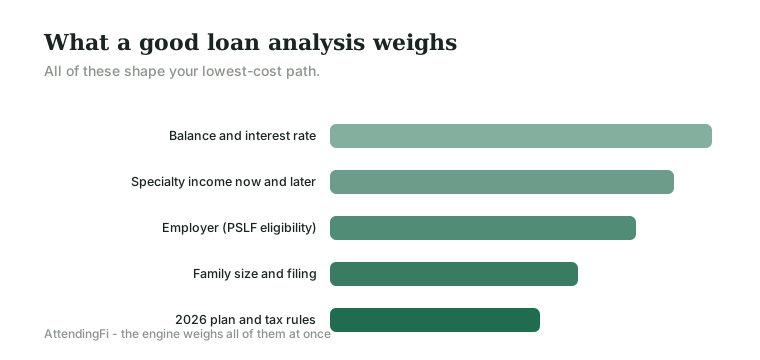
Then maintain the plan: recertify income on schedule, certify employment annually if pursuing forgiveness, and revisit the strategy whenever your income, employer, or family situation changes. A medical student loan plan is not a one-time decision but a strategy you steward from graduation through your attending years, and small adjustments along the way protect large sums.
The fastest way to turn this into a concrete plan is to model your own numbers. Enter your balance, your expected training and attending income, and your employer, and the engine compares PSLF, income-driven plans, and refinancing on a lifetime-cost basis, so you graduate with a strategy rather than a stack of statements you are afraid to open.
Income-driven repayment, in plain terms
Income-driven repayment is the foundation of most physician loan strategies, so it is worth understanding before you graduate. Instead of a fixed bill, these plans set your monthly payment as a percentage of your discretionary income, recalculated each year when you certify your earnings. On a resident salary that produces a small payment; as your income rises, so does the payment, though some plans cap how high it can go.
For a future physician, the appeal is twofold. During the low-income years of residency, an income-driven payment keeps your bill manageable and, crucially, counts toward PSLF if you are at a qualifying employer. Later, as an attending, the plan you chose determines how much you pay and, on a forgiveness path, how much is ultimately forgiven. The right plan can be worth thousands of dollars a year.
The 2026 menu includes a new Repayment Assistance Plan alongside a revised IBR, and which is cheaper depends on your income and balance. You do not need to master the formulas as a student; you need to know that an income-driven plan is almost always your starting point and that choosing the right one is a decision worth modeling rather than defaulting into.
Scholarships and other forgiveness programs
PSLF is the most widely used forgiveness route for physicians, but it is not the only program worth knowing. Service-based options such as the National Health Service Corps and various military and state programs offer loan repayment in exchange for working in underserved areas or in uniform, sometimes with more generous terms than PSLF for those willing to commit.
These programs are not for everyone, since they involve service obligations and specific eligibility rules, but for the right medical student they can dramatically reduce or eliminate debt. It is worth investigating them while still in school, because some are easier to plan around if you know about them early rather than discovering them after graduation. We cover several in our specialty and program guides.
The broader lesson is that medical student debt has more solutions than a single repayment plan. Between PSLF, income-driven forgiveness, refinancing, and service-based programs, most physicians have a genuinely good path available, the challenge is identifying which one fits your career and balance. Mapping those options before you graduate turns an intimidating number into a manageable plan.
Key takeaways for medical students
If you remember nothing else, remember this. Borrow only what you truly need, because every dollar accrues interest from the day it is disbursed and compounds across years of training. Keep the bulk of your debt in federal loans, since their forgiveness eligibility and protections are where physicians capture the most value. And treat graduation as the start of an active plan, not a deadline to dread.
- In school: minimize borrowing, understand that interest is accruing, and prefer federal loans.
- At graduation: inventory your loans, confirm they are Direct, and enroll in a qualifying income-driven plan before your grace period ends.
- If pursuing PSLF: certify employment immediately and every year, and bank cheap qualifying months during residency.
- Refinancing: wait until you are an attending and have ruled out forgiveness; refinancing federal loans is permanent.
- Always: compare lifetime cost, not just the monthly payment, and revisit your plan as your career changes.
Handle those few things deliberately and your medical student loans become a manageable, well-understood part of your financial life rather than a source of dread. The single best next step is to model your own numbers so your plan is concrete from day one of residency.
Get your personalized plan
Don't guess — model your exact numbers. AttendingFi runs the real federal-rules math on your numbers and shows its work. Free, no login needed to see your answer.
Run my numbers →Frequently asked questions
How much do medical students owe in loans?
Many medical graduates owe well over $200,000, among the highest of any profession. The exact figure depends on your school, in-state residency, scholarships, and any undergraduate debt.
Do medical student loans accrue interest while in school?
Yes. Most graduate and professional loans are unsubsidized, so interest accrues from disbursement, while you are still in school. Unpaid interest is typically capitalized into principal when repayment begins.
Should medical students use federal or private loans?
Federal loans first, in almost all cases. They offer income-driven repayment, PSLF, deferment, and other protections that private loans lack and that are especially valuable during residency.
When should a medical student start repaying?
Set up your repayment plan before your grace period ends, ideally early in residency. If pursuing PSLF, enrolling promptly lets you bank cheap qualifying months at your low resident income.
Can medical students get loan forgiveness?
Yes. Many physicians qualify for PSLF, which forgives the federal balance tax-free after 120 qualifying payments at a nonprofit or government employer. Most residencies count toward it.