Your Match Day student-loan checklist
A Match Day loan checklist turns the most overwhelming financial moment of your training into a short list of clear actions. The months around Match are when a few simple choices, which plan you enroll in, whether you certify your employer, and whether you resist the urge to refinance, quietly set up a decade of forgiveness progress or quietly throw it away. This guide walks through the key moves to make with your student loans from Match Day through your first months as a resident, in the order that matters.
Why Match Day is the moment to act
Match Day marks the transition from student to resident, and with it the end of your in-school status and the start of repayment decisions that compound for years. The choices you make in the months right around Match, before your first paycheck and your first loan bill, establish the foundation of your entire repayment strategy. Get them right and your residency years can generate the cheapest, most valuable qualifying payments toward forgiveness; get them wrong and you can forfeit progress that is impossible to recover later.
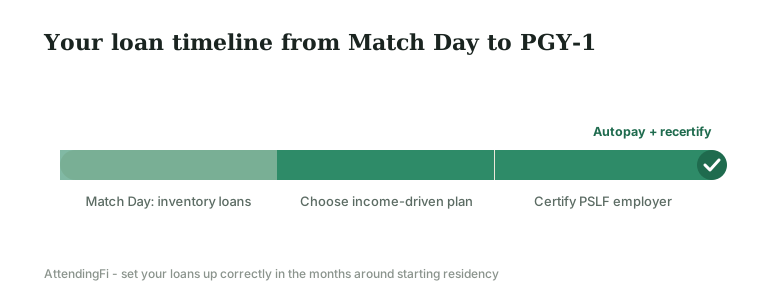
What makes this moment so high-stakes is that the default path is rarely the right one. If you do nothing, your loans may land on the Standard repayment plan with payments far higher than an income-driven plan would require, and your residency months may not count toward forgiveness at all. The federal system does not optimize itself for you; the borrower has to take specific actions to capture the benefits. A short checklist, completed early, is what separates an optimized start from an expensive drift.
The good news is that the list is genuinely short, and none of it is complicated. Most of these steps take an afternoon and a few online forms, and once they are done your residency repayment largely runs on autopilot. The point of doing them around Match, rather than waiting, is that the clock on grace periods, plan enrollment, and forgiveness eligibility starts whether or not you are paying attention. Acting early simply ensures you are the one steering.
Step 1: inventory every loan you have
Start by knowing exactly what you owe and to whom. Log in to StudentAid.gov, the official federal site, and pull a complete list of your federal loans, their balances, interest rates, and loan types. Most physicians finish school with a mix of Direct Unsubsidized and Grad PLUS loans, and the type matters because it determines plan eligibility and forgiveness treatment. Note any private loans separately, since they follow entirely different rules and none of the federal protections in this checklist apply to them.
This inventory is the foundation for every later decision, because you cannot choose the right plan or estimate your forgiveness without knowing your actual numbers. Write down your total federal balance, your weighted average interest rate, and whether all your loans are Direct loans, which are the ones eligible for Public Service Loan Forgiveness. If you have older federal loans that are not Direct loans, you may need to consolidate them to make them PSLF-eligible, which is a decision to make deliberately and early.
Take a moment to confirm your contact information and loan servicer details while you are there, so you do not miss critical notices during the busy transition into residency. Misdirected mail and outdated email addresses are a surprisingly common way that residents miss recertification deadlines or forbearance notices. A clean, current record at the start of residency is a small thing that prevents a number of avoidable problems over the long years of repayment ahead.
Step 2: choose the right repayment plan
For most residents pursuing forgiveness, enrolling in an income-driven repayment plan is the single most valuable step on this checklist. These plans set your payment as a share of your income rather than your balance, which during residency means a low payment that still counts as a qualifying payment toward PSLF. A resident on an income-driven plan can make many cheap qualifying payments during training, banking forgiveness progress at the lowest payment they will ever have, which is the heart of the PSLF strategy for physicians.
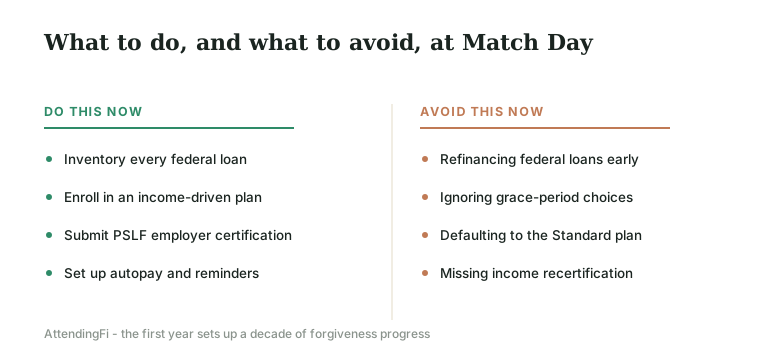
The specific plan to choose depends on your loan types and the current rules, which changed in 2026 with the introduction of the new Repayment Assistance Plan and a revised Income-Based Repayment. The right plan for you is the one that produces qualifying payments toward your goal at the lowest cost, and that depends on when you borrowed and your situation. We cover the current options in our RAP vs IBR guide, which is worth reading before you enroll.
Whatever you do, avoid letting your loans sit on the Standard plan by default if you are pursuing forgiveness. The Standard plan's higher fixed payments are wasted money for a PSLF-bound resident, since you would pay far more than an income-driven plan requires while reaching the same forgiveness. Choosing your plan deliberately, rather than accepting the default, is one of the clearest examples on this list of a small action with a large, compounding payoff.
Step 3: certify your employer for PSLF
If you are pursuing Public Service Loan Forgiveness, submit the employment certification form for your residency program as soon as you start. Most teaching hospitals are nonprofit or government employers that qualify, and certifying early does two things: it confirms your employer qualifies before you bank years of payments on an assumption, and it gets your qualifying months officially counted rather than leaving them to be reconstructed later. Certifying employment is the mechanism that turns your residency payments into documented forgiveness progress.
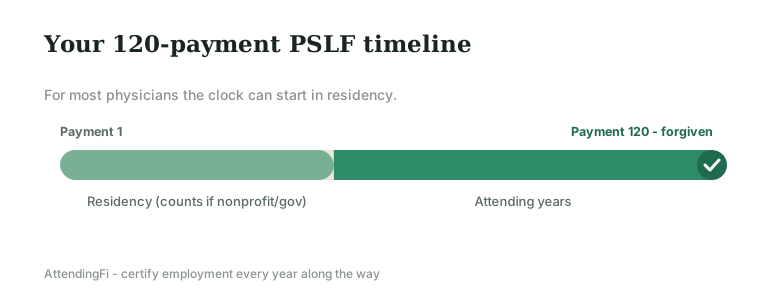
The reason to do this early and repeatedly, rather than waiting until you near forgiveness, is that catching a problem in year one is trivial and catching it in year ten can be devastating. If your employer somehow does not qualify, you want to know immediately so you can adjust, not after you have spent years assuming credit you were not earning. Annual certification, starting at the beginning of residency, keeps your count accurate and surfaces any issue while it is still fixable.
Certification also creates the paper trail that protects you if servicers change or records are lost, which has happened to many borrowers. A documented history of qualifying employment and payments is your insurance against administrative errors that could otherwise cost you months or years of credit. Treat the certification form as a routine annual task, like renewing a license, and your forgiveness progress stays verified and defensible throughout the long path to 120 payments.
Step 4: do not refinance your federal loans yet
Resist the heavily marketed offers to refinance your federal loans during residency. Refinancing moves your debt to a private lender, which permanently destroys your eligibility for income-driven plans, PSLF, and federal forbearance protections. For a resident, this is almost always a mistake, because your residency years are when income-driven payments are lowest and most valuable, and refinancing throws away both the cheap payments and the entire forgiveness option in exchange for a rate cut that rarely justifies the loss.
The pitch is seductive because lenders advertise low resident rates and the accruing interest on your balance feels alarming. But the right comparison is not your federal rate versus the private rate; it is your total cost with forgiveness versus your total cost after refinancing, and for a PSLF-bound resident forgiveness usually wins decisively. Even residents uncertain about PSLF are better off staying federal to preserve the option, because the cost of waiting is small and refinancing cannot be undone.
If refinancing ever does make sense for you, the natural moment is the attending transition, when your income jumps, your credit strengthens, and your career path is clearer, not during the uncertain years of training. We explain the full decision in our refinancing pros and cons guide. For now, the checklist item is simple: keep your loans federal through residency and revisit refinancing only later, if at all.
Step 5: budget for the move and the gap
Match Day usually comes with a relocation, and the weeks between graduation and your first resident paycheck can create a real cash crunch. Moving costs, deposits, and setup expenses often land before any income arrives, and residents frequently underestimate the gap. Building a simple budget for the move, and knowing your financing options for it, prevents the kind of high-interest credit-card debt that can shadow your finances for years and is far more expensive than the student loans you are carefully managing.
Part of budgeting well is understanding how your loans behave during this period. Your federal loans typically have a grace period after you leave school before repayment begins, and how you handle that window, including whether to start income-driven enrollment right away, affects both your cash flow and your forgiveness timing. We cover the cash-flow side of the move in our residency relocation loans guide, which is worth reading alongside this checklist.
The broader principle is that your first resident budget should treat student loans as one line among several, not the only financial decision that matters. An income-driven payment keeps the loan affordable on a resident salary, which frees you to handle the move, build a small emergency buffer, and avoid expensive short-term debt. Setting up the loan correctly is what makes the rest of your resident budget workable, which is why it sits at the center of this checklist.
Steps 6 to 8: autopay, recertify, and track
Once your plan is chosen and your employer certified, set up automatic payments. Autopay ensures you never miss a payment, which protects your forgiveness count and your credit, and many servicers offer a small interest-rate reduction for enrolling. For a resident juggling brutal hours, automating the payment removes one more thing to forget during the months when forgetting is easiest and most costly. It is a five-minute task that prevents some of the most damaging and avoidable repayment mistakes.
Next, mark your income recertification date. Income-driven plans require you to recertify your income periodically, and missing that deadline can spike your payment or knock you off the plan, both of which can interrupt forgiveness progress. Put the recertification date on your calendar the moment you enroll, and treat it as a non-negotiable annual task. This single deadline is one of the most common things residents miss, and missing it undoes much of the careful setup the rest of this checklist accomplished.
Finally, track your progress. Keep a simple record of your qualifying payment count, your certified employment, and your recertification dates, so you always know where you stand and can catch errors early. You do not need anything elaborate; a saved profile that tracks your PSLF month count and reminds you of deadlines is enough. The combination of autopay, on-time recertification, and basic tracking is what keeps your residency repayment running smoothly toward forgiveness with minimal ongoing effort.
The Match Day mistakes that cost the most
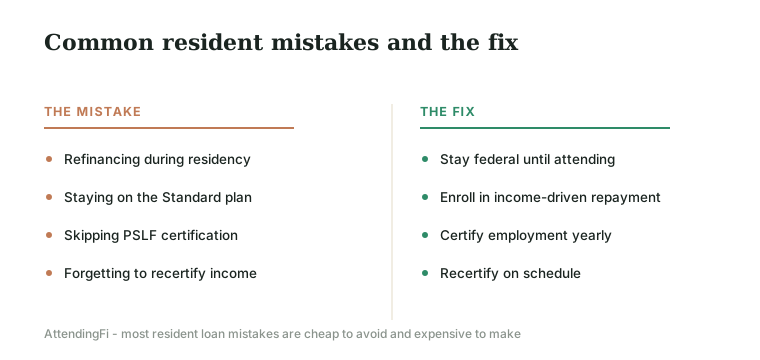
The costliest Match Day mistakes are the ones that forfeit forgiveness, and they cluster around a few specific errors. Refinancing federal loans during residency tops the list, because it permanently destroys PSLF eligibility and the cheap qualifying payments residency provides. Letting loans default to the Standard plan is a quieter version of the same problem, paying far more than necessary while a PSLF-bound borrower reaches the same forgiveness. Both stem from not acting deliberately at the start.
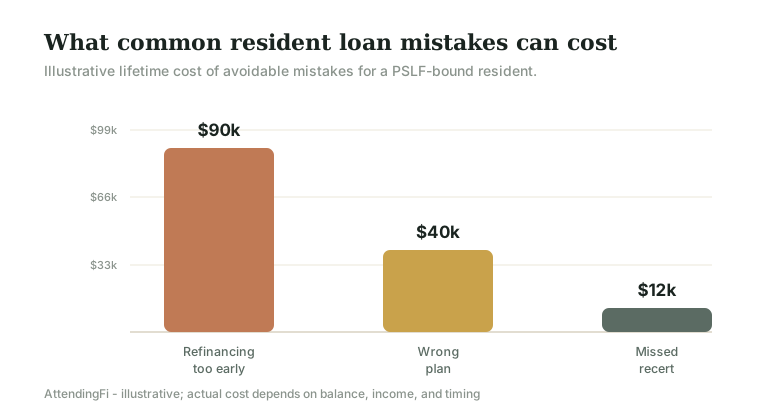
The other expensive errors are administrative: failing to certify employment, so qualifying months go uncounted or unverified, and missing income recertification, which can interrupt payments and forgiveness progress. None of these mistakes is hard to avoid; each is prevented by a single item on this checklist. What makes them costly is that they compound silently over years, so by the time a borrower notices, the lost progress can represent a large sum that careful early setup would have protected entirely.
The unifying lesson is that the Match Day checklist is cheap insurance against expensive, often irreversible errors. An afternoon of deliberate setup, choosing the right plan, certifying your employer, resisting refinancing, automating payments, and calendaring recertification, protects a decade of forgiveness progress that the default path would quietly squander. We go deeper on the pitfalls in our student loan mistakes residents make guide, which pairs naturally with this checklist.
Key takeaways for your Match Day checklist
The months around Match Day are when a few deliberate loan choices set up or sabotage a decade of forgiveness progress. The checklist is short, cheap, and high-leverage.
- Inventory every federal loan and confirm your loan types and servicer.
- Enroll in an income-driven plan to capture cheap qualifying payments.
- Certify your residency employer for PSLF early and annually.
- Do not refinance your federal loans during residency.
- Budget for the move and the gap before your first paycheck.
- Automate payments, recertify income on time, and track your count.
- Residency relocation loans
- Residency loans
Complete the checklist early, while the clock is starting, so your residency repayment runs on autopilot. Save your numbers and deadlines so nothing slips during training.
Get your personalized plan
Don't guess — model your exact numbers. AttendingFi runs the real federal-rules math on your numbers and shows its work. Free, no login needed to see your answer.
Run my numbers →Frequently asked questions
What should I do with my student loans on Match Day?
Inventory your federal loans, enroll in an income-driven repayment plan, certify your residency employer for PSLF if applicable, avoid refinancing, set up autopay, and calendar your income recertification date. These steps set up your residency repayment strategy.
Should I refinance my student loans when I match into residency?
Almost never. Refinancing during residency permanently destroys PSLF eligibility and the cheap qualifying payments residency provides. Stay federal through training and revisit refinancing only later, at the attending transition, if it still fits your situation.
Which repayment plan should a new resident choose?
For most residents pursuing forgiveness, an income-driven plan is best, because it sets a low payment that still counts toward PSLF. The specific plan depends on your loan types and the current 2026 rules, so model the options before enrolling.
When should I certify my employer for PSLF?
As soon as you start residency, and then annually. Early certification confirms your employer qualifies and gets your qualifying months officially counted, surfacing any problem while it is still easy to fix rather than years later.
Why does the income recertification date matter so much?
Income-driven plans require periodic recertification, and missing the deadline can spike your payment or remove you from the plan, interrupting forgiveness progress. Calendar the date when you enroll and treat it as a non-negotiable annual task.