Residency relocation loans: what they are, and the cheaper moves to try first
1. What a residency relocation loan actually is
Residency relocation loans help new physicians bridge a very specific, very real gap: the weeks between Match Day and your first residency paycheck, when moving costs, deposits, and setup expenses pile up before any income arrives. These short-term loans can be a useful tool or an expensive mistake depending on your alternatives. This guide explains how residency relocation loans work, what they cost, when they make sense, and how they fit into the much larger federal student loan picture you are about to inherit as a new resident.
The Match-to-paycheck gap
Match Day is exciting, but it kicks off a financially awkward stretch. Between learning where you matched and receiving your first residency paycheck, often months later, you may face significant one-time costs: moving across the country, apartment deposits, licensing and exam fees, and the many everyday expenses that come with relocating your entire life across the country. Meanwhile, your medical school loans are about to enter repayment and you have little or no income.
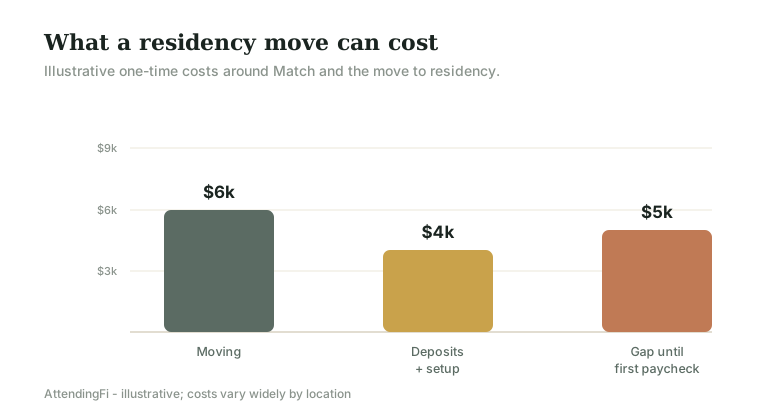
This gap is genuine and catches many new physicians off guard. You are transitioning from being a student with no income to a resident with a modest one, but the costs of that transition land all at once, up front, before the income starts. For a graduate with little savings, covering these expenses can be a real challenge precisely when cash is tightest.
Residency relocation loans exist to fill this gap. They are designed for exactly this moment, providing funds to cover relocation and startup costs until your residency income begins. Understanding them, and their alternatives, helps you bridge the gap in the least expensive way rather than reaching for the first option marketed to you.
What residency relocation loans are
Residency relocation loans, sometimes bundled with or called residency and relocation loans, are typically private loans offered to graduating medical students and new residents to cover the costs of moving and settling into training. They are short-term in spirit, meant to bridge the Match-to-paycheck gap, though their actual repayment terms can extend longer.
Because they are private loans, they are issued by banks and lenders based on credit, and they carry none of the federal protections, no income-driven repayment, no forgiveness eligibility, no federal disability discharge, that your federal student loans have. They are a financing product for a specific short-term need, not a part of your long-term student loan strategy.
This distinction matters. A residency relocation loan is separate from the large federal balance that will define your repayment journey. It solves an immediate cash-flow problem, and it should be evaluated as a short-term financing decision on its own terms, comparing its cost against alternatives, rather than lumped in with your federal loan planning.
What residency relocation loans really cost
The cost of a residency relocation loan depends on its interest rate, fees, and how long you take to repay it. Because these are private loans extended to borrowers with limited income and credit history, their rates can be higher than other forms of borrowing, and interest accrues from the start. A loan taken to cover a few thousand dollars of moving costs can end up costing meaningfully more if repaid slowly.
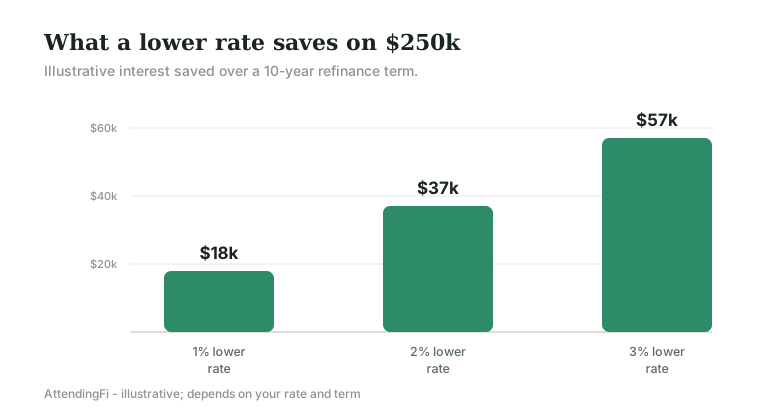
The key is to weigh that cost against the alternatives and against the size of the need. For a genuine, unavoidable relocation expense with no cheaper option, the cost may be worth the convenience. For an amount you could cover another way, paying relocation-loan interest is an avoidable expense layered on top of an already large student debt load.
It is also worth remembering scale. A relocation loan is small relative to your six-figure federal balance, so its absolute cost is modest, but it is still a private debt accruing interest, and unnecessary borrowing is unnecessary cost. The goal is to bridge the gap efficiently, using the cheapest adequate option rather than the most heavily marketed one.
Cheaper alternatives to consider
Before taking a residency relocation loan, consider the alternatives, several of which may be cheaper. Savings, even modest ones, avoid borrowing entirely. Some residency programs offer relocation assistance, stipends, or signing arrangements that defray moving costs, so it is worth asking your program what support exists. Family help, where available, is typically interest-free.
Other options include a low-interest personal loan or a credit card used carefully and paid off quickly, which may carry better terms than a relocation-specific product for some borrowers, though credit card interest is dangerous if not retired fast. The point is not that any one alternative is always best, but that a relocation loan should be compared against them rather than chosen by default.
There is also the option of simply minimizing the costs themselves: a leaner move, shared housing initially, or timing expenses to spread them out can shrink the gap you need to bridge. Reducing the need is often cheaper than financing it, and for a new physician about to take on years of loan repayment, frugality in this transition pays off.
When a relocation loan makes sense
A residency relocation loan can make sense when you face genuine, unavoidable relocation costs, lack savings or cheaper alternatives to cover them, and the loan's terms are reasonable. For a graduate moving a long distance with significant up-front expenses and no other resources, it can be the practical tool that bridges the gap until residency income arrives.
In these cases, the convenience and timing of a product designed for this exact need can justify its cost. The loan lets you make a necessary move and start residency without a cash crisis, and the amount is small relative to your overall debt. Used deliberately for a real need, with a plan to repay it reasonably quickly, it serves its purpose.
The discipline is to borrow only what you genuinely need for actual relocation costs, not to pad the loan for general spending. A relocation loan kept small, used for its intended purpose, and repaid promptly is a reasonable bridge. One inflated beyond the real need becomes just more expensive debt on top of your federal balance.
When to avoid relocation loans
Avoid a residency relocation loan when you have cheaper ways to cover the costs, savings, program assistance, family help, or when you would be borrowing more than the genuine relocation need requires. Using such a loan as general spending money, or taking one when an alternative would cost less, layers avoidable interest onto a debt load that is already substantial.
Also be cautious if the specific loan's terms are poor, high rate, significant fees, or a long repayment period that lets interest accumulate. Not all relocation loan offers are equal, and a bad one can cost far more than the need warrants. Comparing terms, and against alternatives, prevents overpaying for a short-term convenience.
Finally, keep perspective: you are about to manage a six-figure federal student balance, and starting residency with additional unnecessary private debt sets a poor financial tone. If you can bridge the gap without a relocation loan, or with a smaller one, doing so leaves you better positioned for the long repayment journey ahead.
Keeping the bigger picture in view
A residency relocation loan is a minor footnote next to the main event: the large federal student balance you carry into training and the repayment strategy that will define your finances for the next decade. As you handle the relocation decision, do not lose sight of the far more consequential choices about your federal loans, which plan to enter, whether you are on a PSLF path, how to bank cheap qualifying months in residency.
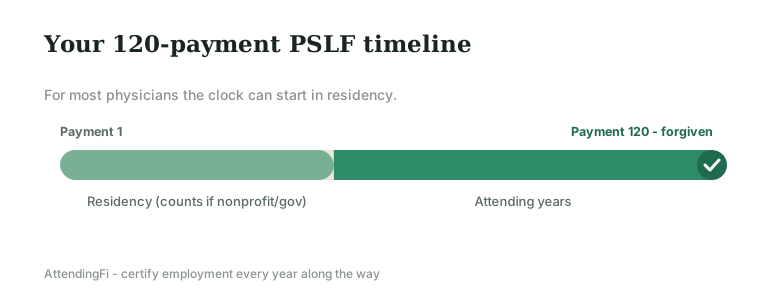
In fact, Match Day and the start of residency are exactly when your federal student loan strategy should be deliberately set up, enrolling in an income-driven plan, certifying employment if pursuing PSLF, and beginning to bank qualifying months at your low resident income. Our PSLF for residents guide and resident strategy guide cover those far more important moves.
So treat the relocation loan for what it is, a small, short-term financing decision, and give the bulk of your attention to the federal loan setup that will shape six figures of value. Handle the one-time move efficiently and cheaply, then focus your real energy on the strategy that matters most. Run your federal numbers in the engine below to start that far more consequential planning for the decade of repayment ahead.
Key takeaways on relocation loans
A residency relocation loan bridges the Match-to-paycheck gap, but it is a small, short-term decision next to your federal loan strategy.
- Relocation loans cover one-time moving and setup costs before your first residency paycheck.
- They are private loans with none of the federal student loan protections.
- Compare their cost against savings, program assistance, and family help first.
- Borrow only what you genuinely need, and repay it promptly.
- Avoid them when a cheaper alternative exists or the terms are poor.
- Give your real attention to setting up your federal loan strategy in residency.
- Residency loans
Bridge the gap efficiently, then focus on what matters. Run your federal numbers in the engine below to set up the repayment strategy that will define your finances for the next decade of training and practice.
Match Day and the weeks after
The period right after Match Day is a financial transition that deserves a brief plan. Beyond the relocation costs themselves, you are moving from student status, often with loans in a grace period, into repayment, while starting a demanding new job. Mapping out your one-time expenses, your expected first-paycheck date, and how you will cover the gap turns a stressful stretch into a managed one.
This is also the window to handle the more important federal loan setup, since decisions made now, which repayment plan to enter, whether to certify employment for PSLF, affect years of repayment. Bundling the relocation planning with the federal loan setup, doing both in the weeks around Match, ensures the small decision does not crowd out the large one.
A new physician who approaches this period deliberately, budgeting the move, choosing the cheapest adequate way to bridge the gap, and setting up their federal loans correctly, starts residency on solid financial footing. One who improvises, reaching for the first relocation loan offer and postponing the federal setup, can start out with unnecessary private debt and missed qualifying months.
Budgeting your move
Practical budgeting can shrink the gap a relocation loan would otherwise fill. List your genuine one-time costs, moving, deposits, fees, and immediate living expenses, and separate the essential from the optional. A leaner move, temporary shared housing, or spreading purchases over your first few paychecks can reduce how much you need to bridge before income arrives.
Whatever shortfall remains can then be bridged with the cheapest adequate option, whether that is savings, program assistance, family help, or a small relocation loan. The discipline of budgeting first means any borrowing is minimized and intentional, which is exactly the financial habit that will serve you well across the much larger student loan repayment ahead.
A smart relocation-financing checklist
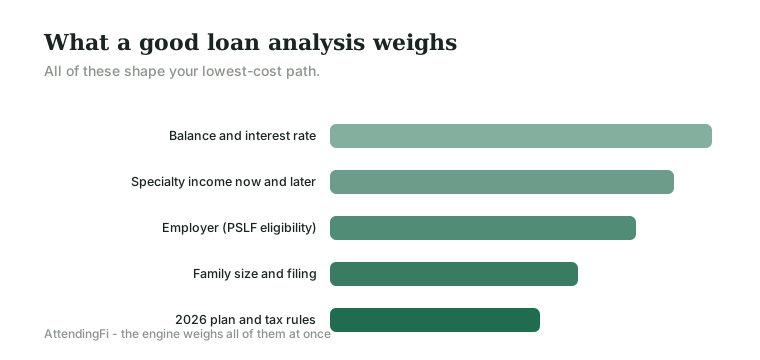
If you decide you need help bridging the gap, run a short checklist before borrowing. First, total your genuine one-time relocation costs and separate essential from optional. Second, ask your residency program directly whether it offers relocation assistance, a stipend, or any signing support, since many do and it costs you nothing to ask. Third, check your savings and any interest-free family help.
Only after exhausting cheaper options should you consider a relocation loan, and then only for the remaining genuine shortfall. Compare offers on rate, fees, and repayment term, and borrow the smallest amount that covers your real need. Make a plan to repay it promptly, ideally within your first year of residency income, so it does not linger and accrue avoidable interest.
This disciplined approach keeps a relocation loan in its proper place: a small, deliberate bridge rather than an open-ended convenience. A new physician who borrows minimally and intentionally for the move, while directing real attention to their federal loan setup, starts residency on far better footing than one who reaches for easy financing and postpones the decisions that actually matter.
Get your personalized plan
Don't guess — model your exact numbers. AttendingFi runs the real federal-rules math on your numbers and shows its work. Free, no login needed to see your answer.
Run my numbers →Frequently asked questions
How does a resident relocation loan work?
A resident relocation loan is a private personal loan that advances a lump sum to cover moving and start-up costs before your first residency paycheck, repaid with interest over a set term. It is not a federal student loan and carries no federal protections or forgiveness.
Are relocation loans worth it for medical residents?
Only after cheaper options. Relocation loans carry private interest rates, so use savings, a 0% credit-card window you can pay off, or a small, quickly repaid amount first. If you borrow, keep the balance modest and the payoff fast.
Is there a dental residency relocation loan?
Yes. The same private relocation loans marketed to medical residents are available to dental residents and other health-professional trainees. The terms and cautions are identical: private interest, no federal benefits, best kept small.
What is a residency relocation loan?
A short-term private loan for graduating medical students and new residents to cover moving, deposits, and setup costs in the gap between Match Day and the first residency paycheck. It carries no federal protections.
Are residency relocation loans a good idea?
They can be, for genuine, unavoidable relocation costs with no cheaper alternative. But compare them against savings, program assistance, and family help first, and borrow only what you truly need.
Do residency relocation loans have federal protections?
No. They are private loans, so they lack income-driven repayment, forgiveness eligibility, and federal disability discharge. They are separate from your federal student loan strategy.
What are cheaper alternatives to a relocation loan?
Savings, residency program relocation assistance or stipends, family help, or a carefully managed low-interest option. Minimizing the move's costs themselves is often cheaper than financing them.
Should I focus on a relocation loan or my federal loans?
Your federal loans, by far. The relocation loan is a small, short-term decision, while setting up your federal repayment strategy in residency shapes six figures of value over the next decade.