7 student-loan mistakes doctors make in residency
The short version
- The worst mistake is forbearance, it wastes the years your payments would be smallest.
- Most PSLF denials come down to missing paperwork, not ineligibility.
- Residency is the time to make tiny income-driven payments that count toward forgiveness.
- Get the foundation right now and you're ahead of most of your colleagues.
The most expensive student loan mistakes residents make are not dramatic; they are quiet defaults and tempting shortcuts that quietly forfeit tens of thousands of dollars in forgiveness. Residency is precisely when your loan decisions carry the most leverage, because your low training income makes income-driven payments cheap and your qualifying months valuable. This guide walks through the nine errors that cost residents the most, why each one is so damaging, and the simple fix for each, so you can protect the progress that residency uniquely lets you build.
Why residency is the highest-leverage time
Residency is the rare period when low income is actually a financial advantage for your loans. Income-driven repayment plans base your payment on your earnings, so a resident salary produces a low monthly payment, and on a forgiveness path that low payment still counts as a full qualifying payment toward your 120. This means residents can bank many of the cheapest qualifying payments they will ever make, which is why the years of training are where the most forgiveness value is created or destroyed.
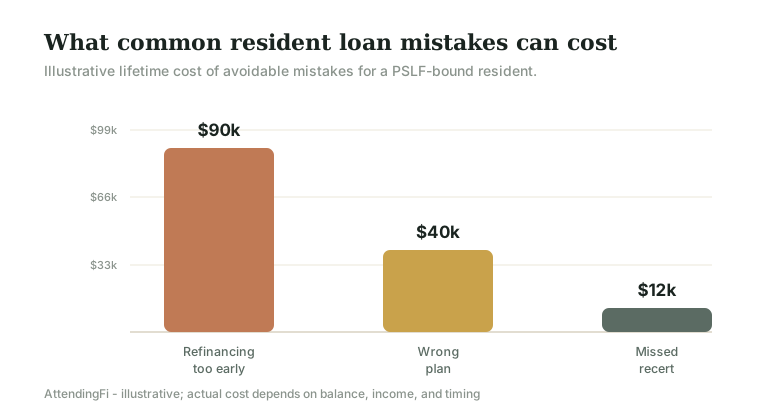
That leverage cuts both ways. Because residency payments are so valuable on a forgiveness path, mistakes made during training are unusually expensive, often forfeiting progress that cannot be recovered. A wrong decision as an attending costs you money; a wrong decision as a resident can cost you years of qualifying payments at the lowest rate you will ever have. The stakes are highest precisely when residents are busiest and least likely to be thinking about loan strategy.
The encouraging part is that nearly every costly resident mistake is both common and easily avoidable. None of the fixes requires financial expertise or much time; they require knowing what to do and doing it deliberately rather than drifting into defaults. The nine mistakes below are the ones that most consistently cost residents real money, and each is paired with a straightforward fix that protects the forgiveness progress residency is uniquely positioned to build.
Mistake 1: refinancing too early
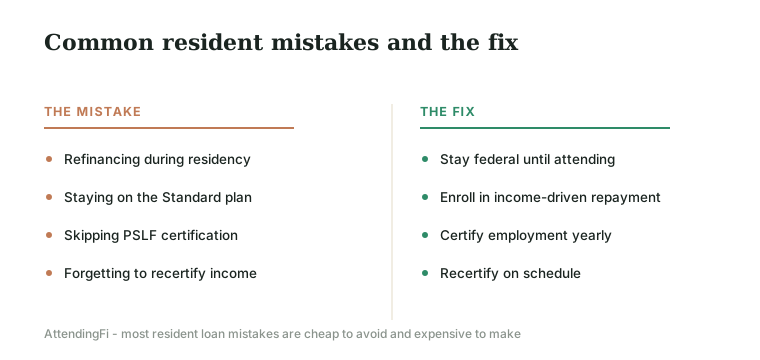
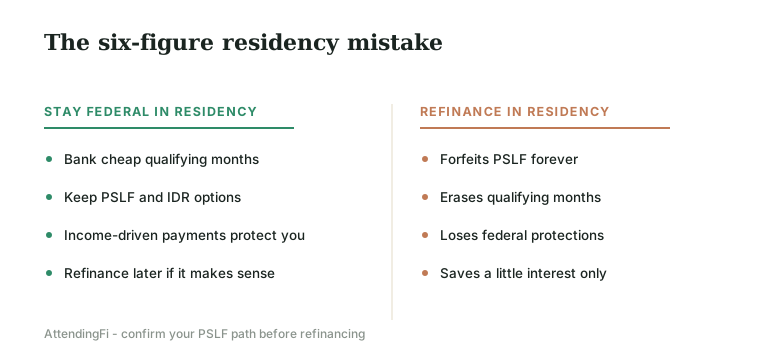
The most expensive mistake a resident can make is refinancing federal loans during training. Lenders market low resident rates aggressively, and watching interest accrue on a large balance makes the offer tempting. But refinancing moves your debt to a private lender and permanently destroys your eligibility for income-driven plans, PSLF, and federal forbearance, throwing away both the cheap qualifying payments residency provides and the entire forgiveness option in exchange for a rate cut that rarely justifies the loss.
What makes this mistake so damaging is its irreversibility. You cannot move refinanced debt back into the federal system, so a resident who refinances and later takes a qualifying nonprofit or government job has permanently forfeited forgiveness they would otherwise have earned. The right comparison is never your federal rate versus the private rate, but your total cost with forgiveness versus your cost after refinancing, and for a PSLF-bound resident forgiveness usually wins by a wide margin.
The fix is simple: stay federal through residency. Even if you are uncertain about pursuing PSLF, keeping your loans federal preserves the option at almost no cost, and you can always refinance later, at the attending transition, if it still makes sense. The natural moment to consider refinancing is when your income jumps and your path is clear, not during the most uncertain years of your career when an irreversible decision carries the most risk.
Mistake 2: letting loans default to the Standard plan
A quieter but common mistake is simply doing nothing and letting your loans sit on the Standard repayment plan. The Standard plan sets fixed payments based on your balance, not your income, which for a resident on a forgiveness path means paying far more each month than an income-driven plan would require while reaching the same forgiveness. Every extra dollar paid above the income-driven amount is wasted money for a PSLF-bound borrower, and on a resident salary those payments can also be genuinely unaffordable.
This mistake usually happens by inertia rather than choice. If a resident never actively enrolls in an income-driven plan, their loans may default to Standard, and the higher payments quietly drain cash that residency budgets can ill afford. Worse, some residents respond to the unaffordable Standard payment by entering forbearance, compounding the problem by pausing forgiveness progress entirely instead of switching to the plan that would have solved it.
The fix is to deliberately enroll in the income-driven plan that fits your loans and goals, rather than accepting whatever default applies. For a resident pursuing forgiveness, the income-driven payment is both affordable and fully qualifying, which is exactly what you want. Choosing your plan actively, early in residency, is one of the highest-return five-minute decisions in your financial life, and it prevents one of the most common silent drains on a resident's budget and forgiveness.
Mistake 3: skipping PSLF employer certification
Many residents pursuing forgiveness never submit the employment certification form, assuming they can sort out the paperwork later when they near 120 payments. This is a mistake, because certification is what officially confirms your employer qualifies and gets your qualifying months counted. Skipping it means banking years of payments on the unverified assumption that everything qualifies, only to discover a problem at the end when it is far harder, or impossible, to fix.
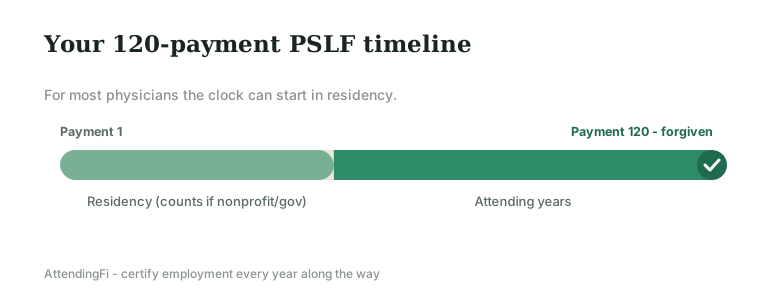
Certifying early and annually catches issues while they are trivial to address. If your residency employer somehow does not qualify, you want to know in year one so you can adjust, not after years of assumed credit. Annual certification also builds the documented paper trail that protects you against servicer changes and lost records, which have cost many borrowers months or years of credit they had genuinely earned but could not prove.
The fix is to treat employment certification as a routine annual task, submitted at the start of residency and renewed each year. It takes little time and turns your residency payments into documented, verified forgiveness progress rather than an assumption you are hoping holds up. Of all the items on this list, certification is the one that most directly protects the value residency creates, and skipping it is a gamble with no upside.
Mistake 4: missing income recertification
Income-driven plans require you to recertify your income periodically, and missing that deadline is one of the most common and damaging administrative mistakes residents make. When you miss recertification, your payment can jump to a much higher amount, you can be removed from your income-driven plan, and your forgiveness progress can be interrupted. A single missed deadline can undo months of careful setup and spike a payment far beyond what a resident budgeted for.
This mistake is so common because residency is busy and the recertification date is easy to forget, especially when it falls during a demanding rotation. Servicers send notices, but those notices are easy to miss amid the volume of mail and email a resident receives, particularly after a move. The deadline does not forgive a busy schedule, and the consequences of missing it land regardless of how good the reason was.
The fix is to calendar your recertification date the moment you enroll and treat it as a non-negotiable annual task, like renewing a medical license. Setting a reminder well ahead of the deadline gives you time to submit even during a hard rotation. A saved profile that tracks your recertification date and reminds you is enough to prevent one of the most avoidable interruptions to a resident's forgiveness progress.
Mistake 5: using forbearance unnecessarily
When residency payments feel tight, forbearance, which pauses payments entirely, can look like relief. But for a resident pursuing forgiveness, unnecessary forbearance is usually a mistake, because paused months generally do not count toward PSLF, so the time spent in forbearance is forgiveness progress lost. A resident who pauses payments to ease cash flow may not realize they are trading away qualifying months that an income-driven plan would have provided at a low, affordable payment anyway.
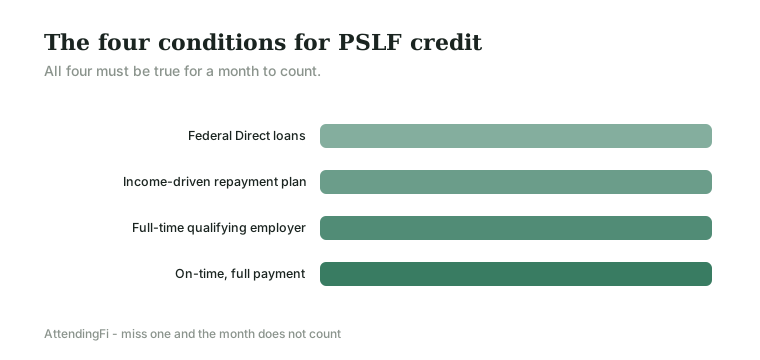
The trap is that forbearance solves the wrong problem. If the issue is an unaffordable payment, the right answer is almost always switching to or correctly enrolling in an income-driven plan, which lowers the payment while keeping it qualifying, not pausing payments and losing the months. Forbearance has legitimate uses for genuine short-term emergencies, but as a routine response to a tight budget it quietly costs a PSLF-bound resident dearly.
The fix is to reach for income-driven repayment, not forbearance, when payments feel high. An income-driven plan keeps your payment affordable on a resident salary while every payment still counts toward forgiveness, which is exactly the outcome you want. Reserve forbearance for true emergencies, and even then understand that paused months will not advance your forgiveness, so it should be a last resort rather than a first response.
Mistakes 6 and 7: tax filing and consolidation errors
Two more technical mistakes can cost married residents and those with mixed loan types. The first is ignoring tax filing status: for a married resident on an income-driven plan, how you file can change whether your spouse's income counts toward your payment, which affects both your payment and your forgiveness. Defaulting to a filing status without considering its loan impact can mean a needlessly high payment, while the right choice can lower it, though it must be weighed against the tax cost.
The second is mishandling consolidation. Some residents have older federal loans that are not Direct loans and therefore not PSLF-eligible until consolidated, and failing to consolidate them means those payments do not count. Conversely, consolidating at the wrong time or in the wrong way can reset progress or combine loans that should be kept separate. Consolidation is a useful tool, but it has to be done deliberately and with an understanding of its timing effects, not as an afterthought.
The fix for both is to make these decisions deliberately rather than by default. We cover the filing decision in our married filing separately guide and the consolidation timing question in our consolidation guide. For a married resident or one with mixed loan types, an hour spent getting these right early can protect a meaningful amount of forgiveness over the years of training and beyond.
Mistakes 8 and 9: ignoring loans and not planning ahead
The eighth mistake is simply ignoring your loans during residency, hoping to deal with them once training ends. This is understandable given how demanding residency is, but it is costly, because the residency years are when forgiveness progress is cheapest to build, and ignoring your loans means missing that window. Interest accrues, qualifying months go uncounted, and deadlines slip, all while the borrower assumes they will sort it out later, when later is precisely when the cheap years have already passed.
The ninth mistake is failing to plan for the attending transition. The jump from resident to attending income is one of the largest a physician will ever experience, and it changes your loan strategy: your income-driven payment will rise at recertification, refinancing may suddenly make sense for non-PSLF borrowers, and your forgiveness math may shift. A resident who has not thought ahead can be caught off guard, making rushed decisions at the transition instead of planned ones.
The fix for both is light but real engagement throughout residency. You do not need to obsess over your loans, but a brief annual check, confirming your plan, certification, recertification, and count, keeps you on track and ready for the attending transition. We cover that next step in our attending loan checklist. A small, steady amount of attention during training prevents the expensive scramble that ignoring your loans guarantees.
Key takeaways on resident student loan mistakes
Residency is when forgiveness progress is cheapest to build, so the mistakes residents make there are unusually costly. Nearly all are common, avoidable, and fixed by acting deliberately.
- Do not refinance federal loans during residency; the loss is permanent.
- Enroll in an income-driven plan instead of defaulting to Standard.
- Certify your PSLF employer early and annually to verify your months.
- Calendar income recertification so a missed deadline never spikes your payment.
- Use income-driven repayment, not forbearance, when payments feel tight.
- Decide tax filing and consolidation deliberately, and plan for the attending jump.
Give your loans a little deliberate attention during training. A brief annual check of your plan, certification, and count protects the forgiveness residency is built to create.
Get your personalized plan
Don't guess — model your exact numbers. AttendingFi runs the real federal-rules math on your numbers and shows its work. Free, no login needed to see your answer.
Run my numbers →Frequently asked questions
What is the biggest student loan mistake residents make?
Refinancing federal loans during residency. It permanently destroys PSLF eligibility and the cheap qualifying payments residency provides, in exchange for a rate cut that rarely justifies the loss. Stay federal through training to preserve the option.
Should residents use forbearance when money is tight?
Usually no. Forbearance pauses payments but the paused months generally do not count toward PSLF, so you lose forgiveness progress. The better fix is an income-driven plan, which keeps the payment affordable while every payment still counts.
Why do residents need to certify employment for PSLF early?
Early, annual certification confirms your employer qualifies and gets your qualifying months officially counted, catching any problem while it is easy to fix and building a paper trail that protects you against servicer changes and lost records.
What happens if a resident misses income recertification?
Your payment can jump to a much higher amount, you can be removed from your income-driven plan, and your forgiveness progress can be interrupted. Calendar the date when you enroll and treat recertification as a non-negotiable annual task.
Do residents need to plan for the attending transition?
Yes. The income jump raises your income-driven payment at recertification and can change whether refinancing makes sense. Planning ahead lets you make deliberate decisions at the transition instead of rushed ones, protecting your strategy.
Related guides
Educational only, not financial advice. Figures are illustrative and program rules change; confirm current details at studentaid.gov.