The new attending's student-loan checklist
Becoming a new attending is the highest-stakes moment in your student loan life after the initial setup in residency. Your income jumps, your payment changes, and the decisions you make in the first year, which plan to be on, whether to keep pursuing PSLF or refinance, how to handle a future tax bill, lock in a path worth six figures. This checklist walks through every move a new attending should make, in order, so the income jump works for you rather than against you.
Why your first attending year matters most
The transition to attending income is where loan strategies are won or lost. During residency your low income kept your payment small and, if you pursued PSLF, let you bank cheap qualifying months. As an attending, your income often doubles or triples, and with it your income-driven payment, unless you are on a plan that caps the increase. The choices you make as that jump happens set your cost for years.
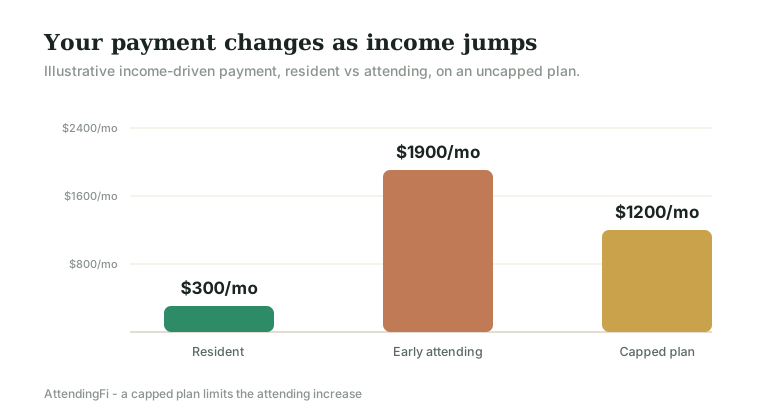
This is also the moment many physicians, exhausted from training and flush with new income, stop paying attention to their loans. That is precisely the wrong instinct. The decisions available in year one, locking the right plan before the income recalculation, deciding PSLF versus refinancing with certainty, are time-sensitive and valuable. A year of inattention here can cost more than the entire setup would have taken.
The good news is that the new-attending checklist is short and finite. A focused afternoon early in your first attending year, plus a yearly habit thereafter, captures the value. The rest of this guide walks through each move so you can work down the list and put your loans on autopilot for the long haul.
Reconfirm: PSLF or refinance?
The first decision is the big fork, now that your attending path is real. If you are at a qualifying nonprofit or government employer and have been banking PSLF months, you almost certainly continue on PSLF, which forgives your balance tax-free after 120 qualifying payments. If you are in private practice with no qualifying employer, the real choice becomes an income-driven plan versus refinancing.
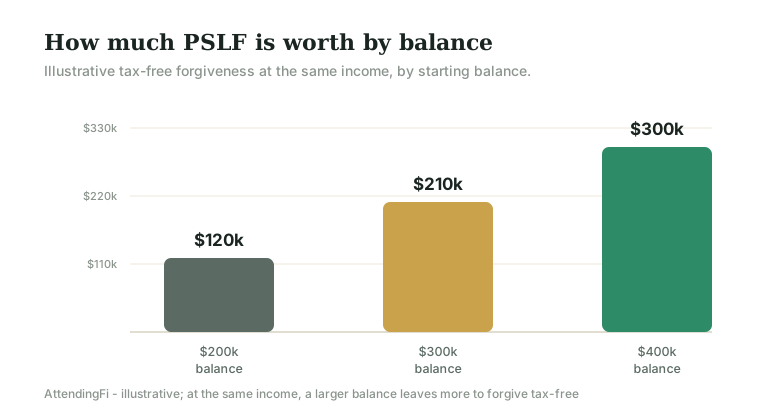
What is different now is certainty. As a resident, your future employer was a projection; as a new attending, it is a fact. That certainty lets you commit to the path the math favors rather than hedging. If you banked years of qualifying payments in training and are at a qualifying employer, abandoning PSLF now to chase a refinance rate is usually a costly mistake, since you would forfeit the forgiveness those cheap months were building toward.
The honest test is the same one we apply throughout: estimate your tax-free forgiveness on a PSLF path, compare it against the interest a refinance would save, and weigh lifetime cost. Our PSLF vs refinancing guide walks through that fork, and the engine runs it on your exact numbers so your year-one decision rests on arithmetic, not instinct.
Lock in the right base plan before the income recalculation
If you are staying federal, the plan you choose now sets your payment as your income climbs. For a high-earning attending with a large balance pursuing PSLF, the capped legacy IBR plan often produces a lower payment than an uncapped alternative, and on a forgiveness path a lower payment means more is ultimately forgiven. Choosing the right base plan is one of the most valuable moves on this list.
The 2026 menu pairs a new Repayment Assistance Plan with a revised IBR, and which is cheaper depends on your income, balance, and eligibility. We compare them in RAP vs IBR. The key is to make this choice deliberately rather than defaulting into whatever plan your servicer suggests, because the difference can be thousands of dollars a year.
Timing matters too. Your income-driven payment is recalculated when you recertify, so locking the right plan and certifying at the right moment, ideally before your full attending income is on record, can keep a lower payment in place longer. This is a subtle lever, but for a new attending it can preserve meaningful forgiveness in the critical first year.
Time your income recertification
Income-driven plans recalculate your payment when you recertify your income, typically once a year. For a new attending, the timing of that first recertification can matter, because it is the moment your payment jumps from a resident-based figure to an attending-based one. Understanding when your recertification falls lets you avoid recertifying earlier than required and keep a lower payment in place.
This is not about gaming the system; it is about not volunteering a higher payment sooner than necessary. If your servicer will base your payment on your most recent income documentation, recertifying the moment your attending income arrives may raise your payment immediately, whereas waiting until your scheduled recertification preserves the lower payment a bit longer, banking additional cheap forgiveness if you are on PSLF.
The mechanics vary by plan and circumstance, so confirm your recertification date and how income is assessed with your servicer. The engine models recertification timing, showing how the choice interacts with your plan across the residency-to-attending transition, so you can capture whatever advantage the timing legitimately offers.
If you are refinancing
If you have confirmed PSLF is off the table and decided to refinance, year one is when it finally makes sense, your attending income strengthens your application and qualifies you for better rates. Compare any offer against your weighted-average federal rate, not your highest single loan, since refinancing replaces all of them at once. A rate a point or more below your federal average can save real money.
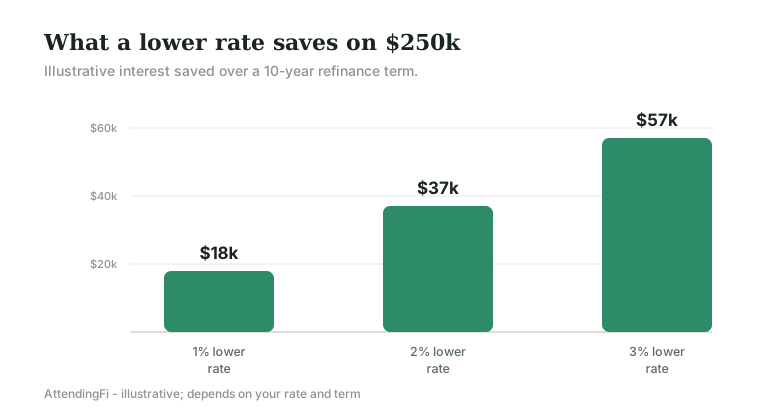
Choose a fixed rate and the shortest term whose payment you can comfortably sustain, since a shorter term carries a lower rate and far less total interest. Consider refinancing only part of your balance if you want to keep some federal flexibility. And remember that refinancing is permanent: it forfeits PSLF and federal protections, so it should follow, not precede, a confirmed decision not to pursue forgiveness.
Our refinancing guide walks through the full decision, and the refinance savings calculator estimates your interest saved. For a new attending who is genuinely not pursuing forgiveness, a well-timed refinance is one of the cleaner wins available, turning a higher income into faster, cheaper payoff.
Plan for the tax bomb if it applies
If you are on a non-PSLF income-driven forgiveness path, year one is the time to start planning for the eventual tax on that forgiveness. As the federal exclusion lapses, income-driven forgiveness after a 20- or 25-year term can be taxable, and on a physician-sized balance that bill can reach tens of thousands of dollars in a single year. PSLF borrowers are unaffected, since PSLF forgiveness is tax-free.
The fix is a sinking fund: estimate the eventual tax and set aside a small amount monthly so the money is there when forgiveness arrives. Starting as a new attending, decades before forgiveness, makes the required monthly contribution small and gives it time to grow. Our tax-bomb guide covers how to size it, including any state-tax component.
Even if forgiveness is far off, building the habit now is the point. A new attending who treats the future tax as a known, funded liability never faces the year-twenty surprise that ambushes borrowers who ignored it. It is a small, boring step that turns a scary future bill into a non-event.
Automate and protect your plan
Once your plan is set, automate it. Put your payment on autopay, which some servicers reward with a small rate reduction, and set a recurring annual reminder to recertify income and, if pursuing PSLF, certify employment. Automation removes the risk that a missed step quietly derails a multi-year strategy during your busiest years as a new attending.
Protect the plan by revisiting it briefly each year and at any major change, a new job, a marriage, a child, a move. These events can alter which plan is cheapest or shift the PSLF-versus-refinancing calculus, and catching that early preserves the advantage. A loan plan is not a one-time decision but a strategy you steward, lightly, over a decade.
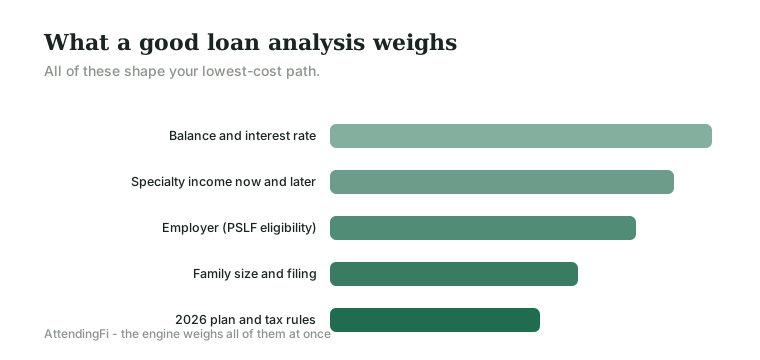
The single best way to lock in your year-one plan is to model your numbers under the current rules. The engine compares PSLF, income-driven plans, and refinancing on a lifetime-cost basis, accounting for your income jump, so you leave your first attending year with a concrete, optimized plan rather than a vague intention to deal with the loans later.
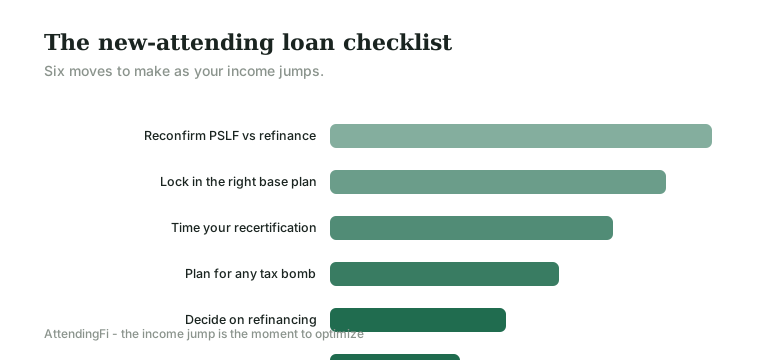
The new-attending checklist
Your first attending year is the moment to convert a higher income into a locked-in, optimized loan strategy. The moves are finite and time-sensitive.
- Reconfirm PSLF versus refinancing now that your employer is certain.
- Lock in the cheapest qualifying base plan before your income recalculation.
- Time your income recertification to preserve a lower payment.
- If refinancing, do it now, fixed rate, shortest sustainable term.
- Start a sinking fund if a non-PSLF tax bomb is in your future.
- Automate payments and certifications, and revisit the plan yearly.
Handle the list once, early, and your loans run on autopilot for the long haul. Run your numbers in the engine below to build your optimized year-one plan.
New-attending mistakes to avoid
A few errors recur among new attendings. The most expensive is refinancing federal loans before confirming PSLF is truly off the table, permanently forfeiting forgiveness for a rate cut that rarely compares. Another is ignoring the loans entirely during a busy, high-earning first year, letting the income recalculation happen on autopilot and missing the chance to lock a cheaper plan.
Others include choosing a refinance term purely for the lowest monthly payment, and quietly paying far more interest, and forgetting to certify employment for PSLF amid the chaos of a new job. None of these require expertise to avoid; they require a short, deliberate review early in year one. The attendings who handle loans well are simply the ones who do not let the first year slip by unmanaged.
The unifying theme is that year one rewards attention and punishes drift. A new attending who spends one focused session on the checklist above captures advantages that compound for a decade, while one who postpones it forfeits irreplaceable timing. The stakes are high enough that the modest effort pays for itself many times over.
Fitting loans into a new attending budget
The income jump brings competing demands: a higher loan payment, perhaps a home, catching up on retirement savings after years of training, and lifestyle pressures that arrive with a bigger paycheck. Your loan strategy should fit into that broader picture rather than dominate it. On a forgiveness path, your required payment is capped and predictable, which actually frees cash flow for other goals.
For a borrower paying the loan off rather than seeking forgiveness, the question becomes how aggressively to accelerate payoff versus invest. There is no single right answer; it depends on your rate, your other goals, and your risk tolerance. The point is to make loans one deliberate line in a coherent financial plan, not an afterthought that consumes whatever is left over.
Confirm everything early
Before you finalize your year-one plan, verify the inputs. Confirm your loan types are federal Direct, your employer qualifies if pursuing PSLF, your qualifying-payment count is accurate, and the plans you are eligible for under the 2026 rules. A plan built on wrong assumptions can fail quietly, so a few minutes of verification at the start protects the whole strategy.
This is also the moment to consolidate any lingering non-Direct loans if they need to qualify for PSLF, and to address any gaps in your payment count from training. Catching these as a new attending, while you have time to fix them, is far easier than discovering them near the finish line. Start clean and the rest of your attending years run smoothly.
One final encouragement: the work you do in this first attending year is genuinely worth it. The same income that makes your loans feel urgent is what makes optimizing them so valuable, and a single deliberate session now sets a strategy that quietly pays off for the next decade. Treat the checklist as an investment of a single focused afternoon that can return six figures of value over time, and run your numbers in the engine below to build the plan that fits your exact balance, income, employer, and goals in detail.
Get your personalized plan
Don't guess — model your exact numbers. AttendingFi runs the real federal-rules math on your numbers and shows its work. Free, no login needed to see your answer.
Run my numbers →Frequently asked questions
What should a new attending do with student loans first?
Reconfirm whether you are pursuing PSLF or refinancing now that your employer is certain, then lock in the cheapest qualifying base plan before your income-driven payment recalculates to attending levels.
Should a new attending refinance student loans?
Only after confirming PSLF is off the table. For a new attending in private practice with no qualifying employer, refinancing finally makes sense and your attending income qualifies you for better rates.
How does the income jump affect my loan payment?
On most income-driven plans your payment rises with income, sometimes sharply. A capped plan like legacy IBR limits the increase, which is why choosing the right base plan before the jump matters for new attendings.
Do I need to plan for a tax bomb as a new attending?
Only if you are on a non-PSLF income-driven forgiveness path. PSLF forgiveness is tax-free. For non-PSLF borrowers, start a small sinking fund now for the eventual tax on forgiveness.
When should I recertify income as a new attending?
Confirm your scheduled recertification date with your servicer. Recertifying earlier than required can raise your payment sooner, so understanding the timing helps you preserve a lower payment, especially on PSLF.
If you plan to attack the balance, our student loan payoff calculator shows the timeline.