PSLF when you're married: how joint payments split, whether SAVE forbearance counts, and how buyback works
1. If we file jointly and both have loans, how is the payment split?
For married physicians pursuing PSLF, three threads tangle together: how you file your taxes, how a spouse's situation affects your strategy, and whether buyback can recover months lost to the SAVE forbearance. Married filing jointly raises your income-driven payment by counting both incomes, but it can save on taxes; a spouse's own loans or income shape the household plan; and buyback may rescue qualifying months that a payment pause stalled. This guide untangles all three for married physician couples.
The married PSLF picture
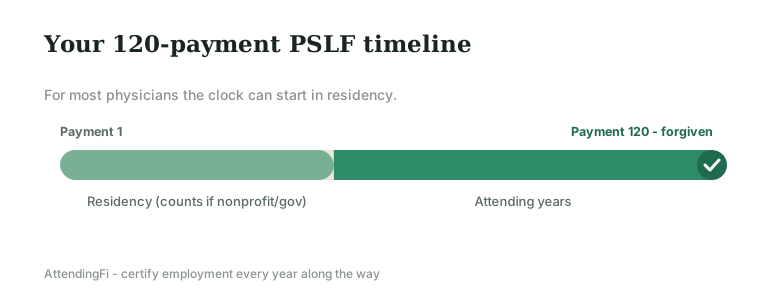
Pursuing PSLF as a married physician is more complex than doing it single, because your spouse's income, your spouse's own loans, and your tax filing all influence the strategy. The core PSLF goal is unchanged, 120 qualifying payments at a qualifying employer for tax-free forgiveness, but the path to it runs through household decisions a single borrower never faces.
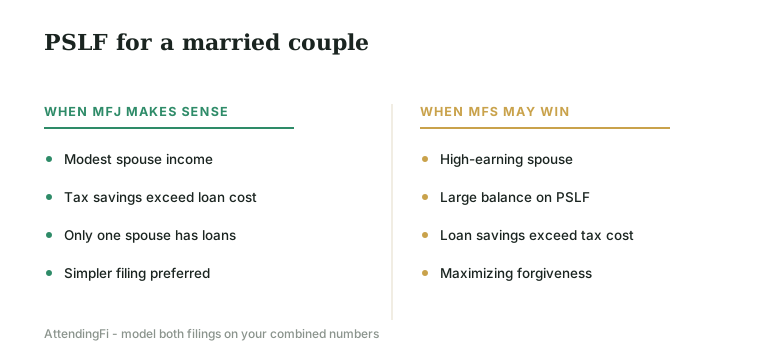
Three questions organize the married PSLF decision. How should you file taxes, jointly or separately, given the effect on your payment and your taxes? How does your spouse's own situation, their income and any loans they carry, fit in? And if the SAVE forbearance or another interruption cost you qualifying months, can buyback recover them? This guide addresses each.
The unifying theme is that married PSLF is a household optimization, not an individual one. The cheapest path for one spouse may not be cheapest for the couple, and the right answer balances loan savings, tax costs, and both partners' situations together. Getting it right is worth real money on the large balances physicians carry.
Married filing jointly and your payment
When you file taxes jointly, income-driven plans generally count both spouses' incomes, which raises the payment for a borrower pursuing PSLF. For a physician married to a high earner, filing jointly can substantially increase the monthly payment compared with filing separately, and on a PSLF path a higher payment means less is ultimately forgiven.
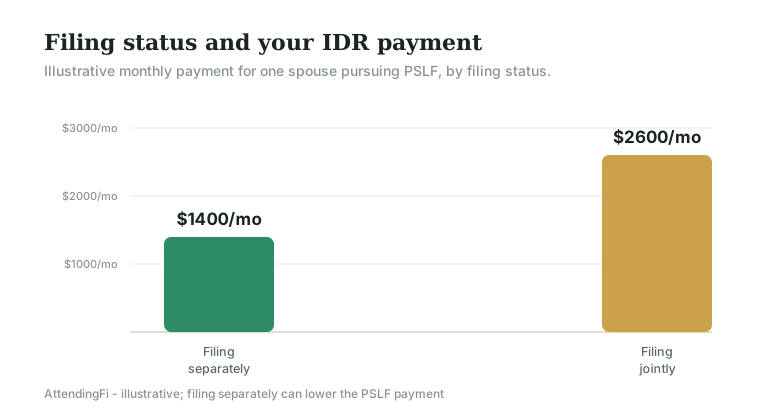
This is the central tension of married PSLF. Filing jointly often saves on taxes but raises your loan payment and shrinks your forgiveness; filing separately does the reverse. Neither is automatically right, the better choice depends on whether the tax savings of joint filing exceed the extra loan cost it imposes, which varies by household.
For couples where one spouse earns little, filing jointly may raise the payment only modestly while preserving valuable tax benefits, making it the clear winner. For couples with two high incomes, joint filing can inflate the payment so much that filing separately, despite its tax cost, comes out ahead. The decision is a net-dollars calculation on your specific numbers.
MFJ versus married filing separately
The joint-versus-separate decision is the same tradeoff viewed from the married couple's side, and it deserves a deliberate comparison. Married filing jointly preserves tax benefits but counts both incomes for your loan payment; married filing separately excludes spousal income, lowering the payment and increasing forgiveness, at the cost of some tax benefits.
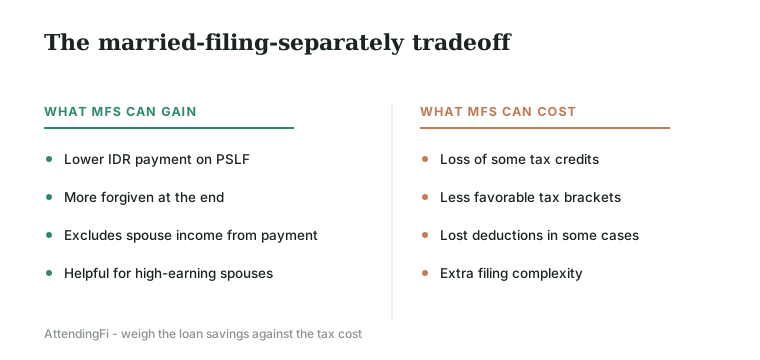
To decide, estimate your household tax under each filing status and your loan payments and forgiveness under each, then compare net dollars. If filing separately saves more on loans than it costs in taxes, choose it; otherwise file jointly. We cover the separate-filing side in depth in married filing separately for student loans.
The right answer is genuinely couple-specific and can change year to year as incomes shift. A married physician should treat the filing decision as an annual optimization tied to their PSLF strategy, not a set-and-forget choice, since the balance between tax cost and loan savings moves over time.
When your spouse also has student loans
If both you and your spouse carry student loans, the household decision becomes richer. You might both pursue PSLF if both work for qualifying employers, or one might pursue PSLF while the other refinances or pays off. The filing decision affects both partners' payments at once, since the household files one way, so the choice has to weigh both sets of loans together.
A common, sometimes optimal arrangement is for one spouse to pursue PSLF while the other, in private practice, refinances. But because the filing decision links them, the couple must model the combined effect: the filing status that minimizes one spouse's PSLF payment may raise costs elsewhere. The optimization is at the household level, across both partners' strategies.
For dual-physician couples in particular, where both carry large balances and both may pursue PSLF, getting this right is worth a great deal. The combined forgiveness across two large balances can be enormous, and the filing and strategy decisions that maximize it are exactly the kind that reward careful modeling over intuition.
The SAVE forbearance complication
Layered on top of the filing decision is the disruption from the SAVE plan forbearance, which paused payments for many borrowers. For a married physician pursuing PSLF, months spent in that forbearance generally did not advance the 120-payment clock, so a couple may find one or both partners' qualifying counts stalled during the pause, lengthening their path to forgiveness.
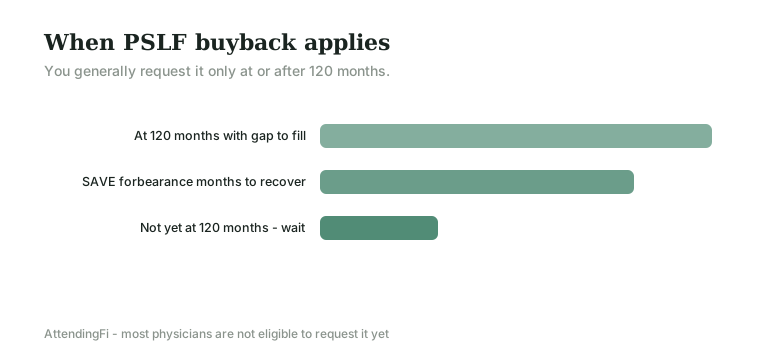
This makes confirming both spouses' qualifying-payment counts important. A couple should not assume their months kept counting through the SAVE disruption; they should check each partner's count and understand how the pause affected their respective timelines. We cover the forbearance in detail in the SAVE forbearance guide.
Where the forbearance stalled genuine qualifying months, the good news is that buyback may let a borrower recover them, which is where the third thread of this guide comes in. For a married couple, that can mean recovering lost months for one or both partners, restoring their progress toward forgiveness.
Spouse buyback and recovering months
PSLF buyback lets a borrower make certain past months count, typically months in a forbearance or deferment while working full-time at a qualifying employer, by paying what they would have paid then. For a married physician whose qualifying months were stalled by the SAVE forbearance, buyback can recover that lost progress, generally once they are at or near 120 payments.
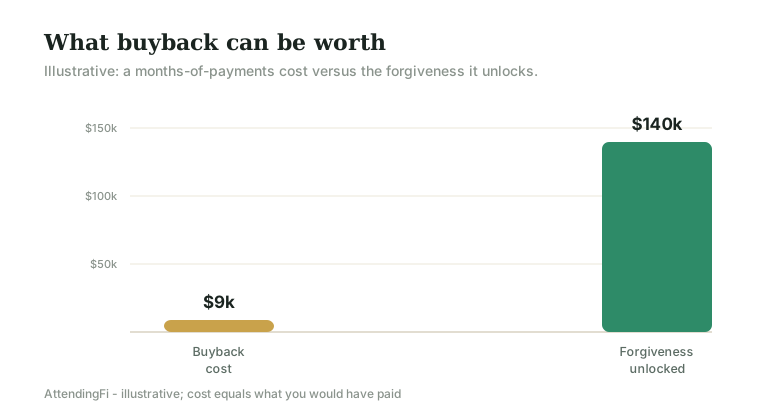
In a married household, this may apply to one or both spouses, depending on whose months were affected and where each stands in their PSLF journey. A couple should identify which qualifying months each partner lost and whether buyback can recover them, planning around the fact that buyback is generally requested near the finish line rather than mid-career. We cover the mechanics in the buyback guide.
The value can be substantial: a modest buyback payment can unlock a large tax-free forgiveness for each affected spouse. The key is to confirm the specific months qualify, since buyback fills genuine gaps but cannot create credit for months that never qualified. For a couple, getting both partners' counts accurate and recoverable is part of the household PSLF plan.
Putting the married PSLF plan together
Bring the threads together with a household view. Decide your filing status by comparing the tax cost of separate filing against the loan savings it produces across both partners. Coordinate both spouses' strategies, PSLF, refinancing, or payoff, recognizing that the filing decision links them. And confirm both partners' qualifying counts, addressing any SAVE-forbearance gaps through buyback as you near forgiveness.
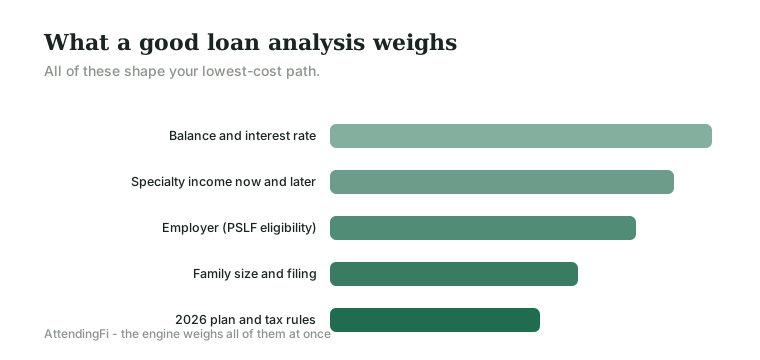
Done well, this household optimization can be worth a great deal on two large balances. Done carelessly, by filing without comparing, ignoring how the choice affects both partners, or failing to recover forbearance-stalled months, a couple can leave significant forgiveness on the table. The married PSLF plan rewards treating the household as a single financial system.
The engine handles the loan side, modeling how filing status and plan choices affect each spouse's payment and forgiveness. Pair that with a tax estimate for the filing decision, and you have the complete married PSLF picture. Run your numbers below to start optimizing your household's path to forgiveness.
Dual-physician couples and PSLF
When both spouses are physicians pursuing PSLF, the household decision reaches its most complex and most valuable form. Two large balances mean the combined forgiveness at stake can be enormous, while two high incomes mean the filing decision carries large effects on both the loan and tax sides. This is precisely the situation where careful household modeling pays off most.
Such couples must coordinate not just filing status but the timing of each partner's recertification, each one's plan choice, and how any SAVE-forbearance gaps are handled for both. The interactions are numerous enough that intuition is unreliable; the cheapest household path often surprises couples who assumed they could optimize each spouse independently. Modeling the combined picture is what reveals it.
The payoff for getting it right is among the largest in physician finance: two PSLF forgivenesses, optimized together, can erase a substantial share of a dual-physician household's debt tax-free. A couple that treats this as a joint project, rather than two separate ones, captures value that piecemeal decisions would miss.
Make it an annual review
Because incomes, balances, and rules all change, the married PSLF plan is not a one-time decision. Each year, as you prepare taxes and recertify income, revisit the filing decision and both spouses' strategies. A filing status that won last year may not win this year if either income shifted or a plan change altered how spousal income is treated.
This annual review is also when you confirm both partners' qualifying-payment counts are accurate and on track, catching any errors or forbearance gaps while they are still addressable. For a married couple with large balances and a decade-long PSLF horizon, a brief yearly check protects a great deal of forgiveness and keeps the household on its cheapest combined path.
Key takeaways for married PSLF couples
Married PSLF is a household optimization across filing status, both spouses' strategies, and recovering any forbearance-stalled months.
- Filing jointly counts both incomes, raising your PSLF payment.
- Filing separately lowers the payment but costs some tax benefits, weigh both.
- When both spouses have loans, the filing choice affects both at once.
- SAVE forbearance months generally did not count, confirm both partners' counts.
- Buyback may recover forbearance-stalled months, near 120 payments.
- Optimize at the household level, not spouse by spouse.
Treat your household as one financial system. Run your numbers in the engine below to optimize filing, strategy, and forgiveness together.
Get your personalized plan
Don't guess — model your exact numbers. AttendingFi runs the real federal-rules math on your numbers and shows its work. Free, no login needed to see your answer.
Run my numbers →Frequently asked questions
Does married filing jointly raise my PSLF payment?
Generally yes. Filing jointly counts both spouses' incomes on income-driven plans, which raises the payment and, on a PSLF path, reduces how much is forgiven. Filing separately can lower it, at a tax cost.
Should a married physician file jointly or separately for PSLF?
It depends on net dollars: compare the tax savings of joint filing against the loan savings of separate filing. High-earning couples often benefit from separate filing on PSLF; others do better filing jointly.
How does the SAVE forbearance affect married couples' PSLF?
Forbearance months generally did not advance either spouse's 120-payment clock, so a couple should confirm both partners' qualifying counts and consider buyback to recover genuinely stalled months.
Can both spouses use PSLF buyback?
Potentially, if both had qualifying months stalled by a forbearance and both are at or near 120 payments. Each spouse's situation is assessed separately, so confirm which months qualify for each.
What if only one spouse has student loans?
Then the filing decision weighs that spouse's loan payment against the household's tax situation. With modest other income, filing jointly often preserves tax benefits at little loan cost; model both to be sure.
Common mistakes married PSLF couples make
The most common mistake married couples make on PSLF is optimizing each spouse independently rather than as a household. Because the single filing decision affects both partners' payments at once, a choice that minimizes one spouse's payment can raise costs for the other or for the household's taxes, and couples who decide spouse by spouse routinely miss the combined optimum. The cheapest household path frequently differs from what either partner would choose alone, which is why the optimization has to happen at the household level.
A second mistake is assuming qualifying months kept counting through the SAVE forbearance without ever confirming it. Many borrowers were surprised to learn that forbearance months generally did not advance their 120-payment clock, and a couple that never checks both partners' counts can plan around a finish line that has quietly moved. Confirming each spouse's qualifying count, and understanding how the pause affected it, is the only way to know where you actually stand.
A third mistake is waiting too long to understand buyback, or assuming it is automatic. Buyback can recover genuinely qualifying months stalled by a forbearance, but it is generally requested near the 120-payment mark and requires confirming that the specific months qualify. Couples who treat it as a guaranteed backstop, without verifying eligibility for each affected month, risk discovering gaps too late to address them cleanly. Knowing the rules in advance lets you plan the recovery rather than scramble for it.
Avoiding these mistakes means treating married PSLF as one coordinated plan: decide filing status by comparing household net dollars, confirm both partners' qualifying counts, and understand buyback before you need it. Couples who do this capture the full forgiveness available across two balances, while those who decide piecemeal or assume the best routinely leave significant tax-free forgiveness on the table.