PSLF buyback for physicians: how to recover months that didn't count
→ Try the free PSLF Buyback Calculator
1. What PSLF buyback actually is
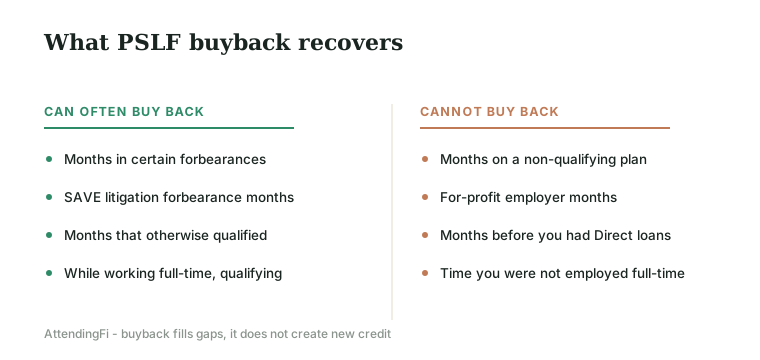
PSLF buyback is a way to make certain past months count toward your 120 qualifying payments by paying what you would have paid back then. It exists for a specific problem: months when you were working full-time for a qualifying employer but were not making a qualifying payment, usually because you were in a deferment or forbearance. Buyback lets you, in effect, purchase that missing credit so those months are not lost.
Public Service Loan Forgiveness requires 120 qualifying monthly payments made while you work full-time for a qualifying nonprofit or government employer. The problem: some months you worked in public service didn't count, usually because you were in a deferment or forbearance instead of an active income-driven payment. Time in school, in grace, or parked in a forbearance generally does not tick the 120-payment clock.
Buyback is the Department of Education's fix for that. It lets you pay an amount roughly equal to what you would have paid during those non-qualifying months, and in exchange those months are credited as qualifying PSLF payments. For physicians, the months that most often come up are residency or fellowship months spent in forbearance and, increasingly in 2026, months spent in the SAVE administrative forbearance.
2. The two gates almost everyone misreads
This is where most online confusion lives. Buyback is not available to anyone with a gap month. Both of these must be true:
- You already have 120 months of qualifying employment. Not payments, employment. You must have worked full-time for qualifying employers for at least 120 months (10 years), even though not all of those months counted as payments.
- Buying back the gap months would actually result in forgiveness. The math has to finish the job: the bought-back months, added to the months you already have, must bring you to 120 qualifying payments and complete PSLF (or TEPSLF).
In plain terms: buyback is the move you make at the end, when you have the years of service but a handful (or many) of those months didn't count. If you're a resident or a three-years-in attending, you are not eligible yet, and the right move is different (see section 6).
3. Which months you can, and can't, buy back
Eligible months are generally months where all of these are true:
- They were spent in an ineligible deferment or forbearance (including the SAVE administrative forbearance).
- You had qualifying full-time employment (nonprofit 501(c)(3) or government) during them.
- They are on Direct Loans (PSLF only forgives Direct Loans; FFEL/Perkins must be consolidated first, and consolidating resets counts, so timing matters).
- They aren't already counted as qualifying payments.
Months you generally cannot buy back include time you were in school, in the grace period, in default, or any month you weren't working for a qualifying employer. Buyback recovers employment months that a payment technicality erased, it doesn't manufacture service you didn't perform.
How much buyback can be worth
The reason this gets so much attention is leverage. The cost of buyback is roughly what your income-driven payment would have been during those months, which for a resident can be very small. The payoff, if those months complete your 120 and unlock forgiveness, can be a large tax-free balance. Paying a few thousand dollars to release six figures of forgiveness is the kind of trade that makes buyback worth understanding precisely.
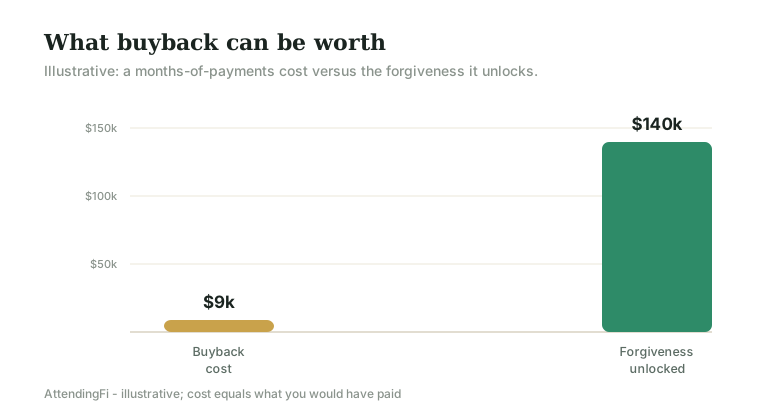
That said, buyback is only worth it when those recovered months actually change the outcome. If you would reach forgiveness anyway, or if the months in question were never going to qualify, paying for buyback adds cost without benefit. The value comes entirely from whether the purchased months are the ones standing between you and a forgiven balance.
4. What buyback costs
The price is based on what you would have paid during those months under an income-driven repayment plan, not a token fee, and not your full balance. Because SAVE is being wound down, the Department now calculates buyback using the IBR / PAYE / ICR formula rather than the old, cheaper SAVE figure. For a physician who was earning an attending salary during the gap months, that can make buyback meaningfully more expensive than people expect, so budget for it deliberately.
A few practical realities:
- You'll receive an official amount from the Department/your servicer before you owe anything, you don't pay blind.
- It's paid as a lump sum for the months being bought back; you choose to accept the agreement or not.
- The cost is usually far less than the balance being forgiven, that's the whole point. Paying a few thousand to unlock a six-figure tax-free forgiveness is the trade most physicians will gladly make.
Because the exact figure depends on your income documentation and the specific months, get your number from studentaid.gov or your PSLF servicer before deciding, don't rely on a Reddit estimate.
5. The 2026 reason this is everywhere: the SAVE forbearance
Millions of borrowers, including many physicians, were placed in the SAVE administrative forbearance while that plan was litigated. Those months do not count toward PSLF on their own, and interest has been accruing since August 2025. The forbearance is ending by September 30, 2026.
Buyback is the mechanism that can recover those SAVE-forbearance months, but the same two gates apply. If you'll cross 120 months of qualifying employment around the time the forbearance ends, those frozen months become exactly the kind of gap buyback was built to fix. If you're years away from 120, buyback won't help yet; getting back onto a qualifying plan now is what protects you. See the SAVE wind-down guide for the full switch plan.
6. If you're not at 120 months yet (most physicians)
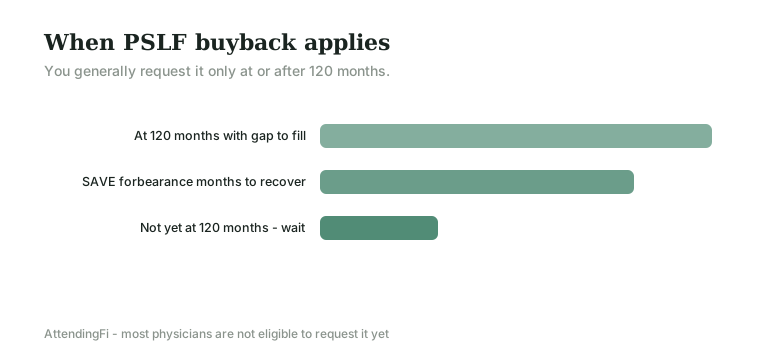
This is the part most coverage skips: buyback is generally something you request at or near 120 months, not mid-career. If you are a resident or early attending with years still to go, you usually cannot buy back months yet. What you can do is set everything up correctly now, certify your employment annually, and keep your record clean, so that when you near the finish line any genuine gaps are visible and recoverable.
For residents, fellows, and early attendings, the honest answer is: buyback isn't your tool yet, and you shouldn't sit in forbearance assuming you'll "just buy it back later." Instead:
- Get into a qualifying income-driven plan now (for most physicians pursuing PSLF, capped IBR) so your months count in real time and you don't have to repurchase them.
- Certify employment every year with the Employment Certification Form so your count stays accurate and gaps are caught early.
- Treat buyback as a safety net for months a technicality erased, not a strategy you plan around.
A counted month is free. A bought-back month costs what you would have paid plus the hassle. The cheapest path is almost always to make the month count the first time.
7. How to request buyback
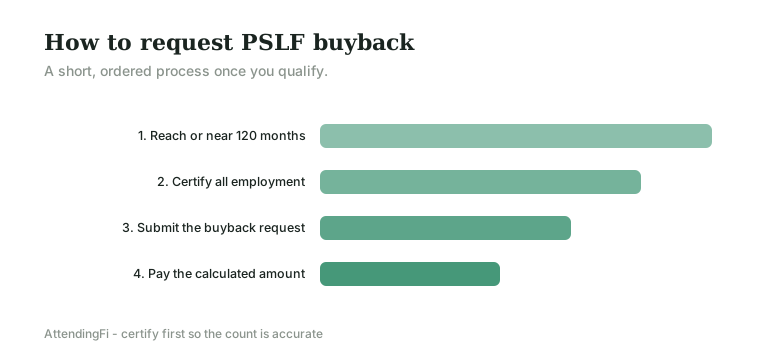
- Confirm you've hit 120 months of qualifying employment, submit/refresh your Employment Certification Forms for every qualifying job through the PSLF Help Tool so your service history is complete.
- Submit the buyback request per the instructions at studentaid.gov/PSLFbuyback (the Department reviews requests and may take time).
- Wait for your official amount. The Department/your servicer determines what you'd have paid and sends you the figure and agreement.
- Pay the lump sum within the window you're given; once processed, the months are credited and, if you've reached 120 qualifying payments, your loans are forgiven tax-free.
Processing has historically been slow and is being handled under regulations the Department finalized on October 30, 2025 (effective July 1, 2026). Keep copies of everything and follow up with your servicer.
Buyback vs other ways to fix your count
Buyback is one tool among several, and it is not always the right one. If your months failed to count because you were on the wrong repayment plan or had the wrong loan type, the fix is not buyback but correcting those underlying issues going forward, since buyback cannot manufacture credit for months that never qualified in the first place. If your count is simply out of date because you never certified employment, the fix is to submit the missing certifications, which often recovers months on its own at no cost.
Think of buyback as the specific remedy for qualifying months you missed due to deferment or forbearance, not a general repair tool. Before paying for buyback, confirm that the months you are targeting genuinely qualified in every other respect, and that recovering them actually changes whether or when you reach forgiveness. Our buyback calculator and the full engine help you see whether those months move the needle before you spend anything.
8. Mistakes to avoid
- Assuming you can buy back anytime. You can't, you need 120 months of qualifying employment first, and the buyback must complete forgiveness.
- Sitting in forbearance "because buyback exists." That guarantees accruing interest and a future bill for months you could have counted for free.
- Forgetting it's Direct-Loan only. FFEL/Perkins must be consolidated to qualify, and consolidation resets your count, so sequence it carefully.
- Estimating the cost from forums. Your figure depends on your income docs and the specific months; get it from the Department.
These federal rules are still being implemented by the U.S. Department of Education and can change, verify your eligibility, the current cost basis, and the request process at studentaid.gov and with your PSLF servicer. This is educational information, not individualized advice. See our disclosures.
See whether PSLF is still your lowest-cost path
Model PSLF, capped IBR, RAP, and refinancing on your real numbers in about three minutes, free, no login. The dashboard also tracks your 120-month count and flags gap months to evaluate for buyback.
Run my numbers free →A worked example: when buyback pays off
Consider a physician who reaches the end of her PSLF journey and finds her servicer credits only 116 qualifying months. Investigating, she discovers the four missing months fell during a forbearance while she was working full-time at her nonprofit hospital, exactly the kind of gap buyback was designed to fill. The cost to buy those four months back is roughly what her income-driven payment would have been at the time, a few hundred dollars each. In return, those four months complete her 120, and her remaining balance, a large figure, is forgiven tax-free.
The arithmetic is lopsided in her favor: a four-figure payment unlocks a five- or six-figure forgiveness. That is the scenario where buyback is unambiguously worth it. Contrast that with a physician whose missing months were spent on a non-qualifying repayment plan. Those months never qualified, so buyback cannot recover them, and paying for it would accomplish nothing. The difference between the two cases is entirely about why the months failed to count, which is why diagnosing the cause comes before reaching for buyback.
If your own count looks short, the practical move is to identify exactly which months are missing and why, then check whether buyback applies to those specific months. The missing PSLF months checker helps you pinpoint the gap, and the engine shows whether recovering those months actually changes your forgiveness outcome before you commit a dollar.
The broader lesson for any physician on a PSLF path is that buyback is a safety net, not a plan. The borrowers who never need it are the ones who set things up correctly from the start: Direct loans, a qualifying income-driven plan, full-time qualifying employment, and an employer certification filed every single year. Do that, and most of the gaps buyback exists to fix never open in the first place. Keep buyback in your back pocket for the rare forbearance or deferment month, and confirm your count regularly.
Do that and you will arrive at payment 120 with little drama and a balance ready to be forgiven, tax-free. To see whether buyback would actually move your own forgiveness date, run your real numbers in the engine below before you spend anything at all.
Frequently asked questions
Can I buy back months while I'm still a resident?
No. Buyback only becomes available once you have 120 months of qualifying employment and buying back the gap months would complete your forgiveness. During residency, the right move is to be in a qualifying income-driven plan so your months count in real time.
Do SAVE forbearance months count toward PSLF?
Not on their own. Months in the SAVE administrative forbearance don't count, but if you had qualifying employment during them you may be able to recover them through buyback once you're eligible.
How much does buyback cost?
Roughly what you would have paid under an income-driven plan for those months, now calculated using the IBR/PAYE/ICR formula since SAVE is ending, which can be higher for attending-level incomes. You receive an official amount before you pay. It's still typically a fraction of the balance being forgiven.
Is buyback worth it for physicians?
Usually yes when you're at the finish line: paying a lump sum to convert qualifying-employment months into the final payments needed for a six-figure, tax-free forgiveness is a strong trade. Confirm your exact cost and eligibility with the Department first.