Student loans in fellowship: extend your advantage
Your fellow student loan strategy sits in a uniquely valuable window: you are still earning a trainee salary, often for one to three more years, which means you can keep banking cheap forgiveness credit before attending income arrives. Fellowship is a continuation of the low-income runway that makes PSLF so powerful for physicians, and the moves you make now determine whether you finish training with forgiveness on track. This guide lays out the complete strategy, step by step and in the right order.
Why fellowship is still prime PSLF time
Fellowship extends the most valuable phase of a physician PSLF strategy: years of qualifying employment at a low, trainee-level income. On an income-driven plan, your monthly payment during fellowship remains modest, yet every month counts toward your 120 just as much as an expensive attending month would. For a fellow with a large balance, that is a continuation of cheap, irreplaceable progress toward forgiveness.
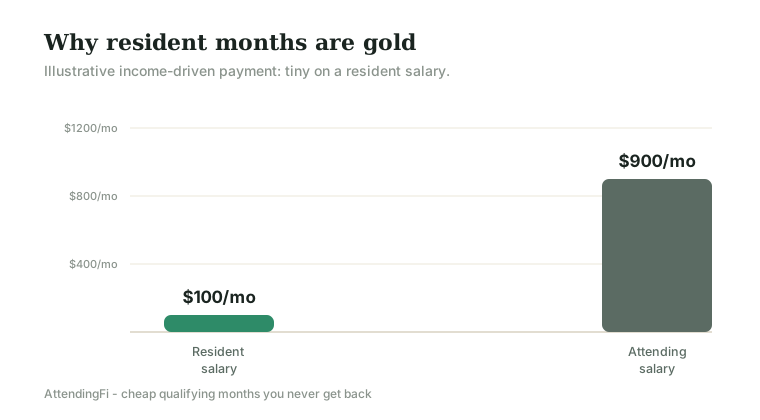
This matters because many physicians underestimate fellowship. After surviving residency, it is tempting to stop thinking about loans, assuming the real decisions wait until attending life. In fact, fellowship is bonus time on the forgiveness clock at a bargain price, and treating it as such can add a year or more of cheap qualifying months to your record.
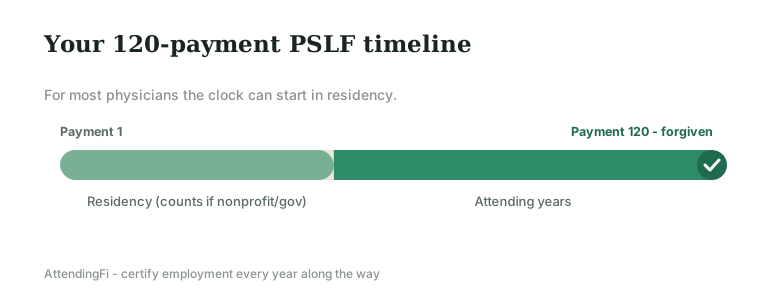
The opportunity is largest for fellows in longer subspecialty tracks. Two or three additional years of qualifying payments at a trainee salary can represent a substantial share of your 120, banked while your income is still far below where it will eventually land. Letting that window pass unused, or worse, refinancing through it, forfeits value you cannot recover.
Does your fellowship actually count?
The same four conditions that govern residency govern fellowship. Your months count toward PSLF only if you hold federal Direct loans, are on a qualifying income-driven plan, work full-time for a qualifying nonprofit or government employer, and make on-time, full payments. Most fellowships are based at nonprofit teaching hospitals, so the employer condition is usually satisfied.
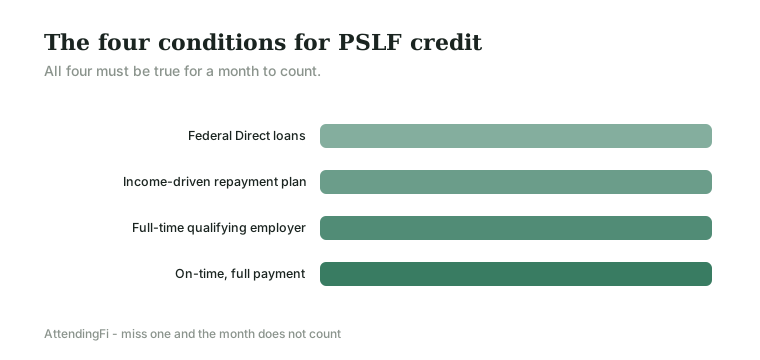
The exceptions worth checking are fellowships housed at for-profit institutions or structured as independent-contractor arrangements rather than W-2 employment. Those months may not count, so it is worth confirming your employer's status and your employment classification at the start of fellowship rather than assuming the months are accruing.
If you discover your fellowship does not qualify, that does not end your PSLF case; it simply pauses the clock until you return to qualifying work. Knowing this in advance lets you plan, perhaps by targeting a qualifying attending job afterward, rather than being surprised later that a chunk of your training did not count.
Keeping your payment as low as the rules allow
On a forgiveness path, every dollar you are not required to pay is a dollar forgiven, so a fellow's goal is to keep the income-driven payment as low as legally possible. Staying enrolled in the qualifying plan that produces the lowest payment on your trainee income maximizes the months you bank cheaply before attending earnings raise your payment.
The 2026 plan menu pairs a new Repayment Assistance Plan with a revised IBR, and which is cheaper depends on your income and balance. We compare them in RAP vs IBR. The right choice during fellowship may differ from the right choice as an attending, which is why revisiting the plan at the transition matters.
Timing your annual income recertification well can extend your lowest payments. Because payments are recalculated when you recertify, keeping a trainee-based payment in place as long as the rules permit, especially as you approach the attending transition, can preserve more forgiveness. These are small levers individually but meaningful across the life of the loan.
Certify through every transition
Fellowship usually means at least two employer transitions in a short span: into the fellowship and out of it into your attending role. Each transition is a moment to certify employment through the official PSLF Help Tool, signed by HR. Certifying at every change keeps your qualifying-payment count accurate and prevents gaps in your documented record.
This is doubly important for fellows because the rapid succession of jobs is exactly where months get lost or mis-recorded. A fellow who certifies at each step catches errors while they are still fixable; one who waits until the end may find that a transition year is missing or undercounted, sometimes years after the fact.
Make certification part of your onboarding and offboarding routine at each institution, the same way you handle credentialing and licensing. A few minutes of paperwork at each transition protects the cheap qualifying months you are working hard to bank during training.
Why not to refinance during fellowship
The temptation to refinance can grow during fellowship, as the end of training comes into view and lenders pitch attractive rates. For most fellows pursuing forgiveness, refinancing now is the same mistake it would be in residency: it converts federal loans to private debt, permanently forfeiting PSLF and erasing the qualifying months you are banking.
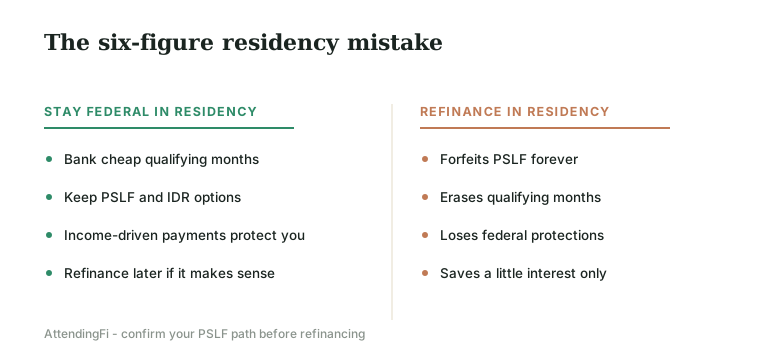
The honest exception is a fellow who is certain of a private-practice future with no qualifying employer ahead, a strong income relative to a modest balance, and a refinance rate well below their federal average. For that specific person, refinancing can make sense. For the typical fellow headed toward a hospital-employed attending job, it usually does not.
The discipline is to treat refinancing as a one-way door and not walk through it until forgiveness is truly off the table. Confirm your attending path first; only then is converting to private debt safe to consider. Run the comparison before signing anything, because the cost of refinancing away forgiveness can dwarf the interest a lower rate would save.
Planning the jump to attending
The transition from fellow to attending is the highest-leverage moment in your loan strategy after the initial setup. Your income jumps sharply, and with it your income-driven payment, unless you are on a capped plan that limits the rise. Choosing the right base plan before that jump, and timing your recertification well, preserves more forgiveness and lowers your payment.
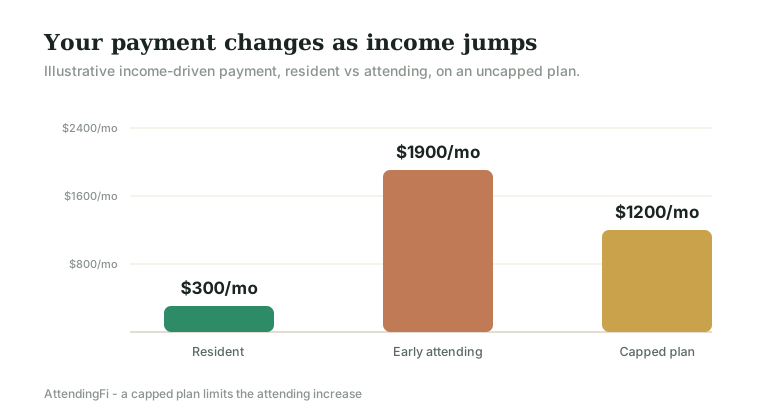
This is also the moment to reconfirm your path. If you are staying at a qualifying employer, continue on PSLF and optimize the plan; if you are moving to private practice, refinancing finally comes onto the table. The decision you have deferred through training becomes live the day your attending contract starts.
Because so much value rides on this transition, model it before you sign your first attending contract. The engine shows how your payment and forgiveness change as you move from trainee to attending income under each plan, so you can lock in the cheapest path through the jump rather than discovering the consequences afterward.
Research years and non-qualifying fellowships
Some fellowships, particularly research-heavy or grant-funded tracks, can complicate your PSLF picture. If your salary during a research year flows through a for-profit entity or a non-qualifying arrangement, those months may not count, even though you are still in training. The same is true for fellowships at the small number of for-profit institutions.
The fix is not to avoid valuable training but to know the impact in advance. If a research or non-qualifying year will pause your PSLF clock, you can plan around it, accepting the pause as the cost of training you want, while ensuring you return to qualifying work afterward. Surprises are the enemy; foresight is cheap.
If you find that genuinely qualifying months were missed due to a forbearance during fellowship, PSLF buyback may let you recover some of them once you near 120 payments. The key is to track which months counted as you go, so you can address any gaps deliberately rather than discovering them at the finish line.
The value compounds with your balance. A fellow with three hundred thousand dollars in loans gains more from each cheap qualifying month than one with a modest balance, because more principal and interest will ultimately be forgiven. This is why high-debt fellows in particular should guard their fellowship months carefully and avoid any move, especially refinancing, that would forfeit them.
Seen this way, fellowship is not a financial pause but an active phase of wealth protection. The trainee salary that feels limiting is precisely what makes these months so cheap to bank, and the physician who recognizes that, and sets up their loans to capture it, finishes training meaningfully ahead of one who treated fellowship as a time to ignore the loans.
Fellows with two incomes or a working spouse
If you are married, your loan strategy during fellowship depends partly on your spouse. On most income-driven plans, how you file taxes affects your payment: filing separately can lower the payment that feeds a PSLF strategy, at the cost of some tax benefits. For a fellow with a working spouse, that filing choice can change your payment, and therefore your forgiveness, meaningfully.
Dual-physician couples in which both are still in training have the most to coordinate. Two forgiveness paths run at once, and the filing decision links them, so the household should model the choices together rather than separately. We unpack the tradeoff in married filing separately for student loans, and the engine can compare filing scenarios on your combined numbers.
The practical takeaway is to treat fellowship as the right time to get the household filing strategy in place, before attending income raises the stakes. A decision made deliberately now, while incomes are still modest, sets up the most efficient path through the attending transition for both partners.
A fellow strategy in action
Consider a cardiology fellow who finishes residency with $280,000 in federal Direct loans and forty months of PSLF credit already banked. During a three-year fellowship at a nonprofit academic center, she stays on the lowest-payment qualifying income-driven plan, certifies employment each year, and resists the refinance offers that arrive as graduation nears. Across fellowship she banks roughly thirty-six more qualifying months at a trainee-level payment.
By the time she becomes an attending, she has banked around seventy-six qualifying months, more than halfway to forgiveness, having paid only a fraction of what those months would have cost at attending income. She continues at a qualifying employer, finishes her remaining payments, and a large balance is forgiven tax-free. A peer who refinanced at the start of fellowship to capture a slightly lower rate gave up all of that, trading a six-figure forgiveness for modest interest savings.
The lesson is the same one that runs through every stage of physician loan strategy: the cheap, qualifying months of training are the engine of forgiveness, and protecting them is worth far more than chasing a marginally better rate. A fellow who understands this finishes training with the strategy intact and the largest possible balance set up to be forgiven.
None of it requires expertise, only attention at the right moments. If you want to see exactly how your fellowship months translate into a forgiveness date and lifetime cost, the engine below models your trainee and attending years together so you can confirm your strategy before the next phase of training begins. It accounts for your balance, your fellowship and attending income, your employer, and the 2026 plan and tax rules, comparing PSLF against refinancing and every other option so the right move through fellowship is clear rather than guessed.
Key takeaways for fellows
Fellowship is bonus time on the forgiveness clock at a trainee price, and a deliberate strategy protects it. The moves are the same ones that served you in residency, applied through the transitions of subspecialty training.
- Keep banking cheap qualifying months at your trainee salary.
- Confirm your fellowship employer and classification actually qualify.
- Stay enrolled in the lowest-payment qualifying income-driven plan available to you.
- Certify employment at every single transition, both into and out of fellowship.
- Do not refinance federal loans if forgiveness may be in your future.
- Model the attending transition before you sign your first contract.
- Coordinate your tax filing if you have a working spouse or are a dual-physician couple.
Handle these deliberately and you finish training with forgiveness on track and your options open. Run your numbers in the engine below to see your forgiveness date and lifetime cost before fellowship ends. A few minutes of modeling now, while you still hold the advantage of a trainee income, can confirm the path that protects the most forgiveness as you move toward your attending years.
Get your personalized plan
Don't guess — model your exact numbers. AttendingFi runs the real federal-rules math on your numbers and shows its work. Free, no login needed to see your answer.
Run my numbers →Frequently asked questions
Does fellowship count toward PSLF?
Usually yes, if your fellowship is at a nonprofit or government teaching hospital and you are on a qualifying income-driven plan with Direct loans. Research years or for-profit fellowships may not count, so confirm your employer's status.
Should fellows refinance their student loans?
Usually not, if a qualifying employer is in your future. Refinancing during fellowship forfeits PSLF and erases qualifying months. Revisit it as an attending once your path is confirmed.
How do I keep my payment low during fellowship?
Stay on the qualifying income-driven plan with the lowest payment on your trainee income, and time your annual recertification well. On a forgiveness path, a lower payment means more is ultimately forgiven.
What happens to PSLF when I become an attending?
Your count carries forward as long as you stay at a qualifying employer. Your payment rises with your income unless you are on a capped plan, so choosing the right base plan before the jump matters.
Do research fellowship years count toward PSLF?
Only if you remain a full-time employee of a qualifying employer on a qualifying plan. Grant-funded or for-profit arrangements may not count, so check your classification before the year begins.