Student loans for established attendings
If you are an established attending still carrying student loans, your decisions are different from a resident's or a new attending's. You are further along, your income is settled, and the questions now are about optimizing the endgame: whether to keep pursuing forgiveness or pay the loan off, how to handle a looming tax bomb, and how to time the final moves. This guide is for the attending who wants to finish strong, capturing every remaining dollar of value from a strategy years in the making. The decisions are fewer now than they were early on, but each one carries real weight, and getting the finish right is worth as much careful thought as the start.
Where you stand as an established attending
By the time you are an established attending, the big structural decisions are mostly behind you, and your loan situation falls into one of a few patterns. You may be well into a PSLF path with a known number of qualifying payments banked and forgiveness in sight. You may be on a non-PSLF income-driven plan heading toward a taxable forgiveness years out. Or you may be paying the loan down directly, weighing whether to accelerate.
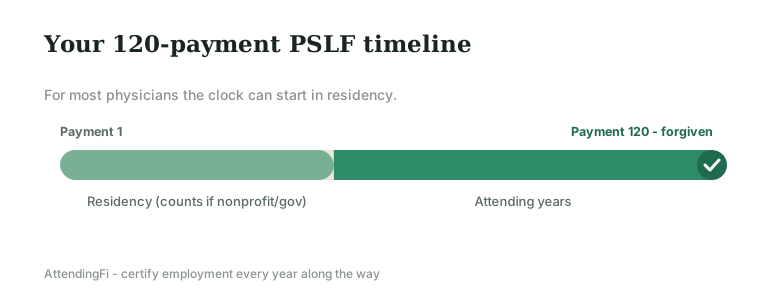
Whichever pattern fits, your settled income and clearer time horizon make the remaining decisions more concrete than they were early on. You are no longer projecting your career; you are optimizing within it. That clarity is an advantage, letting you fine-tune timing and tax planning in ways that were guesswork as a trainee.
The goal of this guide is to help you finish the strategy efficiently, neither leaving forgiveness on the table by abandoning a winning PSLF path, nor clinging to a forgiveness plan that no longer beats simply paying the loan off. The right endgame depends on your specifics, which is exactly what a current analysis clarifies.
Staying the course on PSLF
If you are an established attending well into a PSLF path, the dominant advice is usually to stay the course. Every qualifying payment you have made is value already paid for, and abandoning the path near the end, by refinancing or switching to aggressive payoff, would forfeit a tax-free forgiveness that is now close at hand. The closer you are to 120 payments, the stronger this logic becomes.
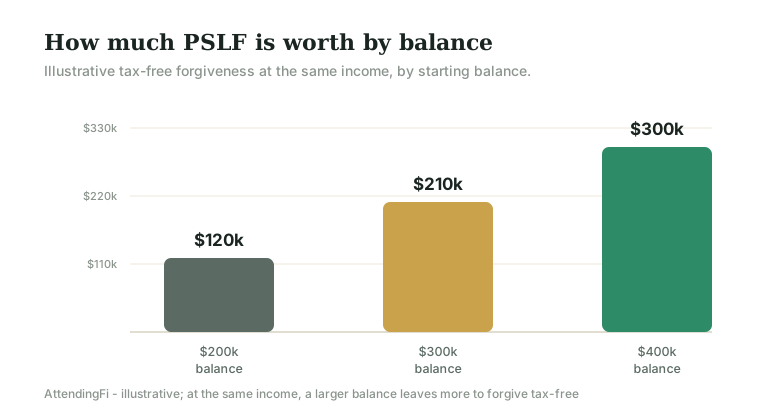
The temptation to bail can grow as your income rises and the monthly payment, even capped, feels large. Resist it unless the math genuinely changes. A capped plan keeps your payment limited, and on PSLF every dollar you are required to pay is offset by the tax-free forgiveness you are marching toward. Walking away to save interest rarely compares to collecting a six-figure forgiveness you have nearly earned.
Your job in this phase is mostly protection: keep certifying employment every year, keep your plan and loan types correct, and monitor your qualifying-payment count for errors. If your count looks short as you near the finish, buyback may recover missing months. The strategy is largely set; the work is finishing it cleanly.
When paying it off makes more sense
For an established attending not pursuing PSLF, the central question is whether to keep riding a long income-driven plan toward a taxable forgiveness or to pay the loan off faster. As your income has grown, the income-driven payment has risen, and at some point paying the balance down directly can become cheaper than waiting decades for a forgiveness that will be taxed.
The comparison hinges on your remaining balance, your income, and the eventual tax on forgiveness. A high earner with a balance they could clear in a handful of years may find that aggressive payoff, possibly after refinancing to a lower rate, beats two more decades of payments plus a tax bill. A borrower with a still-large balance relative to income may find forgiveness still wins.
This is precisely the kind of decision that should be made on lifetime cost including taxes, not on instinct. The engine compares continuing your income-driven path against payoff and refinancing, with the forgiveness tax included, so you can see which truly costs less from where you stand today rather than guessing.
Managing a looming tax bomb
If you are an established attending on a non-PSLF forgiveness path, the tax bomb is no longer a distant abstraction, it is a liability with a visible date. As the federal exclusion lapses, the forgiveness at the end of your term may be taxed as ordinary income, and on your balance that bill can be substantial, due all at once. This deserves active management now.
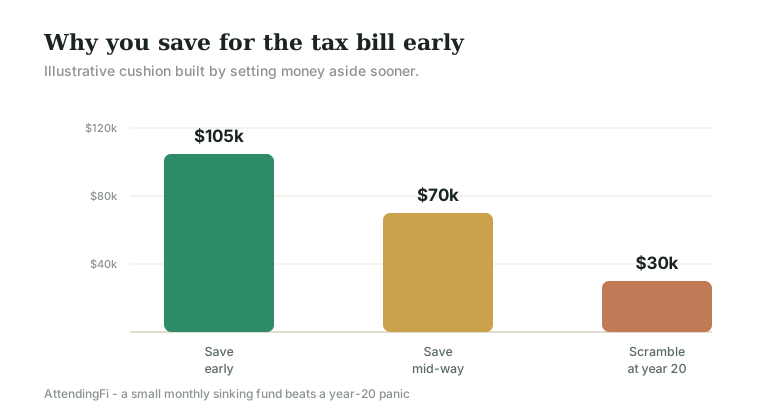
The core move is a properly sized sinking fund. As an established attending, you can estimate the eventual forgiven balance and the applicable federal and state tax more precisely than a trainee could, so you can fund the liability with appropriate monthly contributions. Our tax-bomb guide and state-tax overview cover the sizing.
The tax also belongs in your stay-versus-payoff comparison. Including it can flip the answer for some attendings, making payoff cheaper than a forgiveness that looked attractive before the tax was counted. Pricing the forgiveness honestly, after tax, is the only way to know whether finishing the income-driven path still beats the alternatives.
Late-stage refinancing
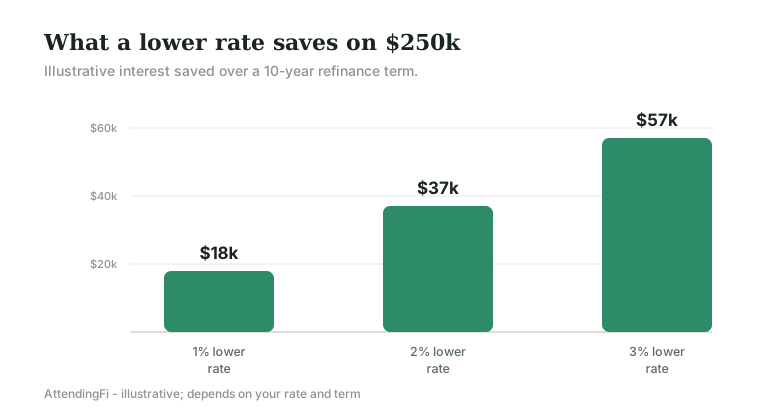
Refinancing remains an option for an established attending, but the calculus is specific. If you are not pursuing PSLF and have decided to pay the loan off, refinancing to a lower rate can accelerate that payoff and save interest, especially with the strong credit profile an established physician brings. The shorter the remaining term you choose, the lower the rate and the less total interest.
The permanent caveat still applies: refinancing forfeits PSLF and federal protections, so it should only follow a firm decision not to pursue forgiveness. For an established attending close to a PSLF forgiveness, refinancing would be a serious mistake, throwing away nearly earned tax-free forgiveness for modest interest savings. For one who has ruled out forgiveness, it is a clean efficiency.
If you do refinance late, consider whether refinancing only part of the balance preserves useful flexibility, and shop multiple lenders since rates vary. Our refinancing guide covers the decision, and the engine shows whether a late refinance genuinely beats your current path on lifetime cost.
Recertification and timing in the endgame
Even late in the game, timing matters. Your income-driven payment recalculates when you recertify, and as an established high earner you want to avoid volunteering a higher payment sooner than required. Knowing your recertification date and how income is assessed lets you keep your payment as low as the rules allow through the final stretch of a PSLF path.
For a PSLF borrower nearing 120 payments, this is about squeezing maximum forgiveness from the remaining months: a lower required payment means more is ultimately forgiven. For a borrower heading toward taxable forgiveness, the timing affects how much you pay versus how much is forgiven and taxed, a tradeoff worth optimizing rather than leaving to chance.
These late-stage levers are smaller than the early structural decisions, but for an established attending they are where the remaining optimization lives. The engine models recertification timing across your remaining term, so you can capture whatever legitimate advantage the timing offers as you finish.
Playing the endgame well
Finishing a physician loan strategy well is mostly about discipline and timing rather than new decisions. If you are on a winning PSLF path, protect it: certify, monitor your count, keep your plan correct, and collect the forgiveness you have earned. If you are on a non-PSLF path, decide deliberately between riding it to a taxable forgiveness and paying off faster, with the tax fully counted.
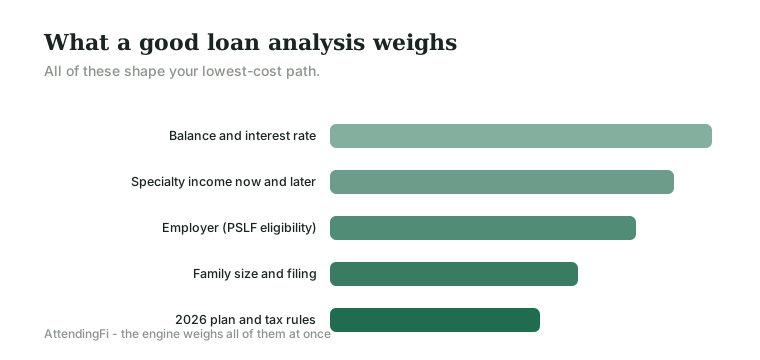
Either way, fund any future tax bomb now, while the date and amount are clearer than ever. And revisit the comparison periodically, because a settled income and a shrinking balance can shift which path is cheapest over time. The established attending who finishes deliberately captures the full value of a strategy years in the making.
The most efficient way to play the endgame is to model your current situation. The engine compares staying the course, paying off, and refinancing on an after-tax lifetime-cost basis, so your final moves rest on arithmetic. After years of building the strategy, a short analysis ensures you finish it for the most value possible.
Key takeaways for established attendings
Late in the journey, the work shifts from making big structural decisions to disciplined, well-timed optimization. Finish the strategy deliberately, on your current numbers, and capture every remaining dollar of value it still holds.
- If well into PSLF, stay the course and protect your count.
- If not on PSLF, compare riding forgiveness against paying off, tax included.
- Fund any looming tax bomb now, while the amount is clearer.
- Refinance only after firmly ruling out forgiveness.
- Time recertification to keep your payment low through the final stretch.
- Revisit the comparison as your income and balance evolve.
After years of building the plan, finish it for maximum value. Run your numbers in the engine below to optimize your endgame on an after-tax basis.
Endgame errors to avoid
Even experienced attendings make late-stage mistakes. Abandoning a nearly complete PSLF path out of impatience with the monthly payment is the costliest, forfeiting forgiveness within reach. Failing to fund a known tax bomb is another, turning a plannable liability into a year-twenty crisis. And refinancing while still eligible for valuable forgiveness throws away earned value for a modest rate cut.
The opposite error also exists: clinging to a forgiveness path that no longer beats payoff once the tax is counted, simply because it was the original plan. The endgame rewards a willingness to recompare on current numbers rather than running on old assumptions. The right answer years ago may not be the right answer now, and an established attending has the income clarity to tell the difference.
Avoiding both errors comes down to the same habit: a periodic, honest comparison on your actual current numbers, taxes included. The attentive established attending finishes with the cheapest available outcome; the one running on autopilot may leave significant money on the table in either direction.
Life after the loans
For many established attendings, the end of the loans is finally in sight, whether through forgiveness or payoff. Planning for that transition is worthwhile: the cash flow currently directed at loan payments or a sinking fund will soon be available for other goals, and having a plan for it, retirement catch-up, college savings, or simply rebalancing, ensures the freed resources are used deliberately.
It is also worth keeping clean records through the finish. For PSLF, retain your certifications and confirmation of forgiveness; for payoff, keep proof the balance is cleared. These details protect you against any administrative error and provide closure on a financial chapter that, for physicians, often spans a decade or more from the first loan to the last.
An established attending decision in practice
Consider an attending eight years into a PSLF path at a nonprofit, with twenty-four qualifying payments left and a large balance still outstanding. Despite a capped payment that now feels significant against her high income, the math is clear: finishing the remaining two years forgives a tax-free balance that no refinance or payoff could match. Her endgame is simply to protect the path, certify, and collect. Abandoning it now would be among the costliest financial mistakes she could make.
Contrast that with an attending of similar income who never pursued PSLF, sitting on a moderate balance fifteen years into a long income-driven plan. For him, the looming taxable forgiveness, once the state and federal tax are counted, no longer beats simply refinancing and paying the balance off over a few years. His endgame is the opposite: exit the forgiveness path deliberately and clear the debt. Same career stage, opposite right answers, decided by the numbers.
These two cases capture the established-attending endgame. The decisions are fewer than they were early on, but the stakes per decision are high, and the right move depends entirely on where you stand. Running your current numbers, with the forgiveness tax fully included, is what turns the endgame from a guess into a clear, optimized finish to a strategy years in the making. After all the effort you have put into managing this debt across training and your career, a short, honest analysis now ensures you capture the full remaining value rather than leaving money on the table at the very end.
Get your personalized plan
Don't guess — model your exact numbers. AttendingFi runs the real federal-rules math on your numbers and shows its work. Free, no login needed to see your answer.
Run my numbers →Frequently asked questions
Should an established attending keep pursuing PSLF?
Usually yes if you are well into the path. The closer you are to 120 qualifying payments, the more costly it is to abandon a nearly earned tax-free forgiveness. Protect your count and finish.
When should an established attending pay off loans instead of seeking forgiveness?
When you are not on PSLF and your income and balance make payoff cheaper than waiting decades for a taxable forgiveness. Compare lifetime cost with the forgiveness tax included before deciding.
How does an established attending plan for the tax bomb?
Estimate the eventual forgiven balance and the applicable federal and state tax, then fund a sinking fund with appropriate monthly contributions. Include the tax in your stay-versus-payoff comparison.
Is it too late for an established attending to refinance?
No, refinancing remains an option, but only after firmly ruling out forgiveness. For someone close to PSLF forgiveness it would be a mistake; for someone paying off, it can save interest.
Does recertification timing still matter late in the journey?
Yes. Avoiding a higher payment sooner than required keeps your payment lower through the final stretch, which on PSLF means more is forgiven and on other paths affects how much is taxed.
See your payoff date and total interest with the student loan payoff calculator.