Dental school student loans: the 2026 repayment guide
The short version
- Dentists face the same federal options as physicians: PSLF, the RAP plan, capped IBR, and refinancing.
- The deciding factor is your employer: nonprofit/government → PSLF is usually best; private practice → refinancing often wins.
- Dental debt is often higher relative to income than physician debt, which makes the right strategy worth even more.
- Run your numbers free, the engine models dental specialties and incomes directly.
Dental school loans are among the largest education debts of any profession, frequently exceeding even what physicians owe at graduation, and the repayment path for a dentist looks different from a doctor's because of how dental careers are structured. Whether you become an associate, own a practice, or work for a nonprofit shapes everything, from PSLF eligibility to whether refinancing makes sense. This complete guide walks a dentist through every major decision, so your six-figure dental school debt becomes a managed plan rather than a source of dread, and a plan you can act on with confidence.
How much dentists borrow
Dental school is expensive, and dental graduates routinely leave with balances that rival or exceed those of medical graduates. Many dentists owe well over three hundred thousand dollars, and those who attend private programs or pursue specialty training can owe considerably more. On top of that, interest accrues throughout school, so the balance at the start of repayment is often larger than the amount borrowed.
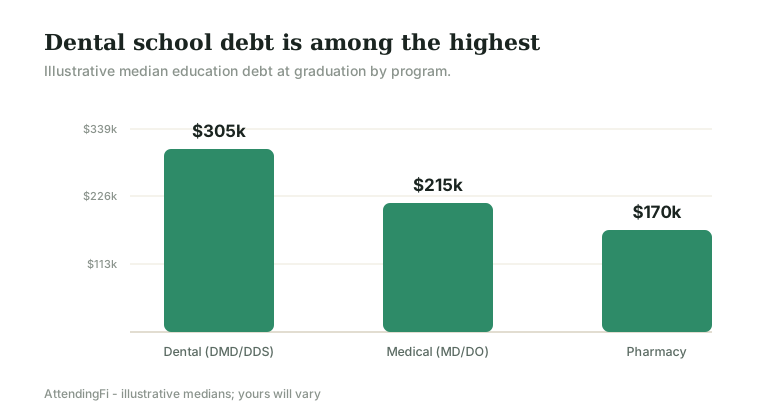
What makes dental debt distinctive is the career structure it sits on top of. Unlike physicians, who mostly move through employed hospital roles, dentists often work as associates early on and then frequently buy or start a practice, becoming business owners. That trajectory changes which loan strategies are available, because PSLF and other programs depend on employment relationships that practice ownership usually does not satisfy.
The size of dental debt means the stakes of getting repayment right are enormous. Choosing the correct path can save or forgive six figures; choosing wrong, by refinancing away forgiveness eligibility or ignoring a tax bomb, can cost just as much. The good news is that the dental decision, like the physician one, reduces to a manageable set of forks once you understand your likely career direction and which employers lie ahead.
Why the dental career path matters so much
For dentists, the central question that organizes everything is your employer over time. If you will work for a qualifying nonprofit or government organization, a community health center, an academic dental school, a nonprofit hospital dental department, or the VA, then PSLF is on the table. If you will work in or own a private practice, which is the most common dental path, PSLF generally is not available.
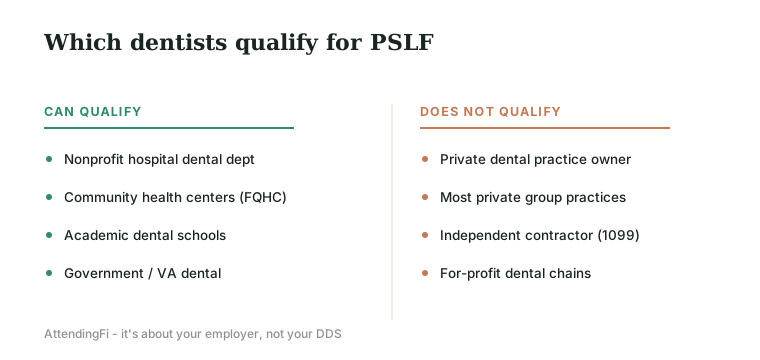
This matters more for dentists than for physicians because private practice is so central to dentistry. A large share of dentists end up as practice owners or associates in private offices, neither of which typically qualifies for PSLF. For these dentists, the real choice is between an income-driven plan and refinancing, not between forgiveness and refinancing.
So the first thing any dentist should do is honestly assess their likely career path. A dentist headed for community health or academic dentistry should build a PSLF strategy; one headed for private practice ownership should plan around income-driven repayment and refinancing. The same debt calls for very different strategies depending on where you will work, which is why this assessment comes first.
PSLF for dentists
Dentists who work for qualifying employers can use PSLF exactly as physicians do: 120 qualifying payments at a nonprofit or government employer lead to tax-free forgiveness of the remaining balance. For a dentist at a community health center or academic institution carrying a large balance, this can be extraordinarily valuable, forgiving six figures with no tax bill.
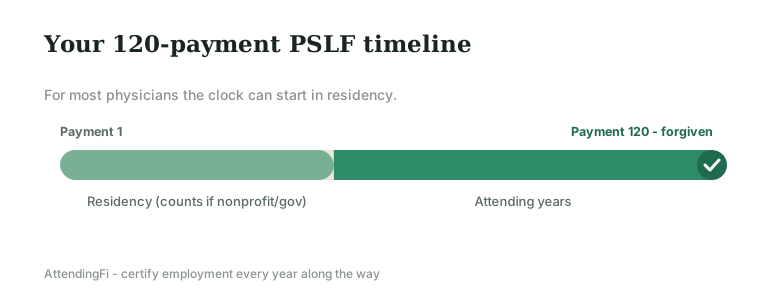
The mechanics are the same as for physicians: federal Direct loans, a qualifying income-driven plan, full-time qualifying employment, and on-time payments, all confirmed by certifying employment every year. We cover the details in how PSLF works, which applies to dentists at qualifying employers just as it does to doctors.
The catch, again, is that most dentists end up in private practice where PSLF does not apply. So while PSLF is a powerful option for the subset of dentists at qualifying employers, it is unavailable to the many who own or work in private offices. Knowing which group you are in determines whether PSLF belongs in your plan at all.
Income-driven plans for dentists
Whether or not you pursue PSLF, an income-driven repayment plan is usually the starting point for a dentist, especially early in your career when income is still building. These plans set your payment as a share of your income, keeping it manageable during an associateship or while establishing a practice, and they underpin any forgiveness strategy.
For a PSLF-eligible dentist, the plan you choose determines how much is forgiven, so picking the qualifying plan with the lowest payment matters. For a dentist not pursuing PSLF, an income-driven plan can still be a sensible bridge while income grows, before deciding whether to refinance or pay down aggressively. The 2026 menu pairs a new Repayment Assistance Plan with a revised IBR, compared in RAP vs IBR.
The key for dentists is to treat the income-driven plan as a deliberate choice tied to your career direction, not a default. A future practice owner uses it differently than a future community-health dentist, and the right plan, and how long you stay on it, depends on which path you are on and how your income is expected to grow.
When dentists should refinance
For the many dentists in or headed toward private practice, refinancing is often the central decision rather than PSLF. Once you have confirmed you will not pursue forgiveness, your income is strong relative to your debt, and a lender offers a rate well below your federal average, refinancing can save substantial interest over the life of a large dental balance.
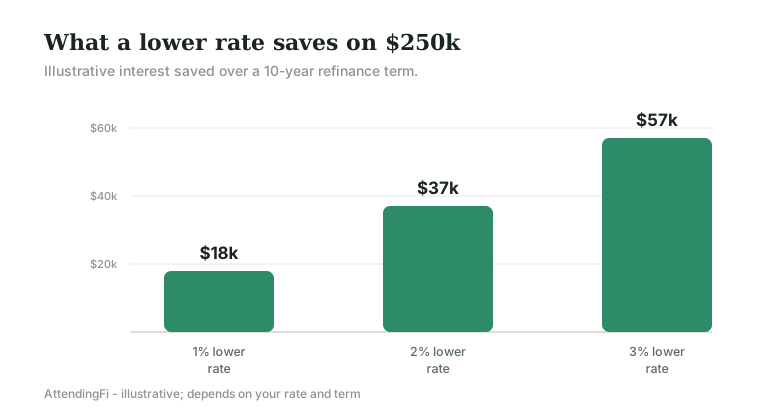
The permanent caveat applies to dentists just as to physicians: refinancing federal loans forfeits PSLF and federal protections forever. So the order of operations is to confirm your career path first. A dentist who might work for a qualifying employer should not refinance until that possibility is ruled out, because doing so would forfeit a forgiveness they could have captured.
For a dentist firmly headed into practice ownership, though, refinancing is frequently a clean win, since PSLF was never available to them anyway. Choosing a fixed rate and the shortest sustainable term maximizes the savings. Our refinancing guide applies to dentists, and the engine shows whether refinancing beats your current path.
If you plan to own a dental practice
Practice ownership is a defining feature of dentistry, and it interacts with your student loans in important ways. As a practice owner, you are typically self-employed rather than an employee of a qualifying nonprofit, so PSLF generally does not apply. That makes refinancing and strategic payoff the relevant tools, layered on top of the financing decisions that come with buying or building a practice.
Owning a practice also means your student loans compete with practice debt, equipment financing, and the cash-flow demands of running a business. Your student loan strategy should fit into that broader financial picture rather than dominate it. On an income-driven plan during the early, lower-income years of ownership, your student loan payment stays manageable while you establish the practice.
The timing of refinancing for a future owner deserves thought. Some dentists keep federal loans on an income-driven plan while building the practice, preserving flexibility during the uncertain early years, then refinance once income stabilizes. The right sequence depends on your numbers and risk tolerance, which is exactly the kind of tradeoff worth modeling before committing.
Taxes and forgiveness for dentists
The forgiveness tax rules apply to dentists the same way they apply to physicians. PSLF forgiveness is tax-free, so a dentist at a qualifying employer faces no tax bomb. Non-PSLF income-driven forgiveness, after a 20- or 25-year term, can be taxable as the federal exclusion lapses, and on a large dental balance that bill can reach tens of thousands of dollars.
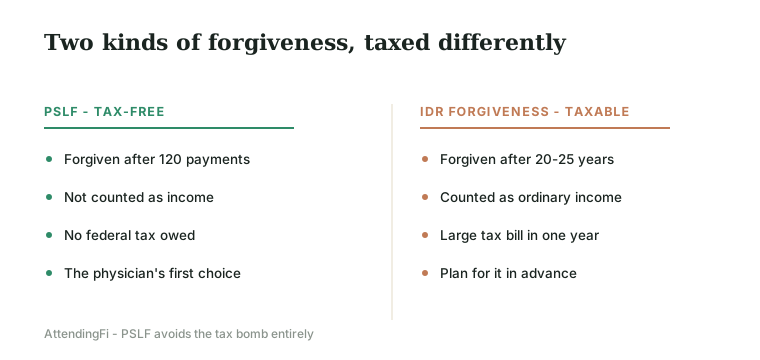
For most dentists, who end up in private practice and are therefore unlikely to pursue either PSLF or a long income-driven forgiveness path, the tax bomb is often less relevant, because they tend to pay the loan off or refinance rather than ride forgiveness for decades. But a dentist who does stay on a non-PSLF forgiveness path should plan for the eventual tax with a sinking fund.
Our tax-bomb guide and state-tax overview cover the details. The practical point for dentists is to know which path you are on: PSLF avoids the tax entirely, refinancing and payoff avoid it by eliminating forgiveness, and only a long non-PSLF income-driven path triggers it.
Building your dental loan plan
A dentist's loan plan starts with the career assessment. Inventory your loans and confirm they are federal Direct. Decide whether a qualifying employer is realistically in your future. If yes, build a PSLF strategy on the lowest-payment qualifying plan and certify employment. If no, plan around an income-driven bridge and refinancing once your income and practice are established.
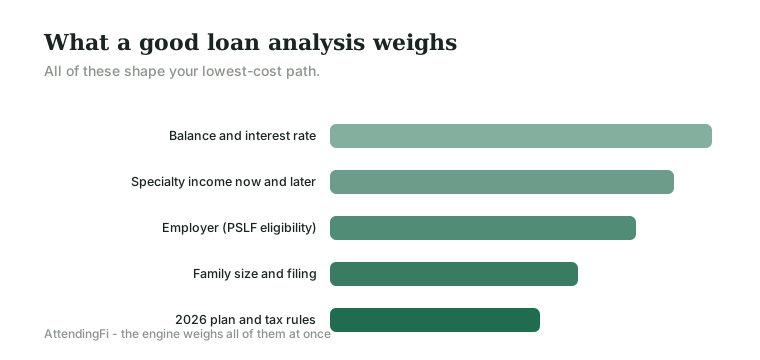
Then maintain the plan as your career evolves, because dental careers often shift from associate to owner, and each shift can change the right strategy. Revisit the comparison between forgiveness, refinancing, and payoff whenever your employment or income changes. A plan set as an associate may need updating once you own a practice.
The fastest way to turn this into a concrete plan is to model your numbers. The engine compares PSLF, income-driven plans, and refinancing on a lifetime-cost basis for your exact situation, so whether you are headed for community health or your own practice, you leave with a clear strategy for your dental school loans rather than a stack of statements. After the years and the expense of dental school, a short, honest analysis is the cheapest insurance you can buy for the six figures of value at stake.
Key takeaways for dental school loans
Dental school debt is large, and the right strategy hinges on your career path more than for almost any other profession.
- Dental balances are among the highest of any profession, often $300k+.
- Your employer over time decides whether PSLF is available.
- Nonprofit, community health, and academic dentists can pursue PSLF.
- Private-practice dentists and owners plan around income-driven plans and refinancing.
- Refinance only after ruling out PSLF, since it is permanent.
- Revisit your plan as your career shifts from associate to owner.
Your dental school loans are manageable with a plan matched to your career. Run your numbers in the engine below to find your lowest-cost path.
Dental specialists and extra training
Dentists who pursue specialty training, in orthodontics, oral surgery, periodontics, and other fields, often borrow even more and delay peak income further, which intensifies both the size of the debt and the importance of a deliberate strategy. Specialty residencies may or may not be at qualifying employers, so a specialist should check whether those training years could count toward PSLF.
Higher specialist income later can make refinancing and aggressive payoff attractive for those not pursuing forgiveness, since a strong income against a large balance is the classic refinancing profile. But a specialist who lands at an academic or nonprofit institution may have a genuine PSLF opportunity. As always, the right answer depends on the employer and the numbers, not the specialty label.
The broader point for dental specialists is that more debt raises the stakes of every decision. A six-figure swing between the best and worst repayment paths is even larger when the balance is larger, which is precisely why a specialist should model their options carefully before committing to a strategy.
Service and scholarship options for dentists
Beyond PSLF and refinancing, some dentists have access to service-based loan repayment programs. The National Health Service Corps offers repayment in exchange for serving in underserved areas, and military and state programs provide similar arrangements. For a dentist open to these commitments, the terms can be more generous than ordinary repayment.
These options are not for everyone, since they involve service obligations and specific eligibility rules, but for the right dentist they can dramatically reduce debt. They are worth investigating early, because some are easier to plan around if you know about them before committing to a career path. We cover several in our program-specific guides.
Get your personalized plan
Don't guess — model your exact numbers. AttendingFi runs the real federal-rules math on your numbers and shows its work. Free, no login needed to see your answer.
Run my numbers →Frequently asked questions
How much do dental students owe in loans?
Dental graduates often owe well over $300,000, among the highest of any profession, and specialists can owe more. Interest accrues during school, so the starting balance is often larger than the amount borrowed.
Can dentists qualify for PSLF?
Yes, if they work for a qualifying nonprofit or government employer such as a community health center, academic dental school, or nonprofit hospital. Private-practice dentists and owners generally do not qualify.
Should a dentist refinance student loans?
Only after confirming PSLF is off the table. For a dentist headed into private practice ownership, refinancing can save substantial interest once income is strong relative to the balance.
Do dental practice owners qualify for forgiveness?
Generally no. Practice owners are typically self-employed rather than employees of a qualifying nonprofit, so PSLF does not apply. Refinancing and strategic payoff are the relevant tools.
What is the best repayment plan for dental school loans?
It depends on your career path. PSLF-eligible dentists pick the lowest-payment qualifying plan; private-practice dentists often use an income-driven bridge then refinance. Model both on your numbers.
Related guides
Educational only, not financial advice. Income figures are illustrative and program rules change; confirm current details at studentaid.gov.