PAYE and ICR are ending in 2028: what physicians should do
What PAYE and ICR ending in 2028 means
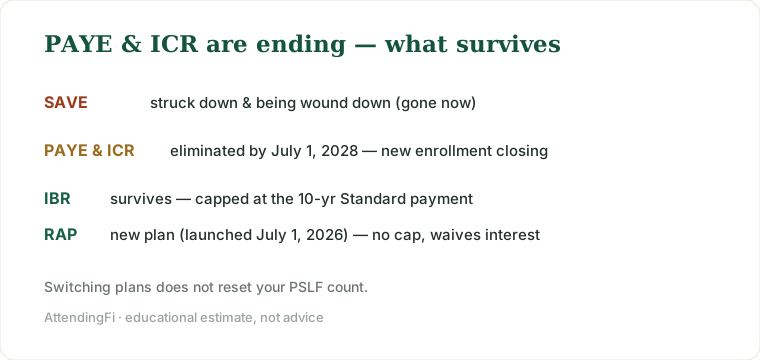
The 2025 reconciliation law reshaped income-driven repayment. SAVE was struck down by the courts and is being wound down. PAYE and ICR are being phased out and eliminated by June 30, 2028 — new enrollment is closing now, and existing borrowers will be moved off before the deadline. The two income-driven plans that survive are IBR (which existed already) and the new Repayment Assistance Plan (RAP), which launched July 1, 2026. So by 2028 your income-driven choices are simply IBR or RAP.
What happens if you do nothing
This is the costly trap. If you don’t actively choose a new plan before your PAYE or ICR plan is discontinued, you can be moved onto a standard (non-income-driven) repayment plan, where your monthly payment is based on your balance, not your income. For an attending with a large balance that can be a sharp jump — and a standard plan that isn’t a qualifying IDR plan can interrupt PSLF progress. Choosing IBR or RAP yourself keeps an income-driven, lower payment.
Your PSLF count is preserved when you switch
Good news for anyone pursuing Public Service Loan Forgiveness: switching between qualifying income-driven plans does not reset your PSLF count — your qualifying months carry over. The risk isn’t the switch itself; it’s being defaulted onto a non-qualifying standard plan or parked in forbearance, where months may not count. Certify your employment (submit your ECF) when you change plans so every qualifying month is logged.
Where physicians should land: IBR or RAP
For most high-earning attendings on a forgiveness track, capped IBR wins: IBR’s payment can never exceed the 10-year Standard amount, while RAP is a straight percentage of total income with no cap, so it keeps climbing as your income rises. RAP’s advantage is that it waives unpaid interest, which can help lower-income or non-PSLF borrowers. There is no universal answer — compare both on your real numbers with our RAP vs IBR breakdown and the free repayment calculator.
Your action checklist before 2028
- Confirm your current plan at studentaid.gov — know whether you’re on PAYE, ICR, SAVE forbearance, or IBR.
- Decide IBR vs RAP on your numbers, not a rule of thumb — run the optimizer.
- Don’t get defaulted to a standard plan — switch deliberately before your plan is discontinued.
- Certify PSLF employment annually and when you switch plans, so qualifying months aren’t lost.
- Pre-2014 borrower? Check whether your IBR is the 15%/25-year version, which changes the math.
- Married? Filing status still affects an IBR payment (but not RAP) — see is filing separately worth it.
Frequently asked questions
Are PAYE and ICR really going away?
Yes. Under the 2025 federal law they are being eliminated by June 30, 2028, and new enrollment is closing. IBR remains, and RAP launched July 1, 2026.
What happens to my PSLF payments if I switch plans?
Your qualifying PSLF count carries over when you move to another qualifying income-driven plan — it does not reset. Certify your employment when you switch.
Will my payment go up when PAYE or ICR ends?
It can if you do nothing and are moved to a standard (non-income-driven) plan, which is based on your balance. Choosing IBR or RAP keeps an income-driven payment.
Should I move to IBR or RAP?
For most high-earning physicians pursuing PSLF, capped IBR is cheaper than uncapped RAP; for others RAP’s interest waiver can help. Model both on your numbers.