MFJ vs MFS for PSLF: does filing separately help?
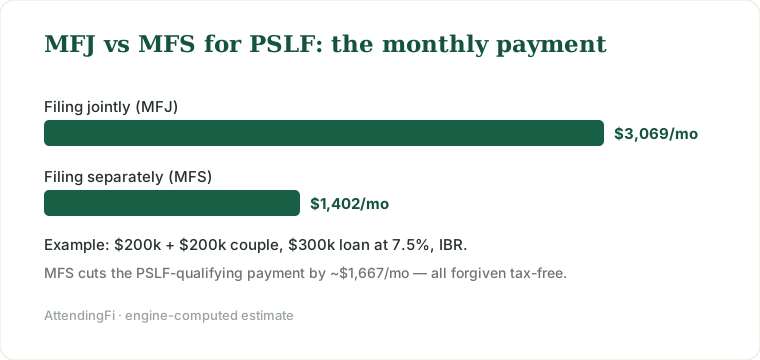
MFJ vs MFS for PSLF: why separate filing is more powerful
On PSLF, your goal is the opposite of paying the loan off: you want to make the smallest qualifying payments for 120 months, because the remaining balance is forgiven and that forgiveness is tax-free. Filing separately on an income-driven plan like IBR excludes your spouse’s income from the payment formula, so your payment drops — and the gap goes straight into the tax-free forgiveness at the end. For a borrower who is not pursuing forgiveness, lower payments just drag the loan out; for a PSLF borrower, lower payments are pure benefit.
The tax trade-off
MFS isn’t free. Filing separately generally raises a couple’s combined federal (and often state) tax and can cost certain credits and deductions. The decision is arithmetic: does the reduction in your PSLF payments over the remaining qualifying months exceed the extra tax you’ll pay by filing separately during those years? If yes, MFS wins.
When MFS wins for PSLF
MFS tends to win when you’re pursuing PSLF and your spouse earns a meaningful income (so excluding it materially lowers your payment), particularly in a state with no or low income tax. It tends to lose when incomes are similar (little payment benefit) or in years you’re close to finishing the 120.
The RAP caveat
One important exception: the new RAP plan counts spousal income regardless of filing status, so filing separately does not lower a RAP payment. If you’re on (or considering) RAP for PSLF, MFS won’t move your payment; the benefit only applies on IBR-style plans.
If both spouses have loans
When both spouses carry loans and both pursue PSLF, the filing decision affects both payments and one shared tax return at once — it’s no longer a single-borrower question. Model it directly: our physician couple calculator compares joint vs separate across both spouses’ loans and shows the lifetime difference with a confidence level.
Frequently asked questions
Does married filing separately help with PSLF?
Often yes. On IBR-style income-driven plans, filing separately excludes your spouse's income and lowers your payment, and since PSLF forgives the remaining balance tax-free after 120 payments, smaller payments mean more is forgiven. Weigh it against the higher tax of filing separately.
Does filing separately lower a RAP payment?
No. The Repayment Assistance Plan counts spousal income regardless of filing status, so MFS does not lower a RAP payment. The separate-filing benefit applies to IBR-style plans, not RAP.
Should both spouses file separately for PSLF?
Filing status is a household choice — you both file jointly or both separately. Whether separate filing helps depends on each spouse's income, who is pursuing PSLF, your state, and whether both have loans. Model your specific situation and confirm with a CPA.
Free, no login, no email. Compare every plan’s monthly payment, total cost and forgiveness.
Run the couple calculator →