Military and HPSP student loans: what physicians and dentists should know
Military physician student loan repayment comes in several forms, and the right one depends on whether you are still in school or already carrying debt. Between the HPSP scholarship that pays tuition during medical school, active-duty loan repayment programs for those who already borrowed, and the fact that military service counts toward PSLF, physicians who serve have unusually strong options. This guide walks through each path so a doctor considering or already in military service can plan their loans with confidence and avoid leaving real benefits on the table.
The military loan-help landscape
The military offers some of the most generous education-debt help available to physicians, but it comes in distinct programs aimed at different stages. If you are still a student, the Health Professions Scholarship Program (HPSP) can pay your tuition and provide a stipend in exchange for a service commitment. If you already have loans, active-duty loan repayment programs can help retire them. And because the military is a government employer, your service also counts toward PSLF.
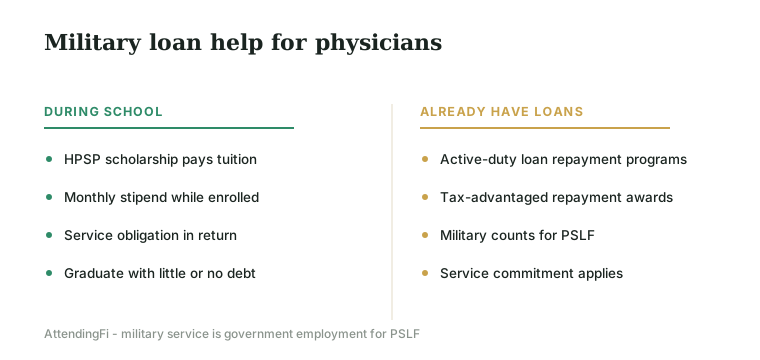
The common thread across all of these is service: the military helps with your debt in exchange for a commitment to serve, typically as an active-duty physician for a set number of years. That tradeoff is the heart of the decision. For a physician genuinely interested in military medicine, the financial benefit can be substantial; for one who is not, the service obligation is a serious commitment that should not be undertaken for the money alone.
Because the programs interact and overlap, and because the right one depends on where you are in training and your debt situation, it pays to understand the full landscape before committing. The sections below walk through each path and how they fit together, so you can weigh the genuine financial value against the service commitment with clear eyes.
HPSP: tuition paid during school
The Health Professions Scholarship Program is the military's main tool for funding medical education up front. In exchange for a service commitment, typically a year of active-duty service for each year of scholarship, HPSP can cover your medical school tuition and provide a monthly living stipend, allowing many participants to finish school with little or no education debt at all.
For a student certain they want to practice military medicine, HPSP is extraordinarily valuable, because avoiding debt entirely is worth even more than forgiving it later, you never pay the interest in the first place. It removes the entire student loan question from your financial life, replacing it with a service obligation you would be fulfilling anyway by choice.
The caution is that HPSP is a major commitment made early, before you may fully know your career preferences. The service obligation is real and binding, and the military, not you, controls aspects of where and how you serve. For the right person it is a great deal; for someone unsure about military medicine, taking the scholarship purely to avoid debt can lead to years of service they would not otherwise have chosen.
Loan repayment for those who already borrowed
Physicians who already have student loans when they join, or who borrowed without an HPSP scholarship, can access active-duty loan repayment programs. These programs make payments toward your existing education debt in exchange for service, helping retire loans you have already taken on rather than funding school up front.
The specifics, how much is repaid and over what service period, vary by program, branch, and current military needs, so a physician interested in this route should confirm the current terms through official military channels. The repayment is generally structured around a service commitment, similar in spirit to HPSP but aimed at debt you already hold rather than tuition you have yet to pay.
For a physician with significant existing debt who is drawn to military service, these programs can substantially reduce the burden. As with HPSP, the financial value is real but secondary to the service decision. The right framing is that you are choosing military medicine and capturing a strong loan benefit in the process, not enduring service to get the benefit.
Military service counts toward PSLF
An important and sometimes overlooked point: the U.S. military is a government employer, so full-time active-duty service generally counts toward Public Service Loan Forgiveness. This means a physician serving on active duty, with federal Direct loans on a qualifying income-driven plan, can be banking PSLF-qualifying months during their service, often at the relatively modest pay of a military physician.
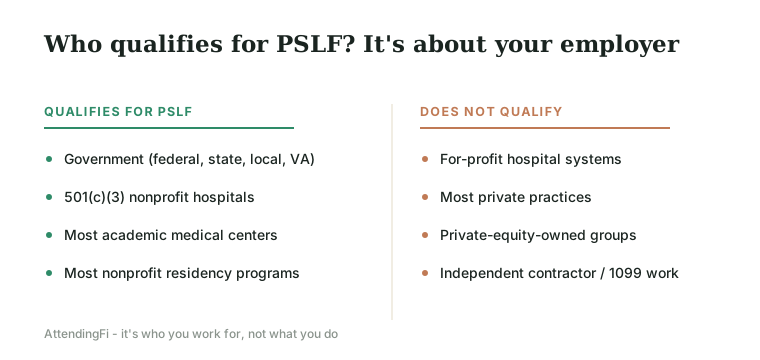
This creates a powerful interaction. A physician with loans who serves can simultaneously fulfill their service commitment and march toward tax-free forgiveness, and the lower military physician pay keeps those qualifying payments small, much like residency does for civilian physicians. For some, military service becomes a path to PSLF as well as a career choice.
The mechanics are the standard PSLF checklist: Direct loans, a qualifying income-driven plan, full-time qualifying employment (your active-duty service), and annual certification. We cover them in how PSLF works. The key insight for military physicians is that PSLF runs in parallel with service, so confirming your loans are set up correctly lets you capture both benefits.
Service programs versus PSLF
Military physicians often have a choice, or a sequence, between direct loan repayment programs and PSLF. The programs differ in shape: military repayment provides help relatively quickly in exchange for a defined service period, while PSLF forgives your remaining balance after 120 qualifying payments, about ten years, of which your service counts.
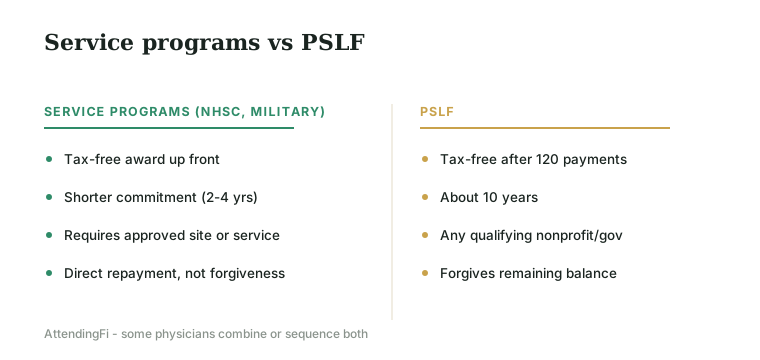
For a physician planning a shorter military stint, a direct repayment program may deliver more value than partial progress toward a ten-year PSLF goal they will not complete in uniform. For one planning a longer or full military career, PSLF can be reached during service, making it the more complete solution. And some physicians effectively combine them, capturing repayment help while also banking qualifying months.
The right choice depends on your service plans and debt, and the programs' current terms. Because the details shift with military needs and policy, confirm specifics through official channels, then model the financial side. The engine can compare a PSLF path on your numbers, helping you see how it stacks against a direct repayment program for your situation.
After your service commitment
What happens to your loans after military service depends on where you land. If you completed PSLF during service, your balance is forgiven and the question is moot. If you served a shorter commitment and still have a balance, you face the same fork as any physician: continue toward PSLF if you move to another qualifying employer, or refinance and pay off if you enter private practice.
A physician leaving the military for a civilian nonprofit hospital can continue accruing PSLF credit, since both are qualifying employers, carrying their banked military months forward. One entering private practice would weigh refinancing instead. The transition out of service is a natural moment to reassess your loan strategy against your new civilian career.
The planning point is that military service is often a chapter in a longer loan journey, not necessarily the whole story. Setting up your loans correctly during service, on Direct loans and a qualifying plan, preserves your options for whatever comes after, whether that is completing PSLF, refinancing, or continuing public service in a civilian role.
How to decide your military loan path
Deciding among the military loan options starts with the service decision, not the money. If you genuinely want military medicine, the financial programs are a strong benefit of a choice you are making anyway. If you do not, no loan benefit on its own justifies a multi-year military service obligation, since the commitment is real, binding, and multi-year regardless of how attractive the finances may look.
Once the service decision is made, match the program to your stage and debt: HPSP if you are a student wanting to avoid debt entirely, active-duty repayment if you already borrowed, and PSLF running in parallel during service. Confirm current terms through official military channels, since they change, and set up your federal loans correctly to capture PSLF alongside any direct program.
The financial side is worth modeling once the service decision is settled. The engine can show how a PSLF path during service compares on your numbers, helping you see the full value of your military loan strategy. Run your numbers below to understand exactly how your military service and your student loans fit together over time.
Key takeaways for military physicians
Military service offers strong student loan help, but the service commitment must come first. The programs differ by stage and debt.
- HPSP pays tuition during school in exchange for service, avoiding debt entirely.
- Active-duty repayment programs help those who already borrowed.
- Military service is government employment, so it counts toward PSLF.
- PSLF can run in parallel with service, banking qualifying months at modest pay.
- Match the program to your stage, student or already-borrowed, and your service plans.
- Confirm current terms through official military channels, since they change.
Decide on service first, then capture the loan benefits. Run your numbers in the engine below to model the PSLF side of your military loan strategy.
Pay, stipends, and the real value
Assessing the financial value of military loan options requires looking beyond the headline benefit. HPSP not only covers tuition but provides a living stipend during school, while military physician pay during service, though typically lower than civilian specialist income, comes with benefits and, crucially, counts toward PSLF at that lower pay. The total package is more than any single number suggests.
At the same time, the opportunity cost is real: military physician compensation is often below what the same doctor could earn in civilian practice, especially in higher-paying specialties. The loan benefit partially offsets this, but a physician should weigh the complete financial picture, pay, benefits, loan help, and PSLF, against both their civilian earning potential and, more importantly, their genuine interest in serving.
This is why the honest framing keeps returning to the service decision. The finances of military medicine can be favorable when the loan benefits and PSLF are included, but they rarely beat top civilian earnings outright. The programs make sense as a benefit of choosing service, which is exactly how a physician drawn to military medicine should view them.
Branches and specialty considerations
The specifics of military loan programs can vary across the branches and shift with military needs, which change over time. A program emphasized one year may be adjusted the next, and certain specialties in high demand may see different incentives than others. This variability is another reason to confirm current terms directly rather than relying on general descriptions.
Specialty also interacts with the decision in another way: the gap between military and civilian pay is larger for high-earning specialties, which changes the financial calculus. A physician in a specialty with modest civilian pay may find military compensation and loan benefits genuinely competitive, while a high-earning specialist accepts a larger pay difference in exchange for service and benefits.
A military loan decision in practice
Consider a medical student certain she wants to serve as a military physician. Choosing HPSP, she finishes school with essentially no education debt, having had tuition and a stipend covered in exchange for her service commitment. The student loan question never arises for her, because the debt was avoided rather than incurred, which is the most efficient outcome of all. For someone genuinely committed to military medicine, this is hard to beat.
Now consider a physician who borrowed the usual six figures, then joined and serves on active duty. He keeps his federal loans on a qualifying income-driven plan, certifies his service employment each year, and banks PSLF-qualifying months at his military pay, while any active-duty repayment program he qualifies for chips away at the balance directly. If his service extends long enough, he can reach PSLF forgiveness in uniform; if not, he carries banked months into civilian public service.
Both physicians come out well, but through different mechanisms, one by avoiding debt up front, the other by combining service-based repayment with PSLF. The common thread is that the service decision came first and the loan benefits followed. Run your numbers in the engine below to see how the PSLF side of a military path would play out on your balance and plans.
Get your personalized plan
Don't guess — model your exact numbers. AttendingFi runs the real federal-rules math on your numbers and shows its work. Free, no login needed to see your answer.
Run my numbers →Frequently asked questions
Does military service count toward PSLF?
Yes. The military is a government employer, so full-time active-duty service generally counts toward PSLF if you have federal Direct loans on a qualifying income-driven plan and certify your employment.
What is the HPSP scholarship?
The Health Professions Scholarship Program pays medical school tuition and provides a stipend in exchange for a service commitment, typically a year of active duty per year of scholarship, often letting participants graduate with little or no debt.
Can the military help repay loans I already have?
Yes. Active-duty loan repayment programs make payments toward existing education debt in exchange for service. Terms vary by program and branch, so confirm current details through official military channels.
Should I take HPSP just to avoid student debt?
No. HPSP is a major, binding service commitment. It is an excellent deal if you genuinely want military medicine, but taking it purely to avoid debt can lock you into years of service you would not otherwise choose.
Can I combine military loan repayment with PSLF?
Often, in effect. Your service counts toward PSLF while a direct repayment program helps with existing debt. The best combination depends on your service plans and debt, so model it on your numbers.