Disability insurance and your student loans
Disability insurance and physician student loans are more connected than most doctors realize: your ability to repay a six-figure balance rests entirely on your ability to keep working, and one serious illness or injury can end that. While federal loans carry a built-in discharge if you become permanently disabled, that protection disappears the moment you refinance, and it does nothing to replace your lost income. This guide explains how disability protection and your student loans interact, and why a true own-occupation policy is a foundational cornerstone of any physician's loan strategy.
The connection you might be missing
Physicians spend enormous energy optimizing their student loan repayment, choosing plans, weighing forgiveness, deciding whether to refinance, while often overlooking the single event that could derail all of it: a disability that prevents them from practicing. Your entire repayment strategy, whatever path you choose, assumes you will keep earning a physician's income. Disability insurance protects that assumption.
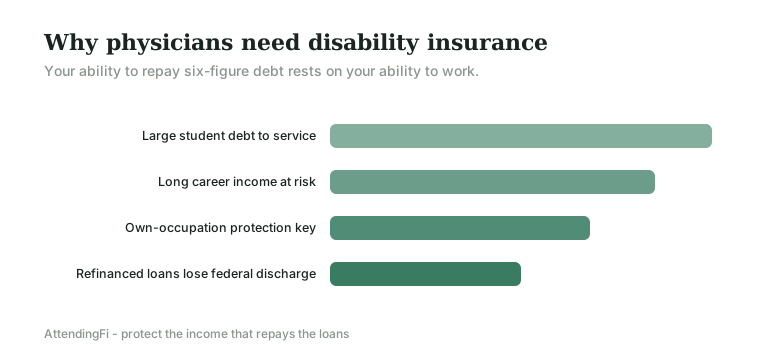
The connection runs both ways. Your large student balance is one of the biggest reasons you need robust disability coverage, because the debt does not disappear if you stop working, your federal loans might, but private ones may not, and your other obligations certainly continue. And your loan strategy, particularly whether you refinance, directly affects what protection your loans themselves carry.
Treating disability insurance as part of your loan plan, rather than a separate item, leads to better decisions on both. A physician who understands that refinancing forfeits a federal disability protection will weigh that cost; one who recognizes that a large balance amplifies the need for income protection will prioritize good coverage. The two are intertwined, and planning them together, as one connected decision, is what truly protects you and your family fully.
Federal loans and disability discharge
Federal Direct loans include an important protection: if a borrower becomes totally and permanently disabled, the loans can be discharged through the Total and Permanent Disability discharge process. In other words, the federal system has a built-in safety net that can erase your federal student debt if a qualifying disability ends your ability to work. This is a genuine, valuable feature of keeping loans federal.
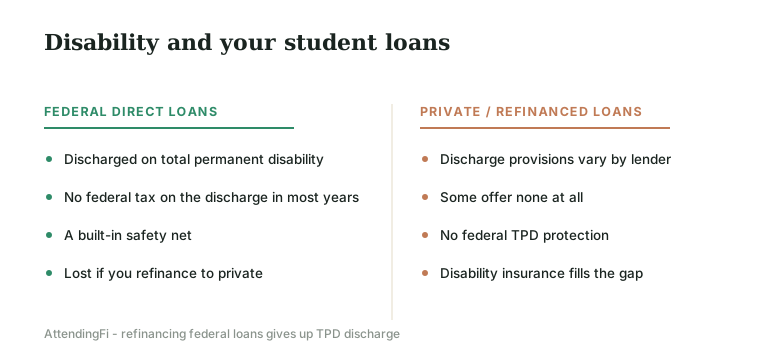
This discharge is one of several protections that distinguish federal loans from private ones, alongside income-driven repayment and forgiveness. For a physician carrying a large federal balance, knowing that catastrophic disability would not also leave the family saddled with that specific debt provides real peace of mind, and it is a benefit that should factor into any decision to leave the federal system.
The discharge is not automatic or unconditional, it requires meeting the program's definition of total and permanent disability and following its process, and tax treatment can vary, so it is not a substitute for income protection. But as a backstop specifically for your federal student debt, it is a meaningful safety net that disappears if you convert those loans to private debt.
How refinancing changes the picture
When you refinance federal loans into a private loan, you give up the federal Total and Permanent Disability discharge along with the other federal protections. Whether your new private lender offers any disability discharge at all depends entirely on that lender, some do, some do not, and the terms vary. You are trading a known federal protection for whatever, if anything, the private loan provides.
This is an underappreciated cost of refinancing. A physician focused on the interest savings of a lower rate may not realize they are also surrendering a disability safety net on their largest debt. For a borrower with significant disability risk or thin income protection, that lost discharge is a real consideration that should be weighed against the interest savings, not ignored.
The implication is not that you should never refinance, refinancing is the right move for many physicians not pursuing forgiveness, but that you should refinance with eyes open. If you are giving up the federal disability discharge, robust private disability insurance becomes even more important, since it now carries the full weight of protecting your ability to repay a loan that no longer self-discharges.
Why own-occupation coverage matters
For physicians, the type of disability insurance matters enormously. A true own-occupation policy pays benefits if you cannot work in your specific medical specialty, even if you could do some other kind of work. For a specialist whose income depends on practicing their particular field, this is the protection that actually matches the risk; a weaker definition might deny benefits if you could theoretically do unrelated work.
This specialty-specific protection is why physicians are routinely advised to secure proper own-occupation coverage early in their careers. A surgeon who develops a hand tremor, or any physician whose condition ends their ability to practice their specialty, needs a policy that pays based on that specialty, not on whether they could find some other job. The distinction can be the difference between protected and exposed.
Because policy definitions and quality vary, the details matter, and this is one area where getting genuinely appropriate coverage, rather than the cheapest available, is worth it. The point for loan planning is that the income protecting your ability to repay should be insured with a policy that genuinely covers your specialty, since that income is the foundation your entire repayment strategy rests on.
Protecting the income that repays the loans
Step back and the logic is clear: every repayment strategy, PSLF, refinancing, income-driven plans, aggressive payoff, depends on continued physician income. A disability that ends or reduces your earning capacity does not pause your student loans (beyond any federal discharge for total permanent disability) or your mortgage, your family's needs, or your other obligations. Income protection is what keeps the whole plan intact through such an event.
This is especially true for a physician who has refinanced. Having given up the federal disability discharge, their private student loan must be repaid regardless of their health, so the income-replacement that disability insurance provides is the mechanism that allows repayment to continue. For these borrowers, disability coverage and the loan are directly linked.
Even for a physician on a federal PSLF path, where the loans might be discharged on total permanent disability, disability insurance protects everything else, and protects against partial disabilities that reduce income without meeting the discharge threshold. The loans are one obligation among many that a physician's income supports, and protecting that income protects them all.
When to get coverage
The conventional and sound advice is to secure disability insurance early, typically as a resident or new attending, for two reasons. First, your health is generally best when young, so you can qualify for better coverage at better rates before any conditions develop. Second, the protection is valuable from the moment you have income and obligations to protect, which is precisely when you also have a large student balance.
Locking in good own-occupation coverage early, ideally with features that let you increase coverage as your income grows, means your protection scales with your career. A resident who secures appropriate coverage protects themselves through the years when their balance is largest relative to their assets, exactly when a disability would be most financially devastating.
Waiting carries real risk. A physician who postpones coverage until they are an established attending may find that a condition developed in the interim limits or prices out their options. Because the protection directly underpins the ability to service a large debt, treating it as an early priority, alongside setting up your loan plan, is the prudent course.
Fitting disability protection into your loan plan
Bring it together by treating disability insurance as a component of your loan strategy rather than a separate concern. When you decide whether to refinance, factor in the federal disability discharge you would forfeit. When you assess your coverage needs, account for the size of your student balance among the obligations your income supports. The two decisions inform each other.
For a physician keeping federal loans, the built-in discharge is one protective layer, and disability insurance covers everything else. For one refinancing, robust own-occupation coverage becomes even more essential, since the private loan carries no guaranteed discharge. In both cases, the goal is a complete picture in which your income, your loans, and your protection are aligned.
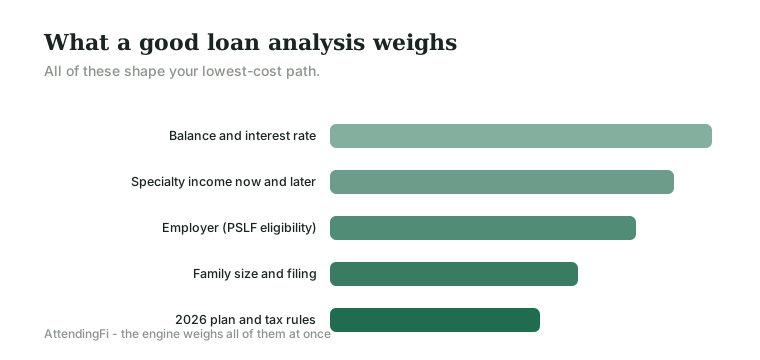
While disability insurance specifics are outside what a loan calculator models, your loan strategy is exactly what the engine handles. Run your numbers below to clarify your repayment path, then layer appropriate disability protection on top, so the income that repays your loans is itself protected against the one event that could undo your whole plan.
Key takeaways on disability and loans
Your ability to repay rests on your ability to work. Disability protection and your loan strategy are intertwined and should be planned together.
- Federal Direct loans can be discharged on total permanent disability.
- Refinancing to private loans forfeits that federal discharge.
- Own-occupation coverage protects your ability to work in your specialty.
- A large student balance amplifies your need for income protection.
- Secure coverage early, when your health and rates are best.
- Factor the federal discharge into any decision to refinance.
Protect the income your whole loan plan depends on. Run your numbers in the engine below to clarify your repayment path, then secure the appropriate own-occupation coverage to protect the income that path depends on.
Private loan disability provisions
If you hold private student loans, whether from school or from refinancing, their treatment in the event of disability depends entirely on the lender. Some private lenders offer a disability discharge or forbearance; others offer nothing, leaving the full balance due regardless of your health. This variability is one more reason to read the terms of any private loan carefully and to understand what protection, if any, it carries.
For a physician comparing refinance offers, the disability provisions are a legitimate point of comparison alongside the interest rate. A lender offering a genuine disability discharge provides more protection than one offering none, and that difference has real value for a borrower giving up the federal discharge. It is worth asking about explicitly rather than assuming.
Regardless of what a private loan offers, disability insurance remains the more reliable protection, because it replaces income broadly rather than addressing a single debt. A physician with private loans and strong own-occupation coverage is protected even if the lender offers no discharge, because the insurance preserves the income needed to keep paying.
Partial disability and your loans
Not every disabling event is total and permanent. Many are partial or temporary, reducing your ability to work and your income without meeting the threshold for a loan discharge. These situations are precisely where income-replacement disability insurance proves its worth, since no loan discharge would apply, yet your reduced income still must cover your obligations, including your loans.
A good disability policy can provide benefits for partial or residual disability, helping bridge a reduced-income period. For a physician with a large balance, this matters because a partial disability that cuts your income could make a previously manageable loan payment difficult, and on a federal income-driven plan your payment would adjust, but a private refinanced loan would not. Coverage fills that gap.
A disability scenario, made concrete
Consider two physicians, each carrying $280,000 in loans, who develop a condition that ends their ability to practice their specialty. The first kept her loans federal and held strong own-occupation disability insurance. Her federal loans may be dischargeable through the total and permanent disability process, and her insurance replaces the specialty income she has lost, so her family's finances, mortgage, and obligations remain intact despite the catastrophe.
The second had refinanced his federal loans to chase a lower rate and skipped robust coverage, assuming he would always be able to work. His private loan carries no guaranteed discharge, so the full balance remains due, and with no income replacement, his family faces both the lost income and the unrelieved debt at the worst possible moment. Same debt, same event, vastly different outcomes, decided by choices made years earlier.
The contrast is stark precisely because the risk feels remote when you are young and healthy, which is exactly when these protections are cheapest and most available. A physician who treats disability protection and the federal discharge as part of their loan strategy is insured against the one event that could otherwise undo everything. Run your federal numbers in the engine below, then secure the own-occupation coverage that protects the income behind them.
Get your personalized plan
Don't guess — model your exact numbers. AttendingFi runs the real federal-rules math on your numbers and shows its work. Free, no login needed to see your answer.
Run my numbers →Frequently asked questions
Are federal student loans discharged if I become disabled?
Federal Direct loans can be discharged through the Total and Permanent Disability discharge if you meet the program's definition and process. It is a valuable federal protection that does not exist for most private loans.
Does refinancing affect disability discharge of my loans?
Yes. Refinancing federal loans into a private loan forfeits the federal Total and Permanent Disability discharge. Whether the private lender offers any disability discharge varies, so robust disability insurance becomes more important.
Why do physicians need own-occupation disability insurance?
Because it pays benefits if you cannot work in your specific specialty, even if you could do other work. For a specialist whose income depends on their field, this protection actually matches the risk to their earning ability.
How does disability insurance relate to student loans?
Your ability to repay a large balance depends on your income, which disability insurance replaces if illness or injury ends your ability to practice. The bigger your debt, the more important that income protection is.
When should a physician get disability insurance?
Early, ideally as a resident or new attending, when your health and rates are best and your student balance is largest relative to your assets. Waiting risks higher cost or limited options if a condition develops.